In 2016, a Respiratory Syncytial Virus (RSV) vaccine candidate named the RSV F Vaccine failed in Phase III trials, which could have been a crippling blow for Novavax, but they may be on the road to recovery.
Companies have to have Phase III trials before they can get approval. Phase I proves safety and dosing while Phase II shows it is better than a placebo and Phase III is intended to show it either works better than existing treatments or has fewer side effects. That's all after numerical models and animal studies. Since FDA essentially doubled the costs to get drug approval in the early 2000s only the most promising drug advances to Phase III. perhaps 1 in 5,000 that look good on a computer. It simply isn't worth the cost otherwise.
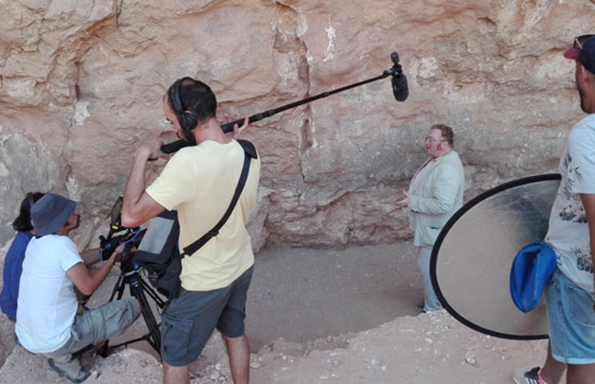
What began as an expedition to record the inscriptions of ancient Egyptian quarry workers produced a remarkable discovery about the Great Pyramid at Giza. My colleagues and I in the Anglo-French joint archaeological mission to the ancient quarry site of Hatnub recently revealed the existence of a well-preserved haulage ramp dating to the time of the Great Pyramid, roughly 4,500 years ago.
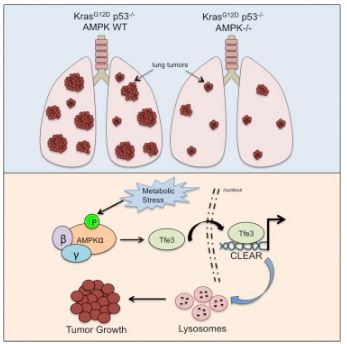
The protein complex AMPK is thought to suppress cancer, by slowing cellular metabolism, but it can also help some tumors grow.
But why? A new study says it has solved the mystery.
AMPK acts as a fuel gauge for the cell, overseeing energy input and output to keep the cell running smoothly. Similar to a car sensor flashing a low-gas signal or turning off a vehicle’s AC to save energy, AMPK slows down cell growth and changes the cell’s metabolism if the cell’s fuel (nutrients) is low.
The Great Pyramids have long been held up as the pinnacle of ancient engineering. Over 100 structures, some as high as were constructed of huge alabaster blocks, many quarried from Hatnub - the site of an new interesting discovery.
Given the challenges in building such huge structures, it is no surprised the Great Pyramid of Khufu is one of the Seven Wonders of the Ancient World. It and others were built thanks to quarries connected to the Nile by Bronze Age roads. The blocks were transported by sleds. But what about construction? Huge ramps? Were they poured? Some even speculated about aliens.
When Miles McEvoy became Deputy Administrator of the USDA’s National Organic Program (NOP) he set out to do something in the Obama administration that Science 2.0 long had called for, and Consumers Union had been calling for a decade before us; spot field testing of organic food so their customers could be certain that the prohibited substances and excluded methods that marketers advertise in their process were actually not being used.
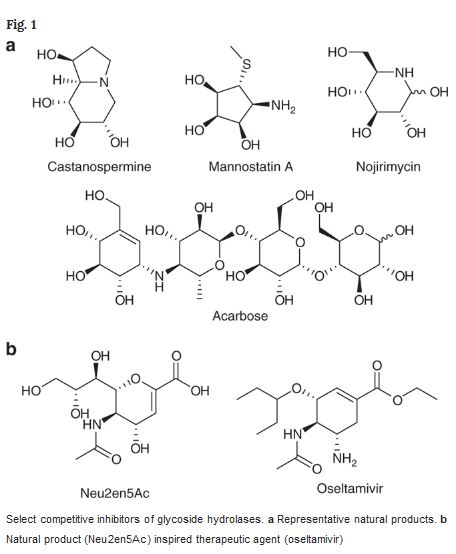
New molecules similar to carbohydrates have showed the capacity to inhibit the activity of a specific type of glycoside enzymes - and that means inhibiting infectious diseases.
Glycosides are essential enzymes to digest carbohydrates but they are also key players in infections caused by pathogens, in anti-bacterial defense and many other vital cellular processes. Because these small molecules that are able to bond with and inhibit the activity of enzymes in infectious diseases, it opens up the basis for new medicines.
George Washington may be the only popularly elected ruler in History who, when his supporters offered to crown him King, relinquished his power, instead. Politically speaking, that was a very unnatural thing to do. Historically, federal agencies have not surrendered their power, even after their congressional mandates were accomplished. Instead, they have invented new problems to solve, thereby justifying their continued existence.
Short summary: it's an entertaining but rather far fetched proposal in an arxiv preprint not published anywhere but mentioned in a Scientific American op ed. Implausible for many reasons including its spectrum which is not the shiny spectrum you'd expect from a solar sail but the red of tholins mixed with rock and metal as you'd expect from an asteroid / comet.
The midterm elections are widely expected to usher in this century’s “year of the woman” – an explosion of women entering government.
Massachusetts will likely elect its first black woman to Congress, Arizona is poised to send its first woman to the U.S. Senate, and fully 50 percent of Democratic congressional nominees this year are women.
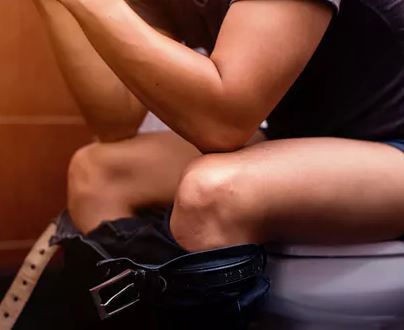
If you’ve ever thought your poo is just a bunch of dead cells, think again. Most of it is alive, teeming with billions of microbes. Here’s what studies in healthy adults reveal makes up our poo.
Water
Our feces is largely (75%) made up of water, although this differs from person to person.