Land mammals such as horses experience ‘pulses’ in their blood when galloping, where blood pressures inside the body go up and down on every stride. In all mammals, average blood pressure is higher in arteries, or the blood exiting the heart, than in veins. This difference in pressure drives the blood flow in the body, including through the brain. Locomotion can forcefully move blood, causing spikes in pressure, or ‘pulses’ to the brain.
The difference in pressure between the blood entering and exiting the brain for these pulses can cause damage. Long-term damage of this kind can lead to dementia in human beings while horses deal with the pulses by breathing in and out.
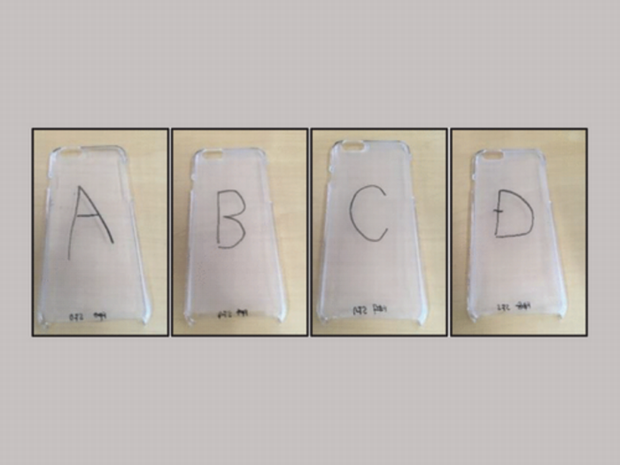
A recent survey found that even if the cost was 10X as much (though still a small amount), users would pay more if they liked the feel of a smartphone cover. This means designers might benefit more factoring that into product design.
The caveat; this was a small number of students and Hiroshima University staff so not representative even of Japan. Still, it showed willingness to pay more when the reference smartphone cover price was 100 yen and 1000 yen. The covers were differentiated by surface smoothness, height, slipperiness, dampness, granularity, stickiness, and dryness.
European governments will tell you they have shown 'leadership' in combating CO2 emissions. What they leave out of media briefings is that they are lying, and always have been.
The original climate treaty, the Kyoto accord, was written by Germany and France and used a target date after West and East Germany unified, so by closing a few Soviet-era power plants Germany met its target, while France had increased nuclear so their emissions easily met the old date target as well. It did nothing for emissions, it was political theater.
The way Chief Justice Roberts tosses red herrings, he could get a job at Seattle’s Pike Market. The court may make unpopular decisions, he says, but that’s no reason to question the Supremes’ legitimacy. He’s right, but he’s right in a way that totally misses the point.
What correlation giveth, correlation can taketh away. Statins, taken by some 40 million Americans, may not be helping a lot of them.
Statins are used to lower cholesterol levels and reduce their risk of heart disease and stroke. They are endorsed by medical groups and the American Heart Association, but many won't benefit from these drugs based on new research. Basically, healthy people with high cholesterol aren't gaining anything.
Do you believe the telegraph was giving telegraph operators cancer? If not, it's only because there was no Robert F. Kennedy Jr. or US Right To Know group promoting fear and doubt about it the way they do vaccines, food, and cell phones.
On May 24th, 1844 a telegram was sent from the Capitol because Samuel Morse, the inventor, wanted a government contract. Because he was diplomatic, he let the daughter of Henry Ellsworth, first Commissioner of the U.S. Patent Office, draft the message. And because young people need to Live In Important Times, the message proposed by young Annie was "What Hath God Wrought.” (1)
Creativity occurs whenever novel connections are made, and often, this occurs by accident.
England is in crisis. They lost a beloved figurehead this month but for decades prior were losing scientific ground. If you look for the home of the modern organic food and anti-vaccine movements, you find their nexus in 1990s England.
The primary royal behind those beliefs is now King Charles III.
Responses to the COVID-19 pandemic, from school closures to lockdowns, were important for health officials and implemented even after factoring in concerns about long-term psychological effects.
If results from 2015-2020 surveys are an indication, depression cases may go up sharply in future data. In 2020,
past 12‒month depression was prevalent among nearly 20 percent of adolescents and young adults, and almost 10 percent of Americans.
'Keeping time' is easy for humans, but not all can keep time equally. Some great drummers, and even more guitarists, use a device like a metronome to keep them on a precise beat, while others seem to do it effortlessly.
A new study finds human capacity to move in synchrony with a musical beat may be partially coded in the human genome.