
A new study uses mouse genetics to demonstrate how a handful of workhorse signaling pathways interact to construct multiple structures that comprise the vertebrate body and how crosstalk between two of those pathways - those governed by proteins known as Notch and BMP (for Bone Morphogenetic Protein) receptors - occurs over and over in processes as diverse as forming a tooth, sculpting a heart valve and building a brain. 

One Notch family protein, Notch2, shapes an eye structure known as the ciliary body (CB), most likely by ensuring that BMP signals remain loud and clear. Understanding CB construction is critical, as excessive pressure is one risk factor for glaucoma.  

The toxin that causes botulism is the most potent that we know of - just 1/1,000th the weight of a grain of salt can be fatal, which is why so much effort has been put into keeping Clostridium botulinum, which produces the toxin, out of our food.

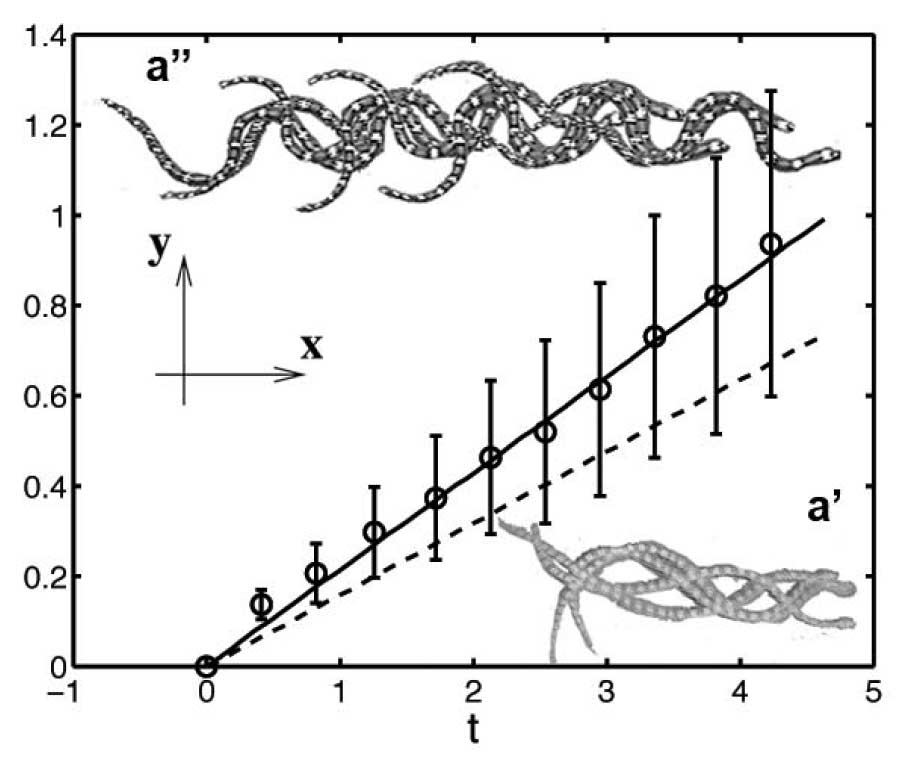
“Previous studies of slithering have rested on the assumption that snakes slither by pushing laterally against rocks and branches.” explain a joint research team from the Applied Mathematics Laboratory, Courant Institute of Mathematical Sciences, of New York University and the Departments of Mechanical Engineering and Biology, at the Georgia Institute of Technology.
The music-recording industry has been under pressure lately, as it struggles to adapt to the age of the internet.  This is the second major structural revolution to challenge the recording industry in the past few decades, the first being when video killed the radio star.  Music videos surged in popularity (and budget) in the '90s, but during the '00s (pronounced "uh-ohs") music video budgets seemed to have plateaued and begun to decline.  In fact, just 3 of the 20 most expensive (inflation-adjusted) music videos of all time were produced after 2000.  The most expensive of all time remains Michael and Janet Jackson's "Scream" at $10 million.

The evolution of the complex, weight-bearing hips of walking animals from the basic hips of fish was a much simpler process than previously thought, according to a new paper.

Tetrapods, four-legged animals, first came to land about 395 million years ago - a significant step, literally and figuratively, and it was made possible by strong hipbones and a connection through the spine via an ilium, features that were not present in the fish ancestors of tetrapods. 

The drug candidate J147 was able to reverse memory deficits and improve several aspects of brain function in mice with advanced symptoms of Alzheimer's disease, according to a new study.  

Unique cellular and molecular mechanisms behind tooth renewal in American alligators may help science learn how to stimulate tooth regeneration in people, according to a new study.

We regenerate teeth now. We grow baby teeth and then we replace those with adult teeth.  Yet most vertebrates can replace teeth throughout their lives and we cannot, despite the lingering presence of dental lamina, a band of epithelial tissue crucial to tooth development. Because alligators have well-organized teeth with similar form and structure as mammalian teeth and are capable of lifelong tooth renewal, the authors reasoned that they might serve as models for mammalian tooth replacement. 

There are some places where food is easy to grow and some where it is not. Nature is not fair.

Expecting companies in countries with food to ship it everywhere for free is not practical and the poorest people don't have the money to import food, so they are stuck in a hunger Catch-22. There are differing schools of thought on how to solve the problem.

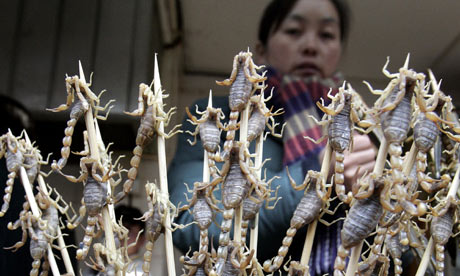
The positive approach - science - is to make it possible for food to grow in areas where food cannot grow now. Plants can be optimized scientifically to thrive in areas where they ordinarily would not. Then there is a less positive approach; tell poor people to eat bugs.

Detecting alien worlds is a significant challenge since they are small, faint, and close to their stars. The two most prolific techniques for finding exoplanets are radial velocity (looking for wobbling stars) and transits (looking for dimming stars). 

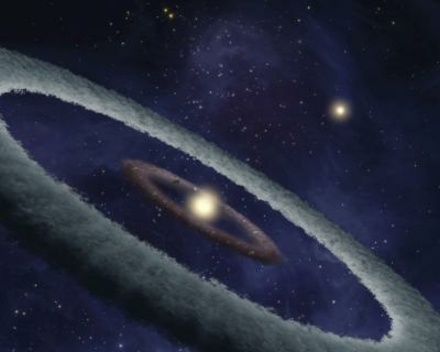
A team at Tel Aviv University and the Harvard-Smithsonian Center for Astrophysics (CfA) has just discovered an exoplanet and the planet they found, Kepler-76b, was identified by the BEER algorithm; an acronym for relativistic BEaming, Ellipsoidal, and Reflection/emission modulations. BEER was developed by Professor Tsevi Mazeh and his student, Simchon Faigler, at Tel Aviv University in Israel and is a new method that relies on Einstein's special theory of relativity.