An Asian elephant named Koshik can speak exactly five words in Korean that can be readily understood by those who know the language. The elephant accomplishes this in a most unusual way: he vocalizes with his trunk in his mouth.
The words include "annyong" ("hello"), "anja" ("sit down"), "aniya" ("no"), "nuo" ("lie down"), and "choah" ("good"). While cool on their own, Koshik's language skills may also provide important insights into the biology and evolution of complex vocal learning, an ability that is critical for human speech and music, the researchers say.
Researchers say their refinements in silicon-based lithium-ion technology could lead to a high-capacity, long-lived and low-cost anode material for next-generation rechargeable lithium batteries.
The Mendeley collaboration company has published the Global Research Report (
http://mnd.ly/global-research-report), an analysis of two million scholars' research activity in relation to economic indicators and research productivity.
Researchers have been studying toll-receptors for decades, revealing functions in immune defence developmental biology. Now, a research team from Kiel University says reporting that toll-receptors have primarily served to identify germs and to control bacterial colonization of organisms – typical immune defense functions.
Toll receptors exist in many animal species as well as humans. Cnidarians are convenient research subjects because they live in plain aquaria, have a simple genome and can be examined easily in experiments. They also live in association with few types of bacteria compared to humans.
If you are a $2 billion company, people will pay for your content - if you are losing money and not making a profit, claims a paper published today in Cyberpsychology, Behavior, and Social Networking.
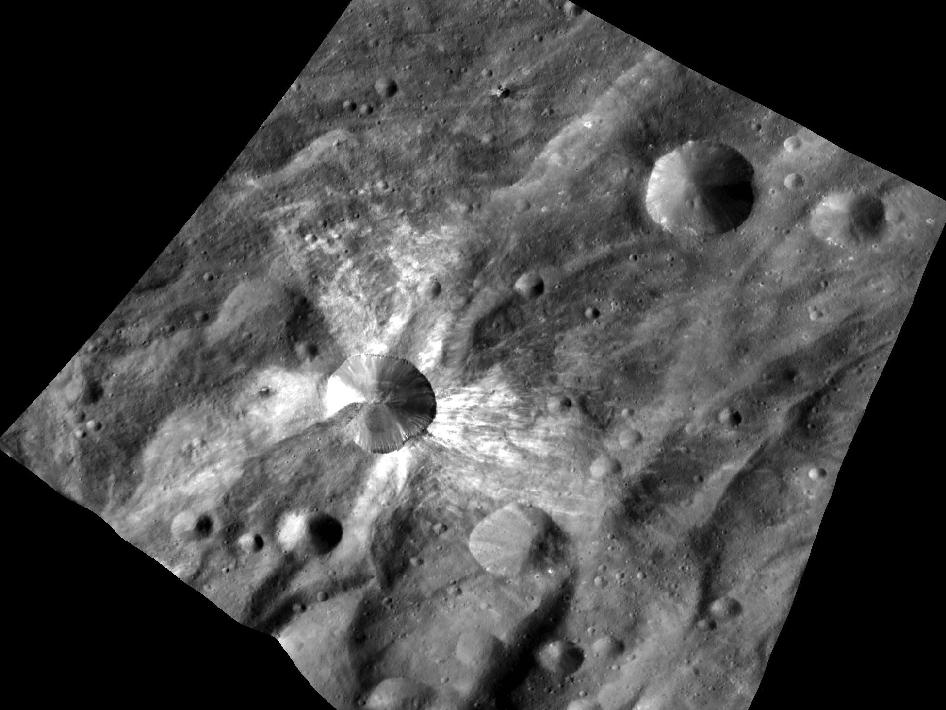
The giant asteroid Vesta is constantly stirring its outermost layer, according to data from NASA's Dawn mission that show that a form of weathering that occurs on the moon and other airless bodies we've visited in the inner solar system does not alter Vesta's outermost layer in the same way.
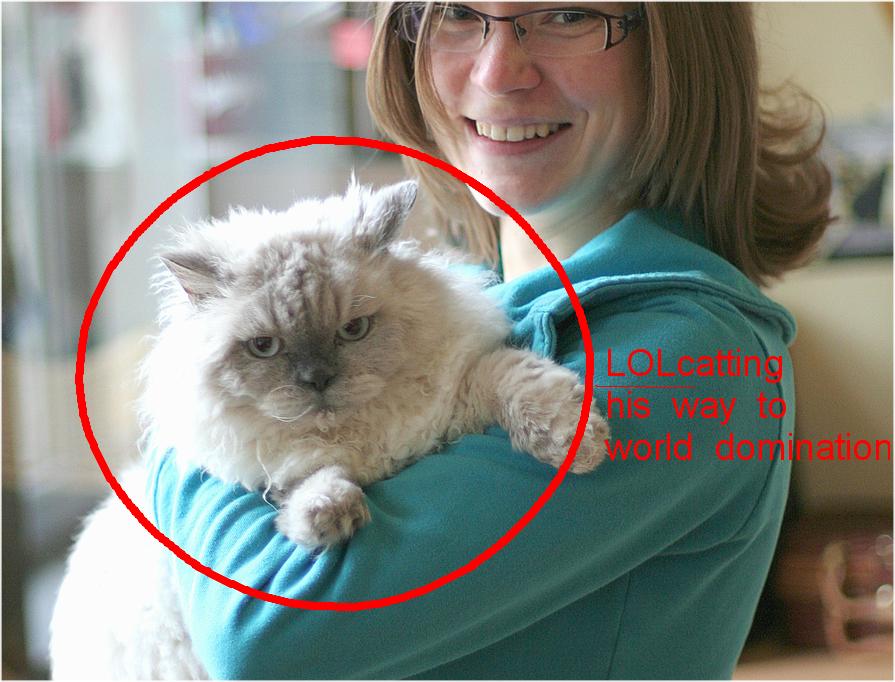
In 1987, unthinking, primitive pre-GMO breeders exploited an abandoned shelter cat in Montana, with no one to defend it, for their own nefarious ends when it was discovered that this feline pawn gave birth to a curly-haired kitten. The kitten was then raped by a Persian male and gave birth to a mixture of curly-haired and normal-haired kittens, resulting in a horrible mutation that was now dominant over nature: its presence on even one of the two copies of the gene involved was suddenly sufficient to cause cats to have curly hair. (1)
The yeast used to make beer has yielded what may be the first gene for beer foam, CFG1, scientists are reporting in a new study. The discovery opens the door to new possibilities for improving the frothy "head" so critical to the aroma and eye appeal of the world's favorite alcoholic beverage, beer. And it gives Science 2.0 another reason to write about beer.
It seems that one continuously hears about individuals passing or failing the lie detector, and despite many questions regarding its veracity, people still assume that there is a scientific basis for its use.
However, lie detection, or polygraphy is not based on science. In fact it isn't based on much of anything, except psychological manipulation of the subject under the guise that taking the lie detector may cause them to confess, because they believe it is based on science.
In short ... it's voodoo psychology.
OpenStreetMap, an alternative to Google map data, has had a lot of success but can't agree on what direction to go next, say those in the know. An odd problem for people who make maps, right?
But at least they are having fun trying.
When I was young, the only sort-of controversy in maps was 'fairness' to third world countries. We didn't say 'developing nations' back then, we said 'third world', just like people who were trying to foment dissent in a country were called 'fifth columnists' but now we call them 'humanities professors'.