



"Man, know thyself" was the challenge of ancient Greek philosophers and it has been the goal of mankind since.

Thousands of years later, neuroscientists are trying to decipher how the human brain constructs our sense of self, with mixed results. Pretty pictures mapped to activity can only tell us so much. But if self-awareness is defined as being aware of oneself, including traits, feelings, and behaviors, there are three brain regions critical for self-awareness, they say: the insular cortex, the anterior cingulate cortex and the medial prefrontal cortex.

In a long-term marriage,  men tend to drink less than they did while single. That's good.  But women drink more, say sociologists. 

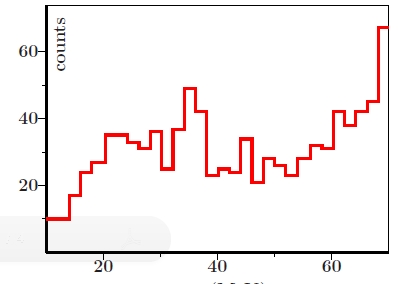
Everybody seems to be talking about this new would-be particle, allegedly observed in diphoton decays in this paper by Kh. Abraamyan et al. at JINR, and consistent with an earlier claim of two physicists (van Beveren and Rupp) who had considered several distributions published by different collaborations.
Americans learned this week that the leader of the free world likes to brew his own “superb” beer. The Washington Post reported that President Obama likes microbrews “so much so that he bought a beer-making kit (with personal funds) for the White House.”

Now the White House can take the next step and slash its electricity bill, too.

The recent discoveries that α-Synuclein(α-Syn), a central player in Parkinson´s disease (PD) brain destruction, can not only pass from one neuron to another but also exist outside neuronal cells, has led to a rethink of the disease. A study investigating α-Syn effects out of the cell has found that the protein can interfere with the normal functioning of the hippocampus, the brain area for memory and learning, what might start explaining the cognitive and memory problems seen in so many PD patients. 

A recent, fascinating recent study is Decoding Animal Languages, by Con Slobodchikoff.  At one level, it is an inspiring demonstration of how new technologies can liberate us from preconceptions and open new avenues of empathy, helping humans to understand the other species who co-inhabit this planet with us.

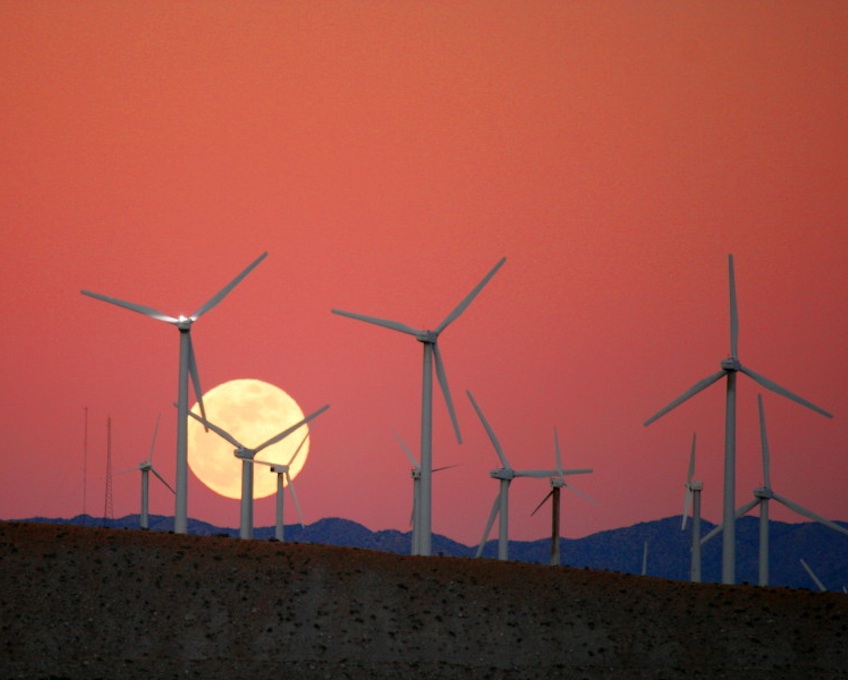
We’ve long depended on coal-fired and natural gas power plants to convert chemical fuel into electricity. Now, scientists have found a way to convert electricity into a fuel using excess power from renewables like wind and solar.

Scientists from Stanford and Pennsylvania State universities have discovered a process to convert electricity into methane, the main constituent of natural gas, using microbes. The fuel is carbon neutral and can use the excess electricity from renewable sources.

Can robots learn language?  Is understanding a language depending on how we see the world and does a Spanish speaker see the world in the same way as an English one?

Linguistic and cognitive experts are going to argue those issues when they arrive at Northumbria University next week for the fifth annual ‘Embodied and Situated Language Processing 2012’ conference August 28-30.

This fall, California voters will be asked to vote on Proposition 37, a law which would require that all foods including “GMO Crop ingredients” be labeled as such.   There are many reasons that this isn’t a good use of governmental authority for mandatory food labeling.  A look at historical logic and precedents for labeling, and at the misleading messages this initiative would foster, should inspire Californians to reject it at the ballot box.

  Labeling for a Known Hazard

San Francisco Giants outfielder Melky Cabrera, coming off an an All-Star Game MVP award, had unusually high testosterone levels to go along with his .346 batting average and 11 home runs.  These are not the days of Steve Howe (1), when baseball could try to ban players only to have the unnaturally powerful Player's Union block any efforts at a drug policy, Cabrera was suspended for 50 games.

