If you don't think the government should be artificially mandating winners and losers among clean energy companies with artificial subsidies, don't let that turn you off of basic research, where the real improvement in future clean energy will be made.
A discovery by military and academic researchers that embedding charged quantum dots into photovoltaic cells can improve electrical output by enabling the cells to harvest infrared light, and by increasing the lifetime of photoelectrons, may mean dramatically increasing the amount of sunlight that solar cells convert into electricity.
Forget starving yourself or kooky ideas like a lettuce diet for increased longevity - the answer to living longer may be found in a bottle of alcohol.
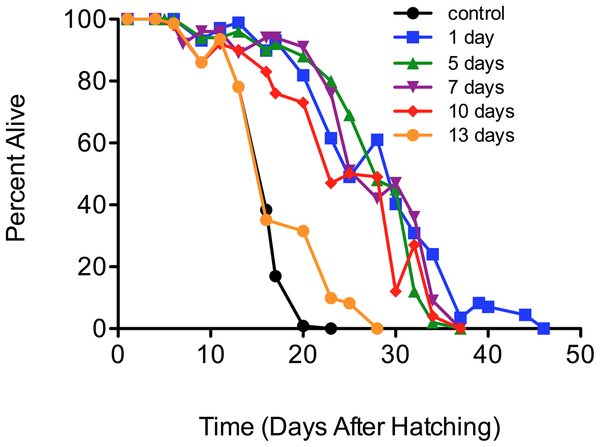
Minuscule amounts of ethanol, the type of alcohol found in alcoholic beverages, has been shown to more than double the life span of Caenorhabditis elegans - though just why is still unclear, so don't get out the Jim Beam just yet. Plus, high concentrations have been linked to numerous detrimental neurological effects too many times for that to be overthrown any time soon.
It seems that certain great ideas have Times. Like, whoever's alive at that time, it doesn't matter--they're going to discover electricity, because the idea's in the ether. Or whatever.
So as it turns out, 2009 was the Time of finding neurotoxins in stranded Humboldt squid. I mean, obviously, right? Or, um, maybe not.
Let me explain: in 2009, a bunch of Humboldt squid stranded on beaches up and down the Pacific coast of North America. And two entirely independent groups of people had the same brilliant idea of taking samples from these stranded squid and looking for neurotoxins.
Can your school-age child break this code?
VS LBH NER NTRQ ORGJRRA RYRIRA NAQ FVKGRRA NAQ PNA ERNQ GUVF GURA JUL ABG RAGRE GUR NYNA GHEVAT PELCGBTENCUL PBZCRGVGVBA
If so, The School of Mathematics at The University of Manchester, where Turing helped develop the earliest stored-program computers following his pioneering Enigma Code-breaking work at Bletchley Park during WW2, wants to help develop those skills and is organizing a competition to celebrate Turing's centenary.
This week's edition of the CMS Times features a
short piece by A.Rao,
where some points are made on the issue of correct statistical analysis of high-energy physics data.
Corporate media likes to shock or enrage people so when it comes to science stories, the ridiculous - life on other planets, billions 'wasted' on curing cancer, Republicans hate science - often takes precedent over the quiet wins.
Mendeley, the citation sharing tool, and the Columbia University Libraries have agreed to jointly develop a graphical and user-friendly Citation Style Language editor, which will enable academic researchers to develop their own citation styles, significantly simplifying the creation of manuscripts for publication in journals.
“The vacuum is empty” Richard Feynman
According to Dick himself, this was his catchiest
motto, but eventually he abandoned it for being as wrong as it sounds right.
Have you heard of
biobricks? They're the answer--or at least
an answer--to the accusation made
here at Science 2.0 and elsewhere that:
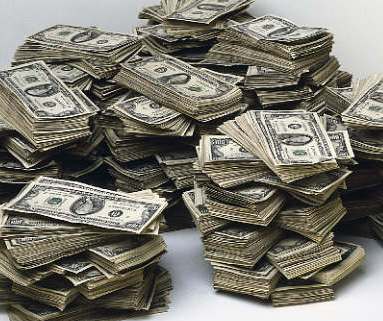
No, not a million of those... I am talking about page hits. And no, there is no reason for retiring: the next million is awaiting!
I didn't give much thought to page hits when I started blogging. And I probably still don't give it enough attention, but I do realize it is page hits that make the internet tick. And yes, it is stimulating for me to witness a piece that I have written attracting many thousands or even tens of thousands of hits. Yet somehow it feels unreal. Who are all these folks clicking on a link to this blog? A million hits for a nerdy and rather inaccessible physics blog is way more than I ever could have expected.