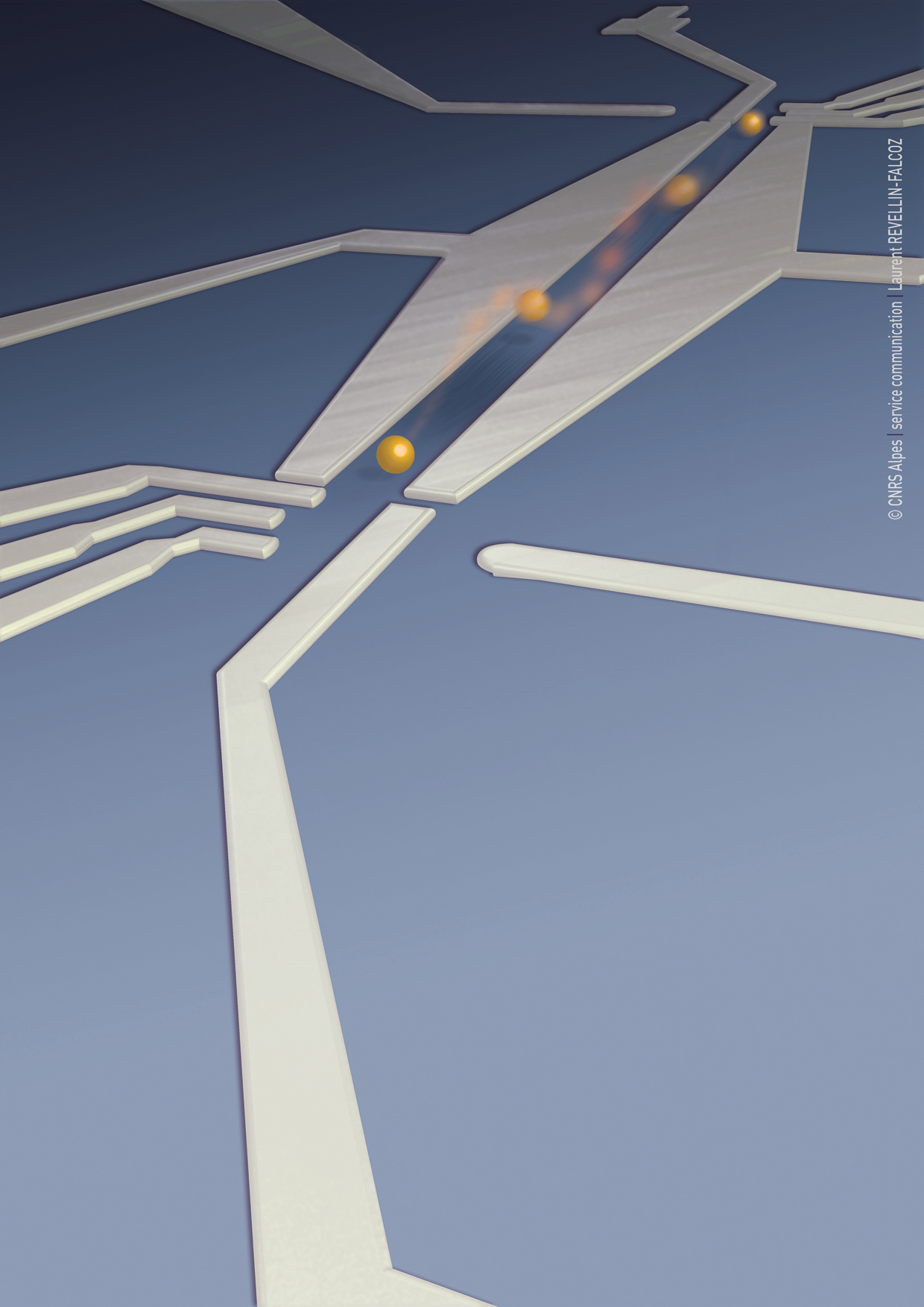






Physicists have succeeded in taking a decisive step towards the development of more powerful computers; they were able to define two little quantum dots (QDs), occupied with electrons, in a semiconductor and to select a single electron from one of them using a sound wave, and then to transport it to the neighboring QD.

A single electron “surfs” thus from one quantum dot to the next like a fish on a wave. This manipulation of a single electron will also enable the combination of considerably more complex quantum bits instead of classical bits (“0” and “1” states).

I've mentioned the Littlest Squid before: the genus Idiosepius, which contains only a handful of very small, very adorable species. And I commented that they have this habit of gluing themselves to seaweed, to hide from predators.

Well, today I'm here to explain how they do it, because a new paper just came out on the topic of itty-bitty squids and their glue organs.
I met Makana in August 2005, where an old lava flow meets the ocean in a series of ledges and tide pools on Kauai, one of the Hawaiian Islands. He was a “local” of about my age who got his name (Hawaiian for “gift”) from the old volcano that formed the backdrop of our introduction. He wasn’t in college, but had a good job as a caddy at an upscale golf course, where Bill Clinton had tipped one of his buddies well the day before. In the afternoons, he and his friends came to this spot — still called “The Queen’s Bath” decades after the days of Hawaii’s royal rulers — to “talk story” and swap tales with an endless stream of tourists.
If you're worried about getting the flu, chances are that you got an influenza vaccine; these are created on an annual basis and use a method from the 1950s; it is egg-based technology, literally produced in chicken eggs.  Some vaccines, like polio, are now created using laboratory-grown cell lines that are capable of hosting a growing virus.  The first is inefficient, the second is expensive.(1)

The future of vaccines looks a little different. The race is on to create a universal flu vaccine, one that does not have to be recreated each year, and to also bring the technology cost down to where it is more financially constructive to get people a vaccine than have them in the hospital.(2)
I am a Science 2.0 newbie: I have written my first article  only a few days ago, and a second one shortly afterwards.  But I have soon realized that there is a sort of underground debate going on, about whether non-scientists should trust scientists about their claims, whether there exists a scientific establishment trying in every possible way to ignore/refute unorthodox ideas, and so on.
During the last decade, the almost singular focus on CO2 has been something of a puzzle; leaving out methane, with 23X the warming impact of CO2, seemed like a mistake. 
Biologists working with fruit flies activated a gene called PGC-1, which increases the activity of mitochondria, the tiny power generators in cells that control cell growth and tell cells when to live and die.  Result: it slowed the aging process of the flies' intestines and extended their lives by as much as 50 percent.
 
Fruit flies, Drosophila melanogaster, have a life span of about two months. They start showing signs of aging after about one month - they slow down, become less active and die. They are a good model for studying aging  because scientists know every one of their genes and can switch individual ones on and off.
Dan Reus of the creative instigator/outfit Openly Disruptive ("the future will be what we make it") tossed me this note: I thought you might like to see the mention of you and Project Calliope in a recent post by our local alternative news weekly: http://blogs.riverfronttimes.com/rftmusic/2011/08/dan_reus_outerspace_music_kickstarter.php 
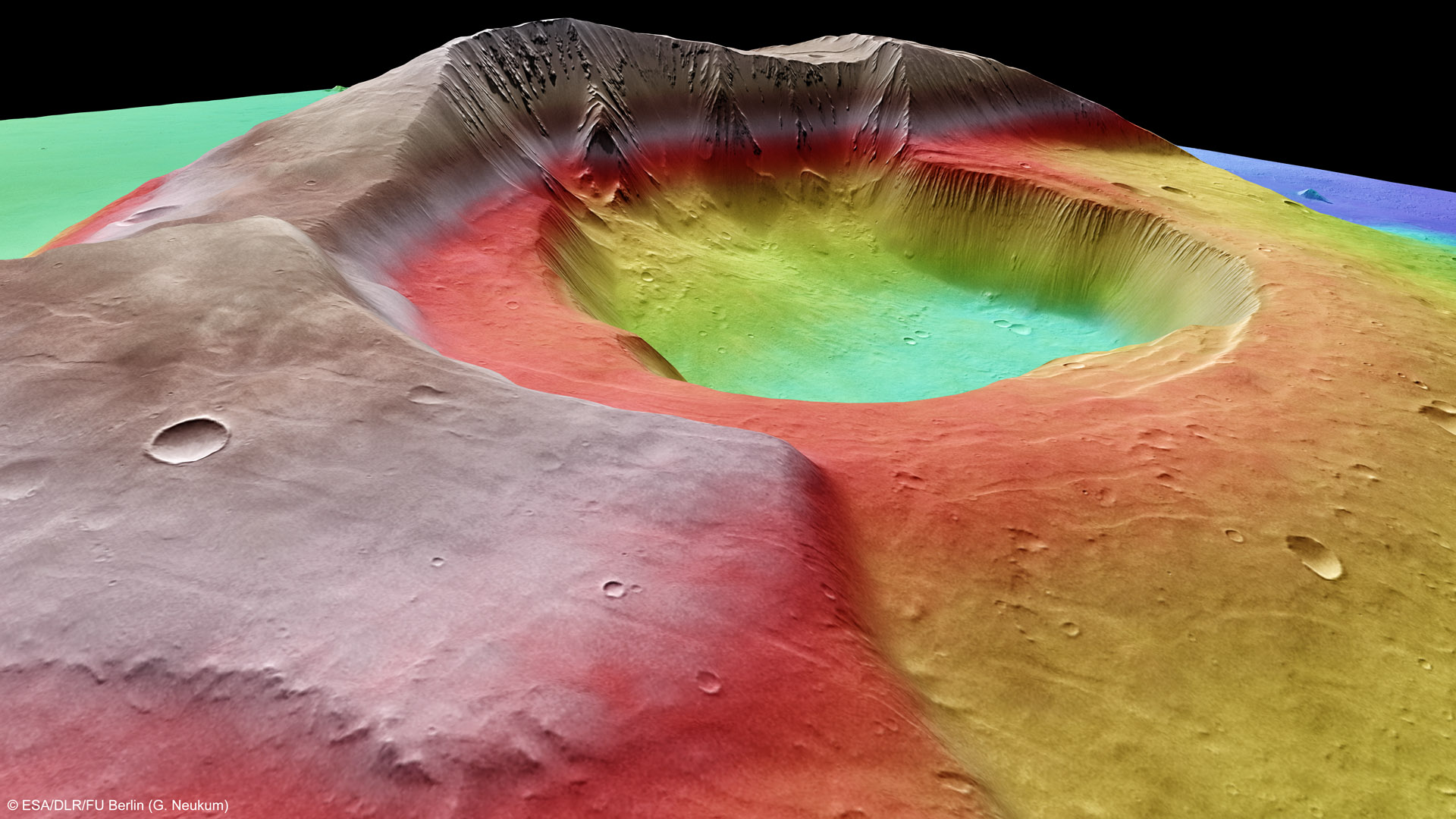
Want to get people excited about space exploration?  Continue to use D&D-style names like Tharsis Tholus for geological features on Mars and every young man in the world will want to visit.