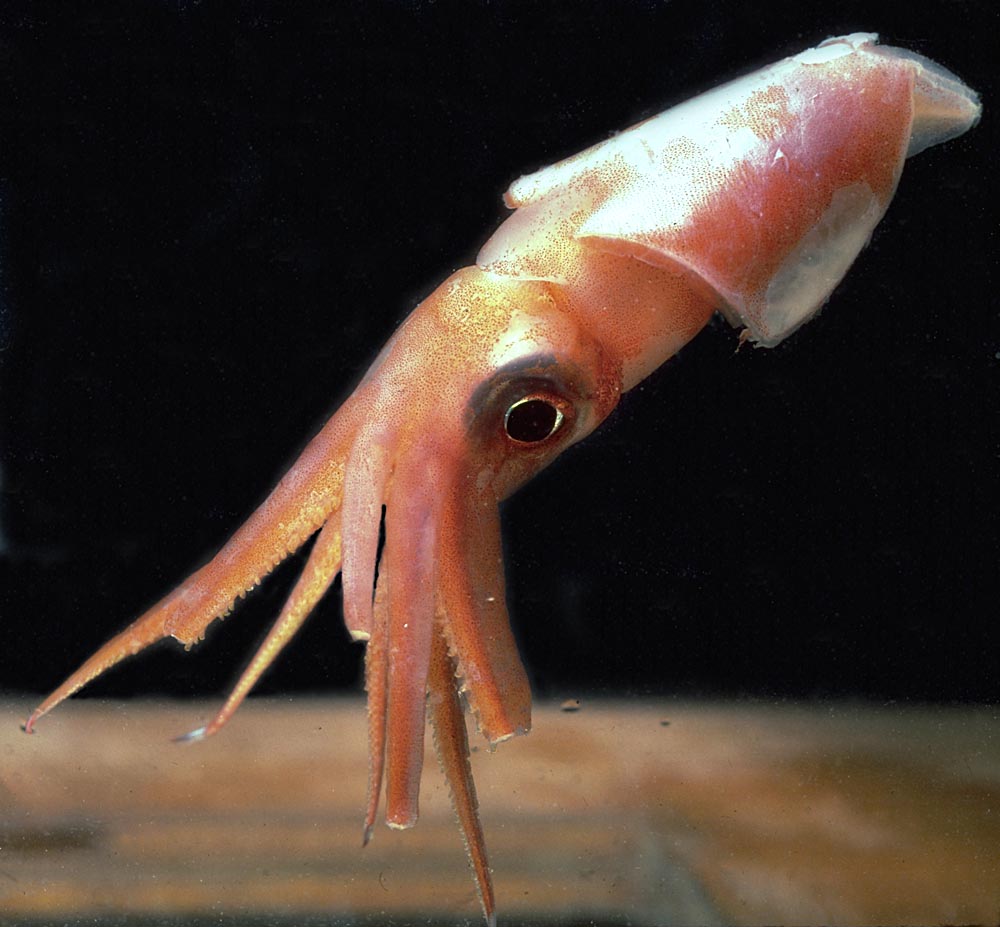






© 1996 Richard E. Young Octopoteuthis is a curious animal. As the name suggests, it's a squid that looks like an octopus. Babies have eight arms and two tentacles, but they lose the tentacles as they grow up--becoming the only adult squid with eight appendages.

They have other intriguing features as well. We tend to think of squid as relatively sociable animals traveling in schools or shoals, but Octopoteuthis lives a solitary life in the deep sea, rarely coming across another member of the same species.

Researchers at Ecole Polytechnique Fédérale de Lausanne are hoping the Higgs boson is found at the LHC for a big reason - they think it can explain universal expansion and even reveal the possible existence of another closely related particle.

The Higgs boson would help explain why the majority of elementary particles possess mass. but a group of EPFL physicists say it would also help us understand the evolution of the Universe from the moment of its birth - and it could be verified with data from the Planck satellite.

A study out tomorrow in Nature by researchers from the Institute of Healthy Ageing at the University College of London and colleagues is questioning the anti-aging effects of sirtuin – which is “just”the most important anti-aging gene of the decade - claiming that its capacity to increase longevity was nothing more than an experimental error, and showing that,once the flaws are corrected, sirtuin has no effect on lifespan.

To religious fundamentalists, atheists in science are engaged in an insidious campaign to undercut morality and replace it with God-less relativism and moral equivalence.  To militant atheists, religious people are intellectually immature, anti-science busybodies telling people how to live.

Social projection, where we believe that others agree with us, helps us validate our beliefs. Psychologists say that we tend to believe people who are similar to us in an important way, religion or lifestyle, will act as we do and even vote as we do.

And we exaggerate differences between ourselves and those who are explicitly unlike us, another form of rationalization.

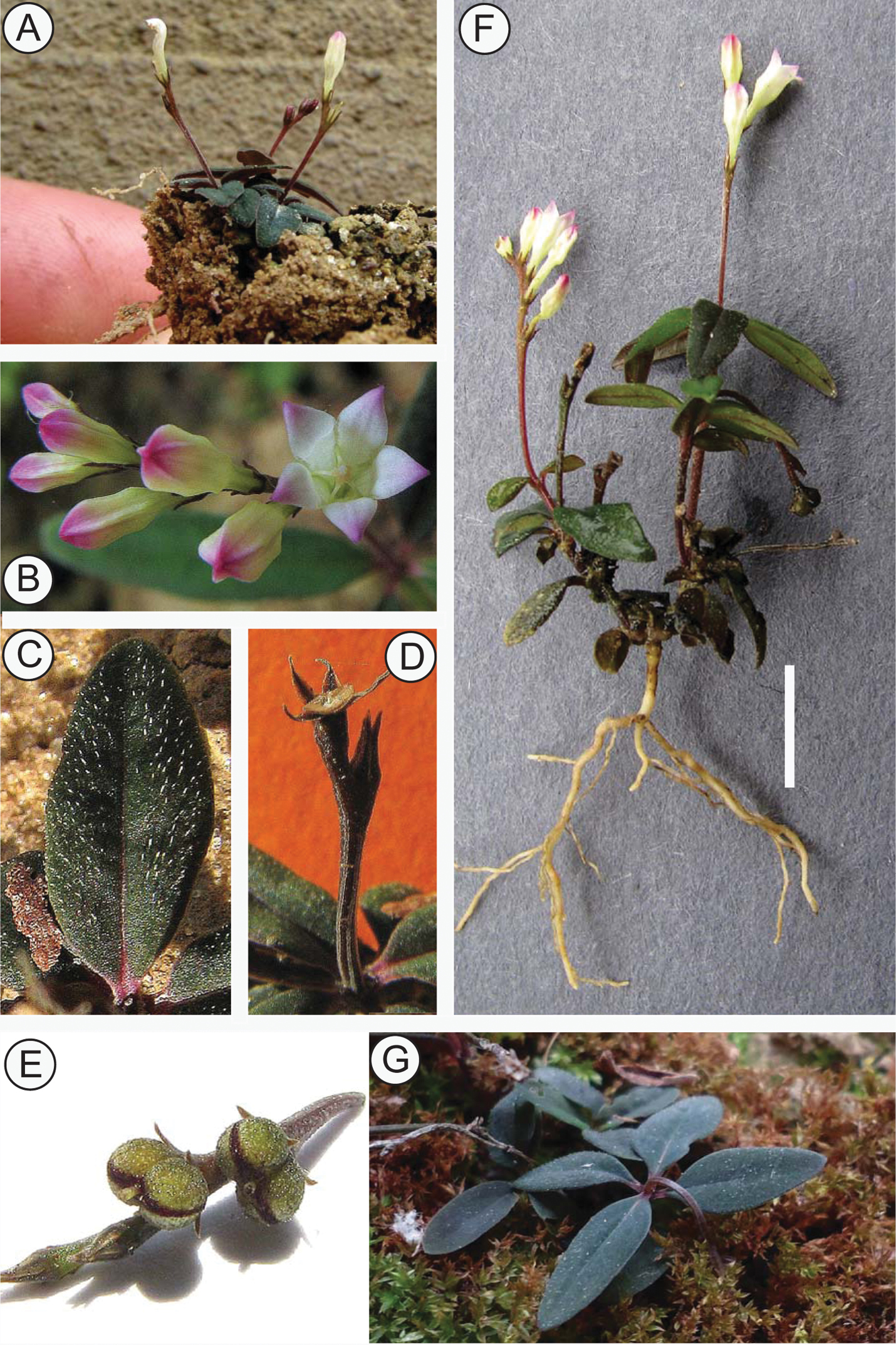
A new plant species is appropriately named Spigelia genuflexa because after fruits are formed, the fruiting branches 'bend down' and deposit  the capsules with seeds on the ground and sometimes burying them in the soft cover of moss, a phenomenon called geocarpy.

Geocarpy ensures that the seeds end up as close to the mother plant as possible, facilitating its propagation the following season. A famous example of geocarpy, a rare adaptation to growing in harsh or ephemeral environments, is the well-known peanut, which is from from the legume family and buries its fruits in the ground.

Edward Calabrese, an environmental toxicologist at University of Massachusetts Amherst,  says he has evidence that oNobel Prize winner Hermann Muller knowingly lied when he claimed in 1946 that there is no safe level of radiation exposure.

We've often defended Jean-Baptiste Lamarck.  Publishing 50 years before Darwin, he can be forgiven for not having 'the greatest idea anyone ever had' and in the last few years,  geneticists have gotten on board as well and no longer dismiss out of hand his belief that acquired traits can be passed on to offspring.

Much of the pre-Darwin thinking was teleological and that is why natural selection in evolution met so much resistance.  But science quickly won and Lamarck's theory of transformation went onto the ash heap of biological history. Yet in the last decade, we have learned that the environment can leave traces in the genomes of animals and plants, in the form of epigenetic modifications.

Cancer patients quickly find themselves learning a new language and, keen to trust in science and medicine, they sometimes don't take time to fully understand their treatment options, and the risks and benefits of each choice, because they know doctors are busy. 

A commentary in the Journal of the National Cancer Institute outlines 10 things health care professionals can do to improve the way they communicate information about treatment risks to patients and that means patients can keep these in mind when talking with their doctors.

We like to think some things are constant, like temperature, and they are as long as everyone agrees.  That does not mean they are accurate.  The metric system is a famous example of a flawed measurement that nonetheless became popular.

Temperature is based on a chemico-physical material property, not on an unchangeable fundamental constant. Some physicists would like to change that.  They call themselves  metrologists - measurement artists who want to be as precise and change the field of worldwide temperature measurement.

