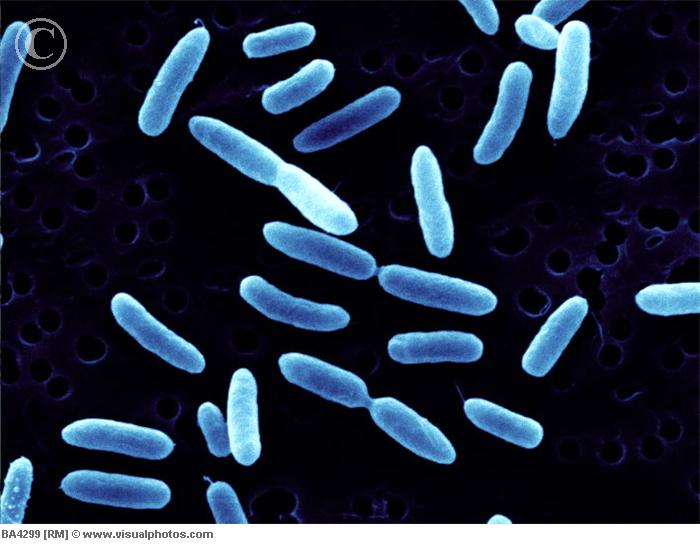


Pseudomonas aeruginosa (see figure 1) is a human pathogen that colonizes the respiratory and gastrointestinal tract, where it can cause life-threatening infections in patients with a compromised immune system, such as cancer or cystic fibrosis patients. P. aeruginosa is resistant to many antibiotics. Current treatments comprise antibiotic chemotherapy and bacteriophage therapy. However, There are some setbacks to these therapies. The chemotherapy kills many kinds of bacteria, upsetting a healthy human microbiome, and the bacteriophage therapy relies on the use of a virus, which has a limited therapeutic potential as the host can develop specific antibodies against the virus.


Webometrics faces many challenges, not the least of which is a dearth of tools capable of measuring the Web with any degree of accuracy.  Most academic and professional Webometrics analysts alike have had to rely on a mix of search engine downloads and query operators.  Yet even analysts from organizations with their own crawlers are challenged by the limitations of methodologies and technologies.

Almost only devote religious people like Obama are allowed to climb to power in the West. Germany’s chancellor Merkel had to play down that she was a physicist in order to ensure the voters trust her to be aligned with the obsessions of her “Christian Democratic Union”.

In China, scientists decide at the highest level for many years. Science bloggers dream about secular people in the most important political positions, of science having effective influence "up there". While they yearn, secular scientists occupy the most important political positions in the most important country in the world.

Émilie Du Châtelet - An Essay On Heat - 1739 - #3

This is a plain text transcription of Dissertation sur la nature et la propagation du feu - Part 2.

For introductory comments, please see Émilie du Châtelet - An Essay On Heat - 1739 - #1.

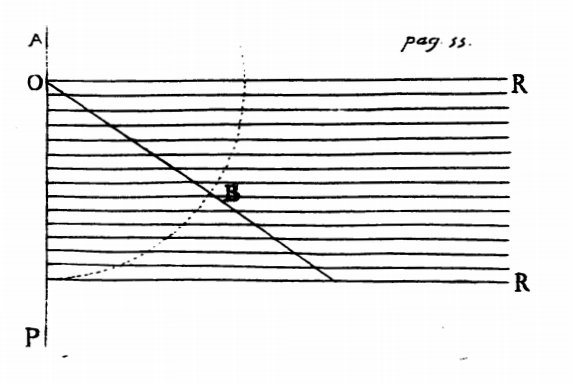
[edit - inserted image at page 55 and corrected a few minor typos.]

Transcription of part 2 follows below this page break.
...........................................................................

    -  51  -

    DU FEU

    SECONDE  PARTIE.
Émilie Du Châtelet - An Essay On Heat - 1739 - #2

This is a plain text transcription of Dissertation sur la nature et la propagation du feu.

For introductory comments, please see Émilie du Châtelet - An Essay On Heat - 1739 - #1.


Transcription of part 1 follows below this page break.
................................................................

DISSERTATION
SUR LA NATURE
ET
LA PROPAGATION
DU FEU
______________________
Ignea convexis vis, & sine pondere coeli
Emecuit, summâque locum sibi legit in arce.
Ovid.
______________________

Recently I became aware through Sullivan's post at LBRB that Autism Speaks was sponsoring the National Autism Association's national conference and that Andrew Wakefield was speaking at this conference, along with a long list of proponents of less-than-scientifically-backed treatments.

Émilie du Châtelet - An Essay On Heat - 1739 - #1


In 1739 the Paris Academy of Sciences proposed a question: what is fire?  A prize was offered for the best response. Entries were to be presented anonymously. The prize was awarded to Euler.  Voltaire, who had also entered the competition, did not know until the list of entrants was published with the prize award notification that his entry had been in competition against one from his lover.  Although Émilie du Châtelet did not win the prize, her entry was considered so remarkable that, at the request of Réaumur, the Academy decided to have it printed at its own expense.

A robot named MABEL was created in a University of Michigan lab but 'she' can run like a human, up to 6.8 miles per hour.

Unless HYDRA and SHIELD exist in secret underground lairs, MABEL is the world's fastest bipedal robot - with knees, that is.
I have written enough today about the topic of Higgs boson searches at the LHC by discussing the new ATLAS limits (see previous post), but I feel that, before going to bed, I need to point out the new results on the same topic by CMS, the competitor experiment. As you know, I work in CMS and I have to be twice as cautious when I write about the results of my own experiment, because some of my colleagues have uncovered nerves when it comes to blogs. However, the little I'll say here tonight should cause no discomfort to anybody.
Science, history and a little detective work?  Yes, please!  

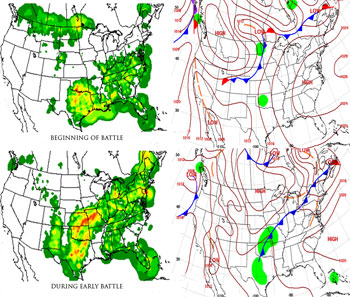
Tony Lupo, professor and department chair of atmospheric sciences at the University of Missouri, and Mike Madden, a meteorology student,  pulled together bits and pieces of global meteorological flotsam to compile a Missouri weather forecast from 150 years.

They created their weather forecast for the Battle of Carthage, which took place early in the Civil War on July 5, 1861.  Why that one?  Well, they live in Missouri.

