




The Many Worlds Wiener Sausage is a very simple model that shows how apparent non-locality in the famous Einstein-Podolsky-Rosen paradox can arise. It can be understood by advanced high school students. But we saw that although it is a many-worlds model, it is not a quantum world! Today we will make the model look like the great spaghetti monster. There are two aspects about this that I find amazing:

1) It can still be understood by high school students but is nevertheless correct quantum mechanics.

Creating sperm or egg cells in the laboratory has been tried several times in the past few years. The reasons for this range from a better understanding of the fundamentals of the reproductive process, to helping infertile couples with their child-wish. The attempts, using embryonic stem cells, however, did not yield viable germ cells.

Until now.

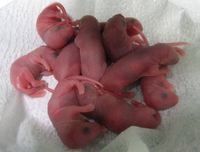
A research team at Kyoto University has succeeded in turning mouse embryonic stem cells into viable sperm precursor cells. The resulting sperm cells was subsequently used to give birth to healthy, normal cute little mice (see figure 1).


An athlete’s level of greatness is often measured by the opinions of his or her peers while they’re playing and especially when they retire.  Being recognized as one of the best by those who understand what it takes is rare.  This week, one of the world’s greatest soccer players of the last 30 years retired, yet he could walk down most streets in America without being recognized.  After 17 seasons, Paul Scholes of Manchester United played in his final tribute game last week and will become a coach at the club he’s been part of since his teens.

While not a household name in the U.S. like Messi or Ronaldo or Beckham, he has earned the respect of the greatest players of his time.
Sometimes the precautionary principle can run amok.   Anti-science people who don't accept climate science use it to prevent meaningful policy actions related to the environment while anti-science people who don't accept biology block efforts to improve food sources so crops can grow in areas where the world's poorest live, or improve yields to feed more people, and use silly labels like "Frankenfood."

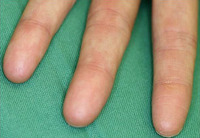
Imagine going through customs with everything in order. Passport’s okay, and all seems fine. But when your fingerprints are scanned, the customs agents are looking surprised. Apparently, you have no fingerprints. Sounds weird, right? And yet, it is exactly what happened to a Swiss woman in 2007 when she tried to enter the United States.

As it turned out, the woman had a very rare condition known as adermatoglyphia, leading to a lack of fingerprints (see figure 1), and a lower production of hand sweat than the average person. Very little is known about the condition, and so far, only four families carrying the mutation have ever been documented.


This afternoon we had the first formal meeting for product planning of the Science 2.0 television pilot.  

As you can imagine, there was talk of technical details, how the creative guys will set up the shot lists and storyboard the segments, what segments we will use, and then some of the philosophical stuff.

Like, what will make Science 2.0 a science show for the next century?

I told the agency and the producer what a fond recollection U.S. scientists of today have for shows like "Nova" and Carl Sagan's "Cosmos" - but noted that at the time, those were not regarded as stodgy, traditional ways of doing science on television, they were cutting edge.
Proofiness, slightly different than Stephen Colbert's truthiness, is basically finding statistics you want to believe to enhance your confirmation bias.  It was coined by Charles Seife, a long-time science writer who teaches journalism at New York University, because he was outraged at skewed representation on both sides of the aisle, like Al Gore for cherry-picking data about global warming and George Bush for cherry-picking data about how tax refunds would save poor people money.   He wrote a book on it called "Proofiness: The Dark Arts of Mathematical Deception" to clobber everyone he found doing it.
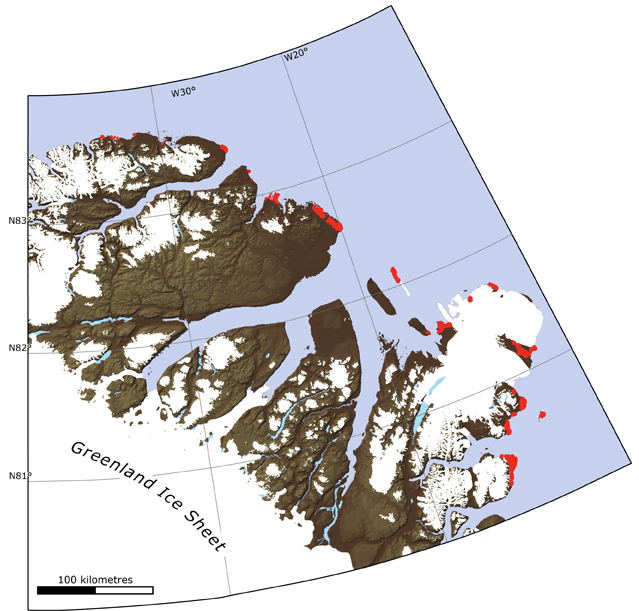
If you are worried about big changes in Arctic sea ice, you are not alone - but it is hard to know how much is worth worrying about.  If you are worried, there is some slightly good news - even if we lose half, it will not be a 'point of no return' according to a new study.

Sea ice comes and goes without leaving a record so our knowledge about variations and extent was limited before we had satellite surveillance and observations from airplanes and ships.  Not any more.  Researchers at The Centre for Geogenetics at the Natural History Museum of Denmark, University of Copenhagen say have developed a method by which it is possible to measure the variations in the ice several millennia back in time.
Psychology does not usually lend itself to live experimentation but the The American Psychological Association intends to change that perception.    They are featuring three public demonstrations of psychological science applications at their annual convention this week.

The goal: to show practical uses of psychological research and how it can be of great service to individuals and society as a whole.
As a teaching assistant for the pilot section of Bio 44Y, I spend Wednesday afternoons accompanying 10 students of field ecology to Jasper Ridge Biological Preserve. Only five miles from the main quad, we’ve battled rattlesnakes and squeezed past poison oak — but the nearest I’ve come to disaster was almost letting a wasp fly into our class van.

When we’re worried about being stung (knock on wood, I’ve so far evaded the experience), we tend to see bees and wasps as the flying enemy, rather than as pollinators, critical to the reproductive life of most of the world’s flowering plants. Of course, the value of pollination isn’t lost on farmers or beekeepers: the former pay the latter to haul hivefuls of bees from crop field to orchard every spring.

