



As Tiger Woods returns to action this weekend at the WGC-Bridgestone Invitational, mortal golfers wonder what's inside his head that makes him so much better than us. Well, chances are his brain actually has more gray matter than the average weekend duffer.

Researchers at the University of Zurich have found that expert golfers have a higher volume of the gray-colored, closely packed neuron cell bodies that are known to be involved with muscle control. The good news is that, like Tiger, golfers who start young and commit to years of practice can also grow their brains while their handicaps shrink.

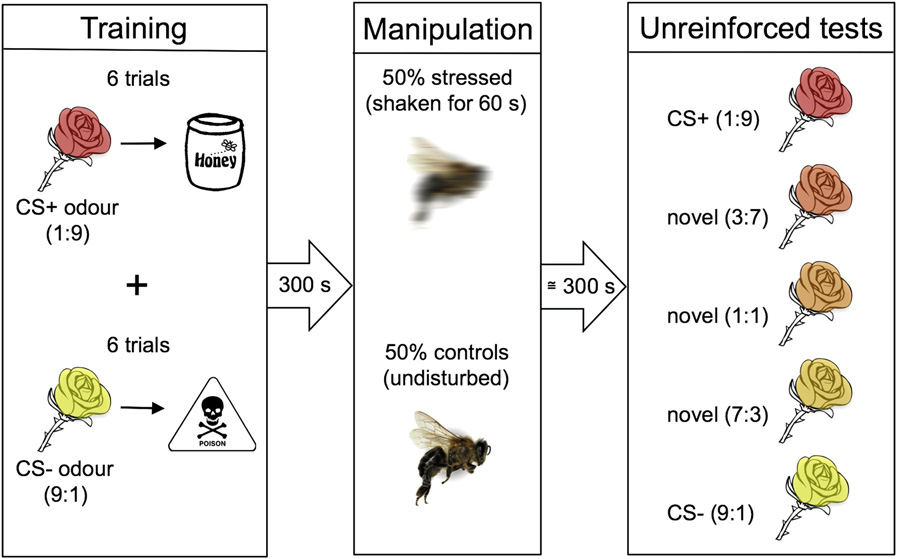
Most of us don’t have a problem attributing emotions to primates, dogs, horses and other vertebrates. But what about invertebrates? That seems less obvious. They have smaller, less complex brains, but is that enough to boldly claim they have no emotions? Of course, studying animal emotions is a precarious business. Studying human emotions has already proven difficult enough, and in animals it is bound to be a lot harder.

One way to go about it, is to take a look at so-called cognitive biases, biases in the processing of information that are typical of negative affective states. An example of this is the pessimistic bias, an increased expectation of punishment, greater attention to potential threats and a tendency to interpret ambiguous stimuli as if they were threats.

The quality of TED talks is in free fall and has gotten only worse since the last time I mentioned this. So it is worth to point to a rare good presentation whenever one comes along.


Geoffrey West’s The Surprising Math Of Cities And Corporations shows nicely how other than biological systems, namely cities and corporations, undergo similar evolutionary shaping by natural selection, even though they do not necessarily die or go through generations. Therefore, they can be described - and their development predicted - with simple scaling laws, which physicists like yours truly always find endearing (since that is all we ever really do).

Squids, as I may have mentioned before, are the snacks of the sea. Everyone who can eat them, does. Whales. Sharks. Birds. Other squids. They're swimming tubes of protein with no scales or bones to get in the way, and they're highly abundant. If you're any kind of marine predator, squids are the perfect prey.

But one has to wonder: if squids fuel everything from albacore to albatross, what fuels the squids? Sure, they'll eat each other, but the ouroboros model doesn't really work that well for ecology.


With several articles recently appearing that were based on various aspects of evolutionary psychology, I thought it would be worth taking a closer look.

One of the ironies in examining evolutionary psychology is how many stories we can make up for ourselves without a shred of conclusive evidence, beyond simply sounding plausible.  This doesn't mean that they may not be true, but they certainly can't be considered scientific.  I thought it would be interesting to examine several points regarding evolutionary psychology before going further:
It is not an area of study, like vision, reasoning, or social behavior. It is a way of thinking about psychology that can be applied to any topic within it. (1)
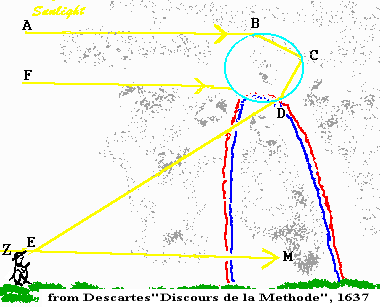
My wife and I once saw a rainbow and we discussed how it happened. She listened somewhat patiently for the first few sentences and then told me I was spoiling the magic of the rainbow, like it was somehow less romantic if she knew how it happened.(1)

Men, you are with me on this; she has a man who can make a rainbow for her any time she wants - and will. That's a higher order of romantic, I think you will agree. Plus, I have to defend all rainbow-making men and note that because my rainbow is a special distribution of colors whose reference point is her eyes, no one else will ever see it. Is it literally for her eyes only.
A new non-deformed energy storage phase change material (PCM) can retain and release heat according to specific temperature requirements - a breakthrough that might make a significant difference to the cost of heating and cooling buildings.

If, for example, the required optimum temperature in a room is 22°C, the material can be fixed so that it starts absorbing any excess heat above that temperature.  The heat-regulating material looks like a circular tablet with the circumference of a large coin in the laboratory and can be manufactured so small that it can be sprayed as an unobtrusive microscopic film on surfaces and could be applied anywhere, from walls and roofs to wallpaper.

The future of networking may mean streaming high-definition movies at blazing fast speeds and the routers are the lights in the room.

Scientists at the Fraunhofer Institute for Telecommunications, Heinrich Hertz Institute HHI in Berlin, Germany, have developed a new transfer technology for video data and were able to transfer data at a rate of 100 megabits per second (Mbit/s), without any losses, using LEDs in the ceiling that light up more than ten square meters (90 square feet). 

"This means that we transferred four videos in HD quality to four different laptops at the same time," says Dr. Anagnostis Paraskevopoulos from the HHI.

Where are we humans going, as a species? If science fiction is any guide, we will genetically evolve like in X-Men, become genetically engineered as in Gattaca, or become cybernetically enhanced like General Grievous in Star Wars.

All of these may well be part of the story of our future, but I'm not holding my breath. The first of these - natural selection - is impracticably slow, and there's a plausible case to be made that natural selection has all but stopped acting on us.
What do you get when you mix Mad Men styling, IKEA how-to, and NASA high tech?  In an incredibly terse 1 minute and 28 seconds, with no sound needed, NASA asks "So, You Want to Build a Satellite?" and explains why rocket science is hard.  Seriously, this is the sort of video that you don't need sound, and it features no talking heads or chatty scientists.  It's an elegant, straightforward wake-up call about the intrinsic difficulties that space exploration brings.

