


In a paper recently published in Cortex, Jan Lonnemann (RWTH Aachen University, Germany) and colleagues report that many children at the age of 8-9 years seem to represent numbers spatially. Interestingly, boys using this kind of representation tended to have better calculation abilities, while girls who represent numbers spatially tended to show poorer calculation abilities.

The authors assume that these differences may be due to gender-specific thinking styles: for boys, who may prefer visual-spatial thinking styles, it seems to be helpful to represent numbers spatially when being confronted with calculation problems, whereas for girls preferring verbal thinking styles it may be even detrimental.

Evidence for a connection between number and space processing comes from behavioral, patient, and brain imaging data, but only a few studies have addressed this issue in children.

STAMFORD, Connecticut, May 10 /PRNewswire/ --

- Organization Continues with Efforts to Gain Clearance for Airlift of Medical Supplies

An AmeriCares emergency relief expert arrived in Myanmar earlier today to assess the crisis situation and continue with efforts to obtain clearance for the organization's airlift of 15 tons of essential medicines and medical supplies to Yangon.

"AmeriCares is working closely with the World Health Organization to help coordinate relief efforts and ensure aid is distributed to the delta regions most affected by Cyclone Nargis. Our relief expert on the ground has extensive experience based on our response to the 2004 tsunami disaster," said Curt Welling, president and chief executive officer of AmeriCares.

One consistent feature of human progress throughout history has been that science will come up with creative answers to current problems. When ancient people living in small tribes were running out of game to hunt, some leaders thought rationing and mitigation were the answers. They would have created a culture of despair. Domesticated livestock was the answer instead and then efficient agriculture and even terraforming.

Based on that confidence, a lot of people, me included, assume that global warming can be solved by some 'future technology' as yet undeveloped. Killing our economy by 25% now (yes, imagine it 25% worse) to stave off a .5 degree warming problem in 50 years is positively un-scientific.

But hope is not how things get done. People point to Y2K and say 'it was all hype, nothing happened' but they forget that's because we spent billions prior to that fixing problems. Likewise, acid rain was a huge concern in the 1980s and is not now because problems were addressed squarely.

Capturing and storing carbon dioxide is a solution the anti-global warming contingent (read, political pundits and bloggers using science to attack Democrats) say can keep us in an SUV Promised Land today. Then future technology can deal with it permanently.

To those people (in this case, Republicans) I say, 'Pretend a Democrat is saying Social Security will take care of itself in the future. Would you be skeptical?' Well, that's how I feel when they insist nothing needs to change and it will all be okay.

With the Large Hadron Collider gearing up for its first test run this summer, physicists hope to discover the last missing particle predicted by the Electroweak theory, the Higgs boson.  Wrapped up in its own big theory, the Higgs Mechanism or Higgs Field, it supposedly confers mass or absolute weight on some paricles or collections of them like atoms and planets.  The Higgs Field is a must, otherwise the Electroweak theory falls flat, insisting that all particles are massless, that matter doesn't exist.

The LHC has been sold to politicians and the public as the experiment that will find the Higgs, though in fact the LHC, no ordinary atom smasher, aims to produce it with colossal energies applied to protons, lead ions later, collided together in a mini Big Bang.  The disaster scenarios also start here.

Einstein and Spacetime, courtesy NASA 2005 

BANGKOK, Thailand, May 10 /PRNewswire/ --

International Rescue Committee emergency team members have arrived in Myanmar and four additional teams are on standby for deployment to the region as the IRC prepares for a possible outbreak of water-borne diseases in cyclone-ravaged villages.

"Nearly all homes were destroyed in the villages I assessed today and the survivors have virtually no access to clean drinking water," says the IRC's emergency coordinator, Gordon Bacon, speaking from Yangon. "With each passing day, we come closer to a massive health disaster and a second wave of deaths that is potentially larger than the first."

LONDON, May 9 /PRNewswire/ --

The 13 members of the Organization of Petroleum Exporting Countries (OPEC) pumped an average 31.87 million barrels per day (b/d) of crude oil in April, a 350,000 b/d decrease from March, according to a Platts (http://www.platts.com/) survey of OPEC and oil industry officials released Friday. The sharp drop was largely the result of steep output losses in Nigeria.

Excluding Iraq, the 12 members which participate in output agreements pumped an average 29.49 million b/d, 360,000 b/d down from an estimated 29.85 million b/d in March.

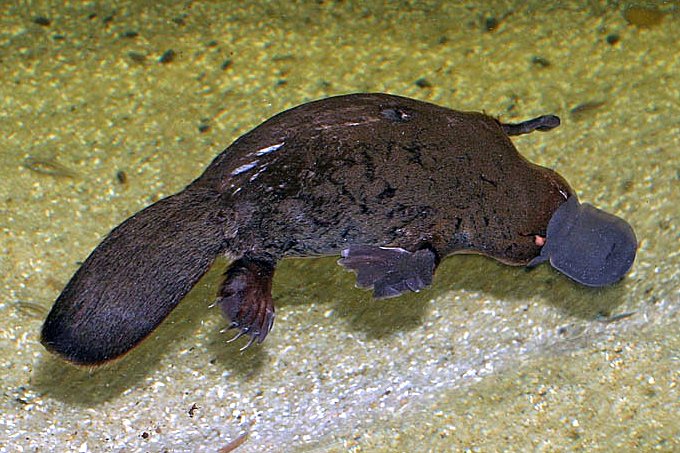
I haven't contributed a single thing to the platypus genome project, but since my desk sits one floor above where people and robots broke the platypus DNA into chunks, cloned those chunks into bacteria, sequenced the pieces of DNA, and used massive amounts of computing power to assemble the stretches of sequence into a complete genomic whole, I'm going to consider myself somewhat of an authority on the subject and tell you what's wrong with other people's ideas about the platypus.

The genome sequence of the platypus was published Thursday in Nature, and from the press headlines, you could be excused for thinking that genomics has in fact confirmed that the platypus is a freak of nature: part bird, part reptile, and part mammal. The animal certainly looks like it - the platypus has the webbed feet and bill of a duck, and venomous spines and rubbery eggs that remind us of reptiles, but it has fur and feeds its young with milk, so it must be a mammal. The confusing press headlines might even lead you to believe that we sequenced the platypus genome just to figure out what this thing is, when the truth is, as we'll see below, that the genome sequence has essentially confirmed what evolutionary biologists have already deduced about the position of the platypus on the tree of life.

Is the platypus part bird, part reptile part mammal, an amalgam of very different groups of animals? Is it a primitive mammal that resembles the early ancestors of all mammals? Can we figure out just what this creature is by gazing at its genome?


Photo Credit: Stefan Kraft, courtesy of the Wikipedia Commons

President Bush has a bill on his desk, the Genetic Information Nondiscrimination Act (GINA), which will prohibit discrimination on the basis of genetic information with respect to health insurance and employment. He is expected to sign the bill, but is science – and the people – ready?

LONDON, May 9 /PRNewswire/ -- Unite, Scotland's largest trade union has condemned management at Freescale Semiconductors after they announced a buyer could not be found to continue production at the East Kilbride plant.

Up to 900 skilled jobs now look under severe threat at the plant which produces embedded chips to provide intelligence for products ranging from car engines to mobile phones. It is also further bad news for the local economy following the recent announcement by JVC that they will move manufacturing operations to Poland at the cost of another 900 skilled posts.

EVANSTON, Illinois, May 9 /PRNewswire/ --

- Shelterbox among the first international relief groups to reach stricken Myanmar

As major relief agencies waited for access to cyclone ravaged Myanmar, among the first charities actually to reach the affected area was Shelterbox, a grassroots disaster relief organization supported by Rotary clubs around the world.


