




Socrates (470-399 BC) may have lived centuries ago but the methods connected with him never go out of date.

Socratic methods(1) have developed independently in various countries. They all describe similar methodological steps - an opening question is answered by all participants and followed by cooperative, critical analysis. Finally, the new ideas are connected to the everyday life experience of the participants.

This formal structure helps participants to try new, bold ideas that they might otherwise not have tested. By cooperating when examining the ideas they also seem to learn a way to address problems on their own without teacher intervention.

The majority of people prefer to start counting on their left hand, regardless of whether they are left- or right-handed, found a recent set of experiments.

In a subsequent odd-even task, the left-starters had more consistent spatial-numerical associations than the right-starters.

Simple numerical tasks, such as classifying digits as odd or even by pressing left or right buttons reveal that we like to associate small numbers with left space.

Where does this preference come from?


Credit: Storyblocks

Designer labels aren't just cool to pretentious New York women - they're also the dream of nuclear physicists.

Designer isotopes, the relatively new power scientists have to make specific rare isotopes to solve scientific problems and open doors to new technologies, will compete with nanotechnology for big breakthroughs, according to Bradley Sherrill, a University Distinguished Professor of physics and associate director for research at the National Superconducting Cyclotron Laboratory at Michigan State University.

Isotopes are the different versions of an element. Their nuclei have different numbers of neutrons, and thus give them different properties. Rare isotopes don’t always exist in nature – they must be coaxed out with high-energy collisions created by special machines, like those in MSU’s Coupled Cyclotron facility. As technology advances, newer equipment is needed.

PHILADELPHIA, May 9 /PRNewswire/ --

The worst cyclone in the history of Myanmar, the tropical Cyclone Nargis, attacked the low lying delta area of Myanmar, including its capital Yangon on Friday, May 2, 2008.

It is believed that more than 100,000 are dead and the death toll is spiraling up, minute by minute. In one small town alone, Bogalay, at least 10,000 are claimed dead. Forty one thousand people are missing. The population at risk in the disaster area is about 24 million.

Since there is no water and electricity in many areas, communicable diseases threaten, including typhoid, dysentery, cholera, Dengue hemorrhagic fever and malaria.

BALTIMORE, May 9 /PRNewswire/ --

Lutheran World Relief is supplying desperately needed emergency aid to Myanmar (Burma) in the wake of the devastating cyclone that struck there over the weekend. Lutheran World Relief is responding through our international partners in the global aid alliance Action by Churches Together (ACT) International.

Official reports indicate that over 60,000 people are dead or missing, with as many as 1 million homeless. These numbers are likely to rise. A United States diplomat in the area has estimated that as many as 100,000 may have been killed.

LONDON, May 9 /PRNewswire/ --

A study published in the May 2008 issue of the peer-reviewed Journal of Urology demonstrates that the prostate cancer gene 3 (PCA3) can be used to detect and stratify stage and grade of prostate cancer.(1) Following recent calls for a more accurate test for the detection of prostate cancer,(2)(3) the results of this study indicate the PROGENSA(TM) PCA3 gene-based urine test may be clinically useful in identifying men with low-grade or low-volume cancer for whom active surveillance would be more appropriate than aggressive treatment, and also shows the test as a more reliable method than existing diagnostic tools such as serum-PSA.(1)

BOSTON and STUTTGART, Germany, May 8 /PRNewswire/ --

- Acquisition expands portfolio with cutting edge Mobiola(R) products and powers revolutionary mobile video broadcasting and social networking service.

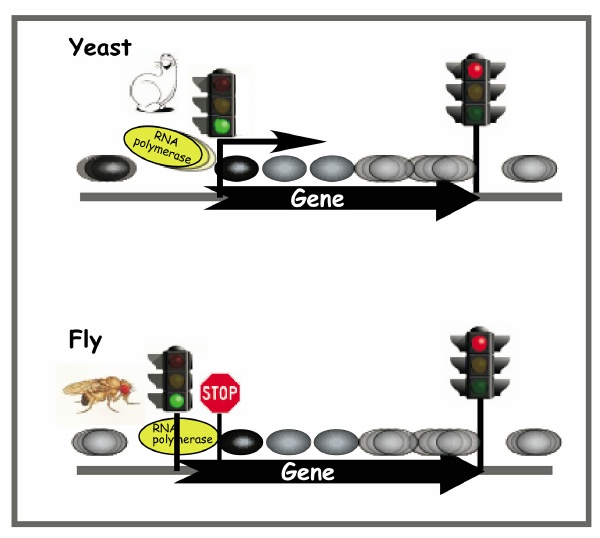
A team of scientists has provided, for the first time, a detailed map of how the building blocks of chromosomes, the cellular structures that contain genes, are organized in the fruit fly Drosophila melanogaster. The work identifies a critical stop sign for transcription, the first step in gene expression, and has implications for understanding how the AIDS virus regulates its genes.

The scientists found that nucleosomes--chromosomal building blocks made up of proteins around which DNA is coiled--occur at precise locations along genes that are actively undergoing transcription. They also showed that RNA polymerase--the enzyme that reads genes as the first step in making proteins--is stopped at the first nucleosome, where it remains idle until it is directed to continue moving forward.

LJUBLJANA, Slovenia, May 8 /PRNewswire/ --

- With Photo

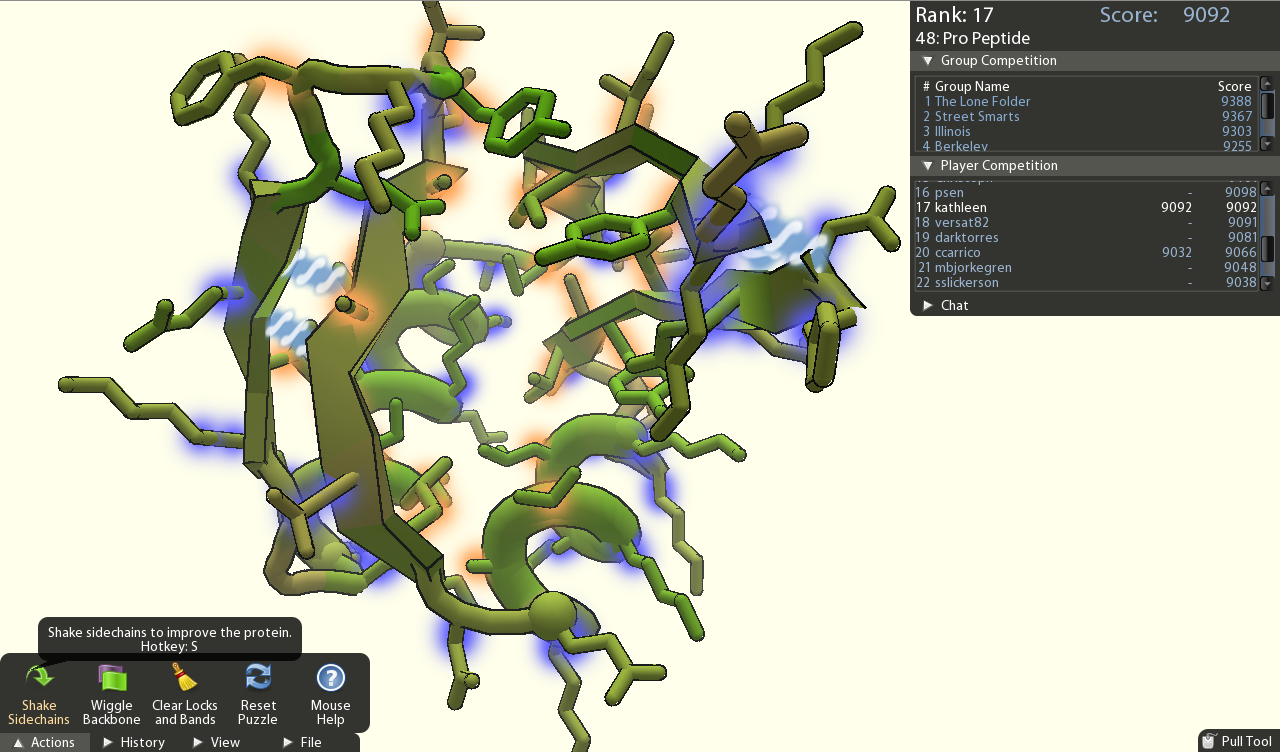
Like video games? Want to also solve puzzles for science?

A new game, named Foldit, turns protein folding into a competitive sport. Introductory levels teach the rules, which are the same laws of physics by which protein strands curl and twist into three-dimensional shapes – key for biological mysteries ranging from Alzheimer's to vaccines.

After about 20 minutes of training, people feel like they're playing a video game but are actually mouse-clicking in the name of medical science.

