




A new type of telescope made by stitching together telephoto lenses recently discovered seven celestial surprises while probing a nearby spiral galaxy - previously undetected dwarf galaxies.
 
Pieter van Dokkum, chair of Yale's astronomy department, designed the robotic telescope with University of Toronto astronomer Roberto Abraham. Their Dragonfly Telephoto Array uses eight telephoto lenses with special coatings that suppress internally scattered light. This makes the telescope uniquely adept at detecting the very diffuse, low surface brightness of the newly discovered galaxies.

Washington, DC (July 10, 2014) — Using an expensive agent to prevent blood clots in kidney failure patients' dialysis catheters may turn out to be less costly overall due to its ability to reduce medical complications, according to a study appearing in an upcoming issue of the Journal of the American Society of Nephrology (JASN).

(Boston) – Emergency Medical Service (EMS) responders felt better prepared to respond to an active shooter incident after receiving focused tactical training according to a new study in the journal Prehospital and Disaster Medicine. This is the first study to specifically examine the EMS provider comfort level with respect to entering a scene where a shooter has not yet been neutralized or working with law enforcement personnel during that response.

CHICAGO – After a concussion, teens who are sensitive to light or noise may be more likely to also have emotional symptoms such as anxiety, according to a study released today that will be presented at The Sports Concussion Conference in Chicago, July 11 to 13, 2014, hosted by the American Academy of Neurology, the world's leading authority on diagnosing and managing sports concussion. The conference will feature the latest scientific advances in diagnosing and treating sports concussion from leading experts in the field.

The symptoms after a concussion can vary widely from person to person. Symptoms can include physical, emotional and cognitive difficulties.


Not the JVC peer review ring, an actual
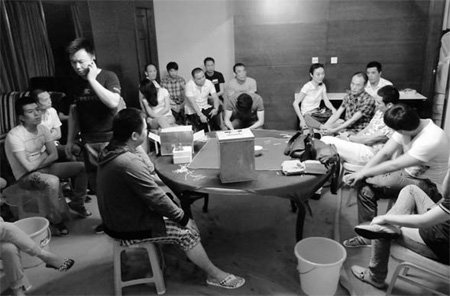
gambling ring. Credit: China Daily

It's something of a mild joke in science circles - you can figure out who is peer-reviewing your paper by looking for the common author in the citations you 'missed' in your submission.

It was only a matter of time before peer review cabals became an actual strategy somewhere.

Higher levels of stress, hostility and depressive symptoms are associated with significantly increased risk of stroke or transient ischemic attack (TIA) in middle-age and older adults, according to new research in the American Heart Association journal Stroke.

A TIA is a stroke caused by a temporary blockage of blood flow to the brain.

Researchers investigated how psychological factors might influence risk for chronic disease, using data from the Multi-Ethnic Study of Atherosclerosis (MESA), an ongoing study on cardiovascular disease risk factors in participants living in six U.S. cities.

The child known as the "Mississippi baby", an infant cured of HIV in a case study published in The New England Journal of Medicine last fall, now has detectable levels of HIV after more than two years without taking antiretroviral therapy and without evidence of virus, according to the pediatric HIV specialist and researchers involved in the case.  

Doctors cringe at the idea that patients may come in with specific information they got from the Internet; an athlete may do something good and the Wikipedia entry will say they are the greatest American since Abe Lincoln, while the entry for Science 2.0 says it was invented by a Wired writer in 2012.

But Wikipedia is absolutely enlightened compared to the misinformation that goes around on Twitter and Facebook. Every day some new graphic or claim about health and politics is invented and shared without any fact-checking of any kind. 

But people like that. They last thing they want is information gate-keepers from the government. The good outweighs the bad. 

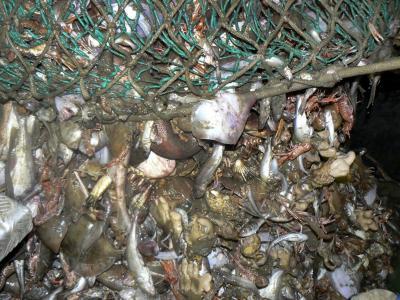
Marine biologists at Plymouth University and the activist group WorldFish conducted analyses of catches over the past 90 years and found significant evidence of the practice of 'fishing down the food web' - removal of many top predators from the sea that has left fishermen 'scraping the barrel' for increasing amounts of shellfish.

Sharks, rays, cod, haddock and many other species at the head of the food chain are at historic lows with many removed from the area completely, they say.

The report used catch statistics from the International Council for the Exploration of the Seas to establish a 'mean trophic level' for catches – an average for how far up the food chain the fish are located.

One possible future in the therapy of children with cognitive and motor-skill disabilities could involve the popular Finnish game "Angry Birds" - and a robot.

Georgia Institute of Technology recently paired a small humanoid robot with an Android tablet and then asked kids to teach the robot how to play the game, dragging their finger on the tablet to whiz the bird across the screen.

The robot watches what happens and records "snapshots" in its memory. It notices where fingers start and stop, and how the objects on the screen move according to each other, while constantly keeping an eye on the score to check for signs of success.

