





There's a reason scare journalism is so popular - people respond to it.

If you ask most people why they should use sunscreen, they will tell you it prevents skin cancer, though humanity survived forever without it. And they can't tell you what difference it's making for their particular biology. They don't know about the statistical likelihood of developing the disease, they just know they don't want to get skin cancer. You see the same behavior about organic food, people are educated by advertising rather than evidence. 40 years ago people went to the beach and put on suntan oil to get darker faster.

It's commonly believed that plant growth can be influenced by sound and that plants respond to wind and touch.

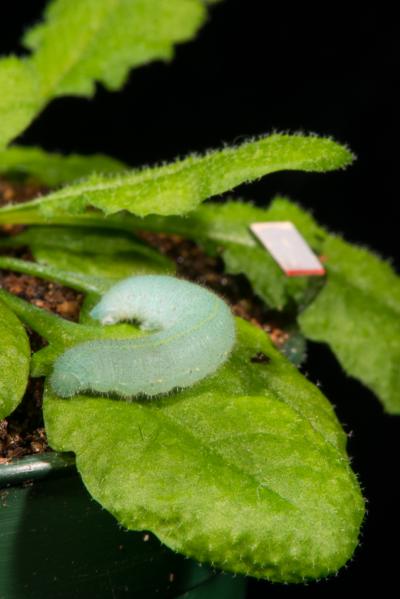
Researchers at the University of Missouri took it a step farther than playing classical music for  ivy. They conducted a chemical and audio analysis and determined that plants respond to the sounds that caterpillars make when eating plants and that the plants respond with more defenses.

Facebook is under fire again, this time not over privacy, but for finding that a news feed can affect users’ subsequent posts (and presumably, emotions).  Unfortunately, the indignant outrage threatens to harm the public more than Facebook’s original study.  Facebook, like every company ever, will continue to experiment to optimize its service.  The only thing this backlash will teach it is not to publish its findings, and that will be a huge loss to social science.

There can't be many rich fat people because poor physical health and financial health are driven by the same underlying psychological factors, according to Lamar Pierce, PhD, associate professor of strategy at Washington University in St. Louis, and PhD-candidate Timothy Gubler.

Of course, the argument is academic. Galileo once declared that, despite what sailors and the natural world knows, tides only happened once per day and the moon had no effect. He clearly needed to get out of the library. We know that the moon impacts the tides and we know that plenty of poor people are in fine physical health, so how did they come to such an odd bit of causalation?

As you read this, NASA's New Horizons is heading to Pluto. After the marathon probe zooms past Pluto in July of next year, it will travel across the Kuiper Belt, that vast rim of primitive ice bodies left over from the birth of our solar system 4.6 billion years ago.  

What next? It is anticipated that NASA will redirect the to a Kuiper Belt object (KBO) and photograph it up close.

That's where Hubble comes in. Before New Horizons arrives, Hubble is looking for the perfect target to be our first up-close look at something inside the Kuiper Belt. It's already found two, proof of concept that Hubble can go forward with a deeper KBO search, covering an area of sky roughly the angular size of the full Moon.

The United States of America has the best medical treatment in the world, but like most things with quality it is not cheap. Advocacy groups like the Commonwealth Fund focus on high average cost in their cultural efforts to nationalize the health care system, but they rarely cover the real reason health care coverage is high - too much is included and hospitals and doctors have a defensive medicine culture due to a hyperactive malpractice system.

If you don't cover every possible test, and something goes wrong, you will get sued. And now, with greater government involvement, even more doctors will be trained in a 'teach to the protocol' environment and run down a checklist of things they know are not relevant.

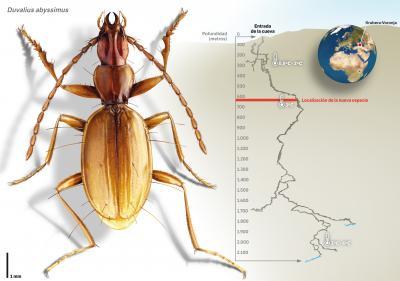
Cave beetles are one of the most iconic species found in subterranean habitats. They were historically the first living organisms described by science that are adapted to the conditions of hypogean - subterranean - life.

Now, the unusual habitat of the Krubera cave, 2,140 meters deep. in the Western Caucasus has revealed a new species of beetle, named Duvalius abyssimus. Ana Sofía Reboleira, researcher from the Universities of Aveiro and La Laguna, and Vicente M. Ortuño, from the University of Alcalá, named it in Zootaxa

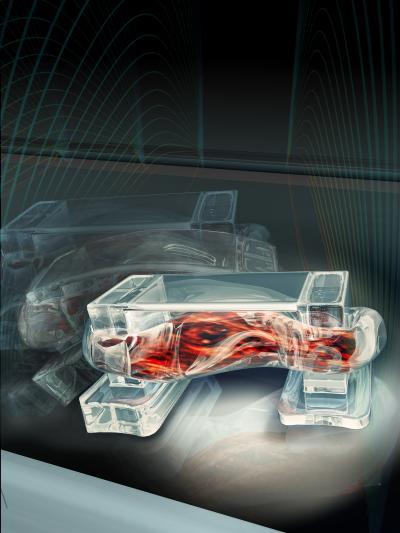
Engineers at the University of Illinois at Urbana-Champaign have demonstrated a class of walking "bio-bots" powered by muscle cells and controlled with electrical pulses, giving researchers unprecedented command over their function. 

The new bio-bots are powered by a strip of skeletal muscle cells that can be triggered by an electric pulse. This gives the researchers a simple way to control the bio-bots and opens the possibilities for other forward design principles, so engineers can customize bio-bots for specific applications.

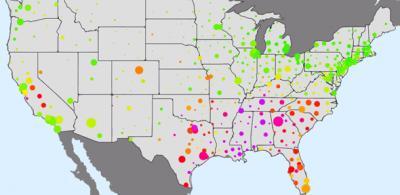
The H1N1 2009 pandemic influenza virus, known informally as 'swine flu', has remained a hot topic in science and culture. The science and medical community, including former FDA deputy commissioner Dr. Scott Gottlieb, criticized the Obama admiinistration for not allowing multi-dose vials of vaccines because they contained thimerosal, which had been one of the reasons during the 2008 campaign season that Senator Obama hinted he believed vaccines caused autism. The anti-immigration contingent blamed international air travel.

Can addiction be predicted? That's always been the goal and conjecture has focused on everything from family to environment. But there are just as many fails as wins. A child who grew up in a house with smokers is only correlated to smoking if they felt like their parents were positive role models, for example, so inheritance claims are spotty.

