


We all know how fire works, the same way we know how gravity works. But, like gravity, there is a lot we don't know about combustion. 

There are many reasons to delve into its secrets. For modern culture, combustion insight could lead to more efficient fuel use and that means less pollution. Today, gasoline has amazing energy density and that makes it difficult to replace so while we research something better, more efficient combustion would mean less waste.

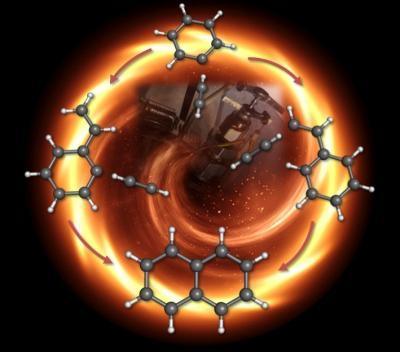
Researchers at the Department of Energy's Lawrence Berkeley National Lab (LBNL) and the University of Hawaii have uncovered the first step in the process that transforms gas-phase molecules into solid particles like soot and other carbon-based compounds.

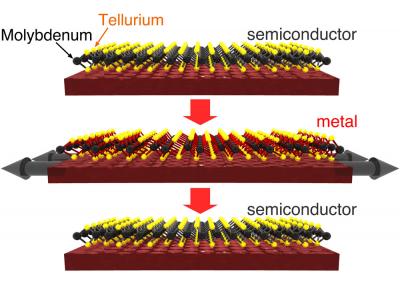
Stanford researchers envision a crystal that can form a monolayer three atoms thick. Their computer simulations show that this crystal, molybdenum ditelluride, can act like a switch: its crystal lattice can be mechanically pulled and pushed, back and forth, between two different atomic structures -- one that conducts electricity well, the other that does not. 

The switchable material is formed when one atomic layer of molybdenum atoms gets sandwiched between two atomic layers of tellurium atoms. Molybdenum and tellurium are elements that are currently used as additives for making alloys, such as steel. Tellurium is also a component of many modern solar cells.

We all have some idea how solar panels work by now; a photovoltaic cell gets bombarded by photons from the sun, which knocks loose electrons that flow as electricity, hopefully while wasting as little energy in the form of heat as possible.

Beyond that, it's a topic of research in order to try and create panels that are less damaging to the environment while hoping to protect the environment.

Oddly, that might mean plastic. 

The dominant hypothesis for the reason that northern Europeans developed light skin is that they needed to absorb more ultraviolet (UV) light to make more vitamin D, which is vital for healthy bones and immune function.

Not so, says a U.C. San Francisco dermatologist.  Peter Elias, MD, and colleagues write in Evolutionary Biology that changes in the skin's function as a barrier to the elements made a greater contribution than alterations in skin pigment in the ability of northern Europeans to make vitamin D. They write that genetic mutations compromising the skin's ability to serve as a barrier allowed fair-skinned Northern Europeans to populate latitudes where too little ultraviolet B (UVB) light for vitamin D production penetrates the atmosphere.

Though the central coast of California is some of the best farmland in the world, organic farmers who don't want to use modern science have a difficult time producing crops for their $35 billion and growing in corporate customers.

Yet science can help there also. Cover crops can provide weed and erosion control so scientifically determining the best method for establishing a uniform and dense cover crop stand as soon as possible after planting is a critical first step.

A child's illness and hospitalization is stressful for children and their parents and also clinicians. 

20 years ago, the Four Habits Model of Highly Effective Clinicians, a core set of communication skills developed to help physicians communicate with patients, was co-created by Regenstrief Institute sociologist Richard Frankel, Ph.D. A new study reports that the Four Habits Model can successfully prepare inexperienced nurses for emotionally difficult conversations with parents of pediatric patients. 

If you own an electric car, you spend a lot of time thinking about where you will recharge it - and how long it will take. In Silicon Valley, where electric cars are the newest fad, charge rage is leading to lost productivity due to hostile emails about someone being hooked up to a parking lot charger for too long. Being stuck on 880 is bad enough without being stranded too.

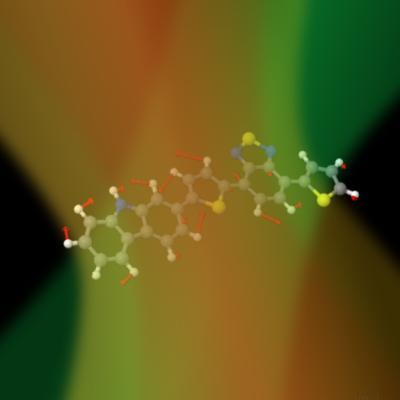
Chemists say they have synthesized a new material that could show the way forward to lithium-sulfur batteries and that could mean actually driving somewhere meaningful.

When it comes to urine, it's all relative. We can't prove Sir Isaac Newton was thinking about how animals urinate when he was developing his laws of gravity but he can't prove he wasn't either. What we can prove is that they are connected – by the urethra, to be specific.

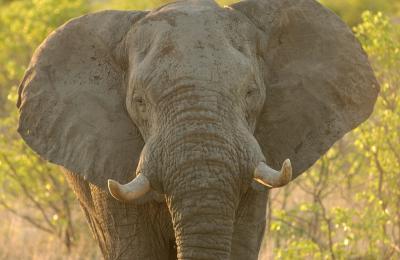
A new study investigated how quickly 32 animals urinate. It turns out that it's all about the same. Even though an elephant's bladder is 3,600 times larger than a cat's (18 liters vs. 5 milliliters), both animals relieve themselves in about 20 seconds. In fact, all animals that weigh more than 3 kilograms (6.6 pounds) urinate in that same time span.

Jill Abramson was recently ousted from her position as the executive editor of The New York Times. Her defenders said it was because of her gender (yet she got the job) and her demand for more compensation (she was paid more than her predecessor and the New York Times is hemorrhaging money) while critics called her polarizing and brusque. Some used the term 'pushy' which was codespeak for sexism, it was said.

She was not the first difficult person to end up running a newsroom and the response her firing got from subordinates and other media leaders likely surprised her - difficult people never know they are difficult, according to a new paper from the Columbia Business School .

In previous articles I’ve demonstrated how to use littleBits and erector set parts to build a magnetic stirrer and a sample rotator. Since I was able to drive Erector set machines with the littleBits motor I decided to try to use it to drive K’nex contraptions.

