The neurotoxin tetrodotoxin (TTX) has been found for the first time in two species living out of water, according to a study published June 25 in the open access journal PLOS ONE by Amber Stokes from California State University, Bakersfield, California and colleagues.

A promising molecule that blocks bone destruction could provide a potential therapeutic target for osteoporosis and bone metastases of cancer, according to a new study.

The molecule, miR-34a, belongs to a family of small molecules called microRNAs (miRNAs) that serve as brakes to help regulate how much of a protein is made, which in turn, determines how cells respond.

Mice with higher than normal levels of miR-34a had increased bone mass and reduced bone breakdown. This outcome is achieved because miR-34a blocks the development of bone-destroying cells called osteoclasts, which make the bone less dense and prone to fracture.

Bottom Line: Drinking alcohol has increased over a generation in a study of mothers and daughters in Australia.

Authors: Rosa Alati, Ph.D., M.Appl.Sc., of the University of Queensland, Australia, and colleagues.

Background: Previous research suggests drinking patterns have changed with more heavy drinking at younger ages.

How the Study Was Conducted: The authors compared change in alcohol use over a generation of young women born in Australia born from 1981 to 1983 with that of their mothers at the same age. Data from an Australian birth cohort study were used for the two generations of women. The study included 1,053 mothers and daughters with complete data after 21 years of follow-up.

Amsterdam, NL, June 25, 2014 – Individuals with brain injury and their families often struggle to accept the associated personality changes. The behavior of individuals with acquired brain injury (ABI) is typically associated with problems such as aggression, agitation, non-compliance, and depression. Treatment goals often focus on changing the individual's behavior, frequently using consequence-based procedures or medication. In the current issue of NeuroRehabilitation leading researchers challenge this approach and recommend moving emphasis from dysfunction to competence.

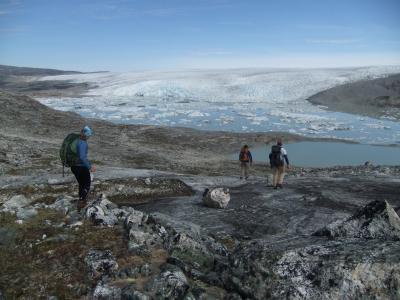
If the Greenland ice sheet ever gets past its stability threshold, it won't be the first time. 

400,000 years ago, a nearly complete deglaciation of southern Greenland happened, raising global sea levels as much as 6 meters. Not quite what was predicted to have happened by 2016 in "An Inconvenient Truth", but a substantial rise nonetheless.

The study authors say this is one of the first to zero in on how the vast Greenland ice sheet responded to warmer temperatures during that period, which were caused by changes in the Earth's orbit around the sun.

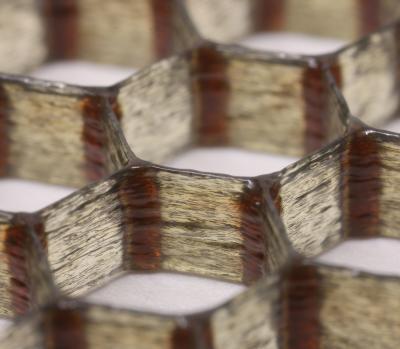
Though wind farms are touted as a viable part of our clean energy future, those sleek turbines are made of a decidedly low-tech core material: balsa wood.

Like other manufactured products that use sandwich panel construction to achieve a combination of light weight and strength, turbine blades contain carefully arrayed strips of balsa wood shipped in from Ecuador, which provides 95 percent of the world's supply.

For centuries, the fast-growing balsa tree has been prized for its light weight and stiffness relative to density. But balsa wood is expensive and natural variations in the grain can be an impediment to achieving the increasingly precise performance requirements of turbine blades and other sophisticated applications.

Cell migration, which is involved in wound healing, cancer and tumor growth, and embryonic growth and development, has been a topic of interest to mathematicians and biologists for decades. 

We don't know what dark matter is but we know it must be. And now, computer hypothetically, we know it a little better, thanks to new supercomputer simulations showing a possible evolution of our corner of the cosmos, the Local Group, from the Big Bang to the present day.

Surrounding the sun is a vast atmosphere of solar particles, through which magnetic fields swarm, solar flares erupt, and gigantic columns of material rise, fall and jostle each other around.  We call it the corona.

This corona, is even larger than thought, extending out some 5 million miles above the sun's surface *the equivalent of 12 solar radii), according to data from  NASA's Solar Terrestrial Relations Observatory. This has implications for NASA's upcoming Solar Probe Plus mission, which is due to launch in 2018 and will go closer to the sun than any man-made technology ever has.

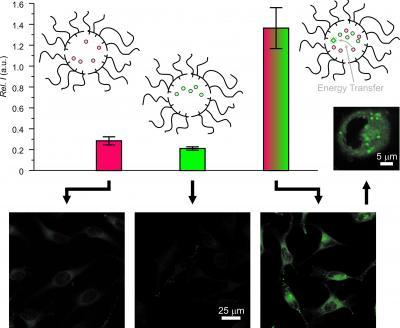
The world of "Fantastic Voyage" is rapidly approaching. Tiny devices are being used in therapeutic applications, and development of nanoparticles that can transport and deliver drugs to target cells in the human body is progressing also.

Recently, researchers created nanoparticles that under the right conditions, self-assemble – trapping complementary guest molecules within their structure. Like tiny submarines, these versatile nanocarriers can navigate in the watery environment surrounding cells and transport their guest molecules through the membrane of living cells to sequentially deliver their cargo.