


News delivery and consumption has rapidly changed in the digital era.  Sites like Science 2.0 were once dismissed by corporate-controlled media, but now the BBC, The New Yorker and Forbes use blog format online news delivery.

But they do things a little differently. In a rush to push out news ahead of their competitors, they will throw up a story and then edit it on the fly. Sometimes it isn't even a human, a computer could be writing the story within minutes of it happening.

Is it too easy to conceal mistakes, misrepresentation and bias? Are news outlets producing content at the expense of hard fact, proper investigation, credibility and truth?

As of June 5th there have been 24 confirmed cases of dengue fever and 18 cases of chikungunya according to health officials, in the state of Florida.

http://www.medicaldaily.com/dengue-and-chikungunya-viruses-pose-imminent-threat-outbreak-florida-summer-286550

A misconception arises when we ask people about the role that gravity plays in space. 

If you watch movies set in space — or for that matter, read statements from NASA —you will be led to think that gravity is absent in space. After all, people often refer to space as a “zero gravity” environment (the movie 2001: A Space Odyssey famously showed a complex set of instructions for its “zero gravity toilet”), and NASA usually refers to the conditions in orbit as “microgravity.” 

Researchers have discovered how a protein molecule in immune cells promotes the production of nitric oxide, a potent weapon in the cells' arsenal to defend the body from bacterial attack. The protein may offer a target for reining in the inflammatory response, which must be able to fight infection without damaging tissue.

Computed tomography scans are the standard of care for diagnosing heart and lung conditions but there is worry more CT scans could mean a higher lifetime risk of cancer from radiation exposure.

A study, of 2,085 patients at nine centers in the U.S. and Middle East, found that using newer generation, dual-source CT scanners significantly reduced radiation exposure for patients when compared with first generation, 64-slice, single-source scanners or first generation, dual-source CT scanners.

Patient radiation exposure was reduced by 61 percent with the newer scanners, with no significant difference in image quality for patients having CT scans for coronary artery disease, pulmonary embolism or aortic disease.

In the past years, invisibility cloaks using metamaterials have developed for various senses. At certain wavelengths, objects can be hidden from light, for example, and even heat or sound.

But touch? That defies our The Invisible Man science-fiction sensibilities.

Yet Karlsruher Institut für Technologie (KIT)
scientists have done just that - they created a volume in which an object can be hidden from touching, they report in Nature Communications.  

Every time you see a model or actress on a magazine cover with an article bragging about how she lost her 'baby weight' a month after delivery, you should know it's probably not because she works harder than you or has a nanny. It's because she probably never gained a lot of the baby weight that occurs in the final month of pregnancy.

Elective early deliveries have become the latest craze for wealthy people - it isn't just the 1 percent, it is the 4 percent. Labor induction or cesarean delivery without medical reason before a baby is considered full-term at 39 weeks is associated with health problems for mothers and babies. But it's still become common, at 37 weeks and even sooner.

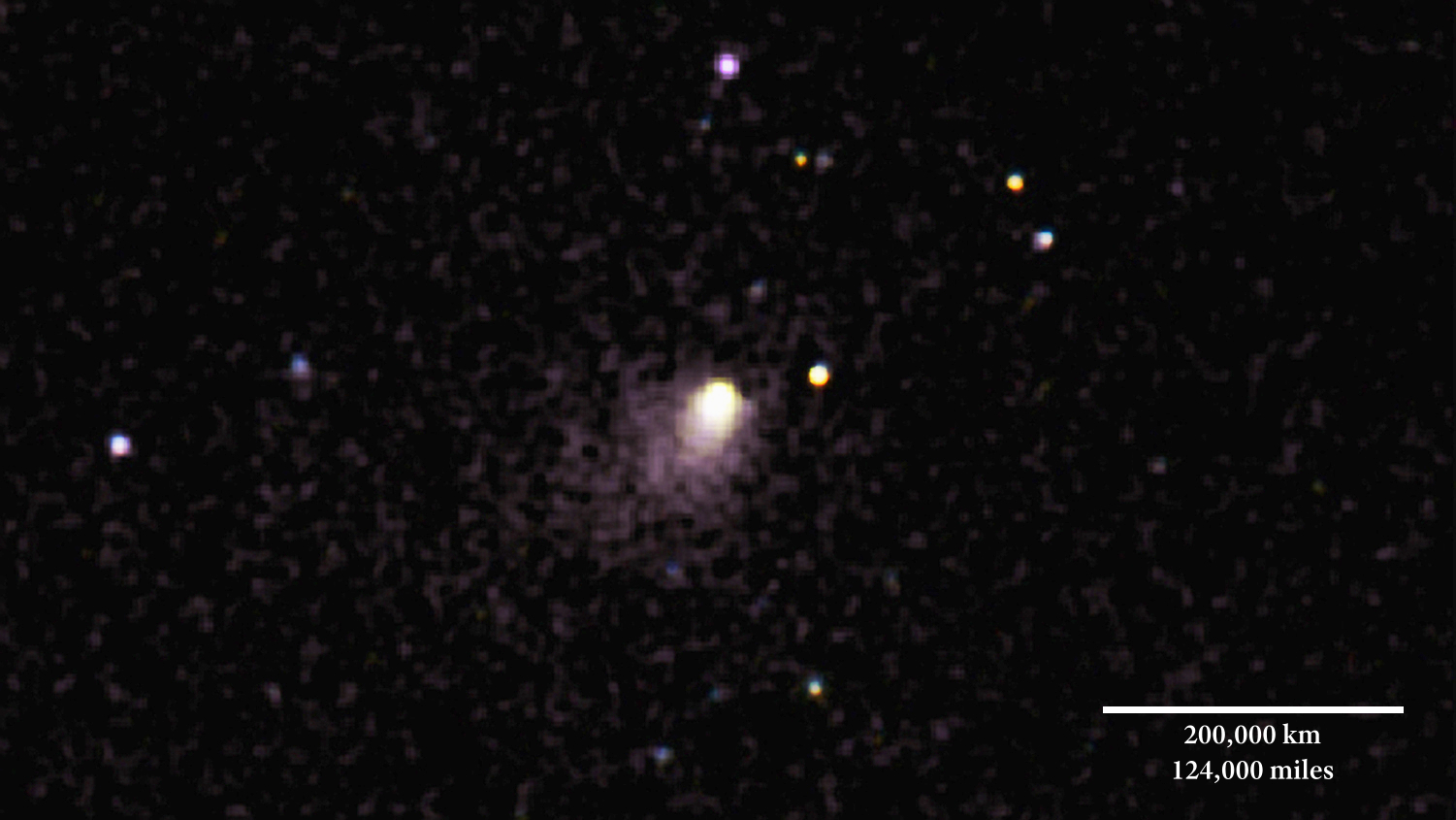
In May, NASA's Swift satellite imaged comet Siding Spring, which is going to play a bit of a game of chicken with  Mars later this year. 

"Fresh" comets like Siding Spring, which is formally known as C/2013 A1, contain some of the most ancient material scientists can study. The solid part of a comet, called its nucleus, is a clump of frozen gases mixed with dust and is often described as a "dirty snowball." Comets cast off gas and dust whenever they venture near enough to the sun.

The new optical and ultraviolet observations are the first to reveal how rapidly the comet is producing water and allow astronomers to better estimate its size. 

Doctors at the University of Arizona Cancer Center at St. Joseph's Hospital and Medical Center in Phoenix report  in Lancet Oncology that a new treatment for ovarian cancer can improve response rates (increase the rate of tumor shrinkage) and prolong the time until cancers recur.  

Trebananib (formally known as AMG 386; Amgen) is a first-in-class peptide-Fc fusion protein (or peptibody) that targets angiogenesis (the growth of new blood vessels into cancerous tumors) by inhibiting the binding of both angiopoietin 1 and 2 to the Tie2 receptor.

This is a different mechanism of action than other agents that also effect angiogenesis by inhibiting vascular endothelial growth factor (VEGF) such as bevacizumab (Avastin; Genentech).  

Epidemiologists who analyzed survey questionnaire responses came up with a new way to predict risk of lung cancer - the time you spent before lighting up the first time.

Lung cancer prediction is tricky business - though it is commonly assume that people who smoke will get lung cancer, shockingly few smokers do and almost half of lung cancer patients didn't smoke. There are standard markers that epidemiologists have used to match cancer risk - how many cigarettes per day and even cumulative exposure (pack-years).

The new survey results lead them to suggest that time before first light up may be a predictor for both light and heavy smokers.


