



Shenzhen, June 5, 2014--- The latest study, led by scientists from Kunming Institute of Zoology, Chinese Academy of Sciences, BGI and other institutes, presents a high-quality sheep genome and reveals genomic and transcriptomic events that may be associated with rumen evolution and lipid metabolism that have relevance to both diet and wool. The work was published online today in Science.

(Garrison, NY) Many of the legal and ethical options for refusing unwanted interventions are not available to people with dementia because they lack decision-making capacity. But one way for these people to ensure that they do not live for years with severe dementia is to use an advance directive to instruct caregivers to stop giving them food and water by mouth. This is an ethical and legal gray area explored in commentaries and a case study in the Hastings Center Report.

People with decision-making capacity have the legal right to refuse treatment of any kind and to voluntarily stop eating and drinking.

A molecular pathway called mTORC1 controls the conversion of unhealthy white fat into beige fat, an appealing target for increasing energy expenditure and reducing obesity, according to a new study. The team also found that a protein, Grb10, serves as the on-off switch for mTORC1 signaling and the "beigeing" of fat.

Phytoplankton are tiny, photosynthetic organisms and essential to life on Earth, supplying us with roughly half the oxygen we breathe.

Phytoplankton have their own requirements to carry out critical cellular activity
- the element phosphorus. But in some parts of the world's ocean, P is in limited supply. How do phytoplankton survive when phosphorus is difficult to find?

In 2007, after a marketing blitz for climate change during much of 2006 and the release of a new UN IPCC report, mentioning that methane had 23X the global warming effect of CO2 would get you shouted down and sternly reminded that CO2 lasts far longer.

That is absolutely correct. Yet recently, twice in the same week, two papers warned us that methane will cause global warming regardless of CO2.

Why, as we age, are we more vulnerable to cancer? 

You don't think of Lawrence Berkeley National Laboratory - one of the atomic bomb testing facilities - when you think of breast cancer research, but they know cell mutations.

A new paper in Cell Reports by LBL researchers found that, as women age, the cells responsible for maintaining healthy breast tissue stop responding to their immediate surroundings, including mechanical cues that should prompt them to suppress nearby tumors. The disease is most frequently diagnosed among women aged 55 to 64, according to the National Cancer Institute.

June 5, 2014 – So-called silent DNA mutations earned their title because, according to the fundamental rules of biology, they should be inconsequential. Reported on June 5 in PLOS Genetics online, University of Utah researchers experimentally proved there are frequent exceptions to the rule. The work was conducted in the bacteria, Salmonella enterica, used to study basic biological mechanisms that are often conserved in humans.

Every spring, as the weather warms, trees in forests up and down the east coast explode in a bright green display of life as leaves fill their branches, and every fall, those same leaves provide one of nature's great color displays of vivid yellow, orange and red.

Over the last two decades, spurred by higher temperatures caused by climate change, Harvard scientists say, forests throughout the Eastern U.S. have experienced earlier springs and later autumns than ever before.

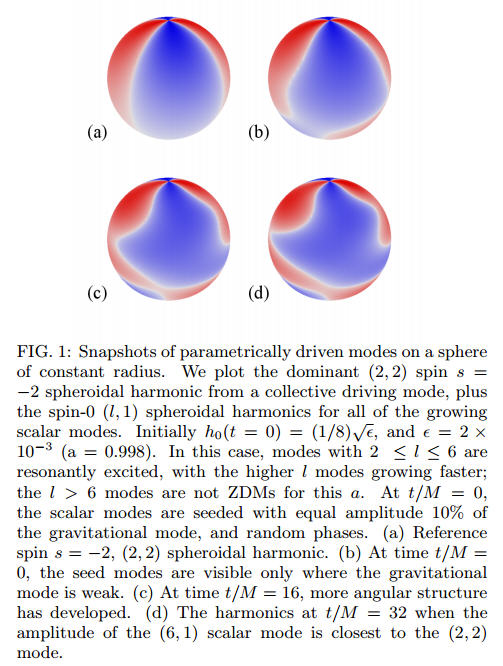
If you’re flying in the vicinity of a black hole, seatbelts and a bumpy ride are really the least of your concerns, but we are in the world of the hypothetical, and the accepted wisdom among gravitational thinkers has been that spacetime cannot become turbulent. 

An idea by the wizards at the Perimeter Institute is that such accepted hypothetical wisdom might be wrong.

The researchers followed this line of thought: Gravity might be able to behave as a fluid. One of the characteristic behaviors of fluids is turbulence – under certain conditions, fluids don’t move smoothly, they eddy and swirl. 

Presto, let's put something on arXiv.

Climate change models could have a thing or two to learn from termites and fungi, according to a new study released this week.

For a long time scientists have believed that temperature is the dominant factor in determining the rate of wood decomposition worldwide. Decomposition matters because the speed at which woody material are broken down strongly influences the retention of carbon in forest ecosystems and can help to offset the loss of carbon to the atmosphere from other sources. That makes the decomposition rate a key factor in detecting potential changes to the climate.

