Neuroscientists from the University of Leicester, in collaboration with the Department of Neurosurgery at the University California Los Angeles (UCLA), are to reveal details of how the brain determines the timing at which neurons in specific areas fire to create new memories.

This research exploits the unique opportunity of recording multiple single-neurons in patients suffering from epilepsy refractory to medication that are implanted with intracranial electrodes for clinical reasons.

The study, which is to be published in the academic journal Current Biology, is the result of collaboration between Professor Rodrigo Quian Quiroga and Dr Hernan Rey at the Centre for Systems Neuroscience at the University of Leicester and Professor Itzhak Fried at UCLA.

Bigger really is better – at least it was for early prehistoric life.

A NASA research group featuring University of Toronto Mississauga professor Marc Laflamme has helped to explain why some prehistoric organisms evolved into larger animals.

Laflamme, an assistant professor with the Department of Chemical and Physical Sciences, and his colleagues at the Massachusetts Institute of Technology Node of NASA's Astrobiology Institute suggest that height offered a distinct advantage to the earliest forms of multicellular life.

MAYWOOD, Il. – Physical activity significantly extends the lives of male cancer survivors, a new study of 1,021 men has found.

During the period while the men were followed, those who expended more than 12,600 calories per week in physical activity were 48 percent less likely to die than those who burned fewer than 2,100 calories per week.

Kathleen Y. Wolin, PhD, of Loyola University Chicago Stritch School of Medicine, is co-author of the study, published in the Journal of Physical Activity & Health, the official journal of the International Society for Physical Activity and Health.

Scientists have mapped the genetic changes that drive tumors in rhabdomyosarcoma, a pediatric soft-tissue cancer, and found that the disease is characterized by two distinct genotypes. The genetic alterations identified in this malignancy could be useful in developing targeted diagnostic tools and treatments for children with the disease. The study, by researchers at the National Cancer Institute (NCI), part of the National Institutes of Health, and their colleagues, appeared in the Jan. 23, 2014, issue of the journal Cancer Discovery.

CAMBRIDGE, Mass-- Flexible, layered materials textured with nanoscale wrinkles could provide a new way of controlling the wavelengths and distribution of waves, whether of sound or light. The new method, developed by researchers at MIT, could eventually find applications from nondestructive testing of materials to sound suppression, and could also provide new insights into soft biological systems and possibly lead to new diagnostic tools.

The findings are described in a paper published this week in the journal Physical Review Letters, written by MIT postdoc Stephan Rudykh and Mary Boyce, a former professor of mechanical engineering at MIT who is now dean of the Fu Foundation School of Engineering and Applied Science at Columbia University.

AMHERST, Mass. – Introducing a new approach that combines evolutionary and engineering analyses to identify the targets of natural selection, researchers report in the current issue of Evolution that the new tool opens a way of discovering evidence for selection for biomechanical function in very diverse organisms and of reconstructing skull shapes in long-extinct ancestral species.

Evolutionary biologist Elizabeth Dumont and mechanical engineer Ian Grosse at the University of Massachusetts Amherst, with evolutionary biologist Liliana Dávalos of Stony Brook University and support from the National Science Foundation, studied the evolutionary histories of the adaptive radiation of New World leaf-nosed bats based on their dietary niches.

ESO's Very Large Telescope has been used to create the first ever map of the weather on the surface of the nearest brown dwarf to Earth. An international team has made a chart of the dark and light features on WISE J104915.57-531906.1B, which is informally known as Luhman 16B and is one of two recently discovered brown dwarfs forming a pair only six light-years from the Sun. The new results are being published in the 30 January 2014 issue of the journal Nature.

On January 29 at 1430 UTC/9:30 a.m. EST, the Joint Typhoon Warning Center dropped System 91S from formation alert status, but the low pressure area still has a medium chance for development in the next 24 hours. System 91S was located near 18.2 south and 39.1 east, about 585 nautical miles northeast of Maputo, Mozambique. An image from India's Oceansat satellite indicated 20 to 25 knot (37.0 to 46.3 kph/23.0 to 28.7 mph winds over the eastern semi-circle of the storm. Meanwhile the NOAA-19 polar orbiting satellite data showed weak, shallow convective banding of thunderstorms wrapping into the low-level center on January 29.

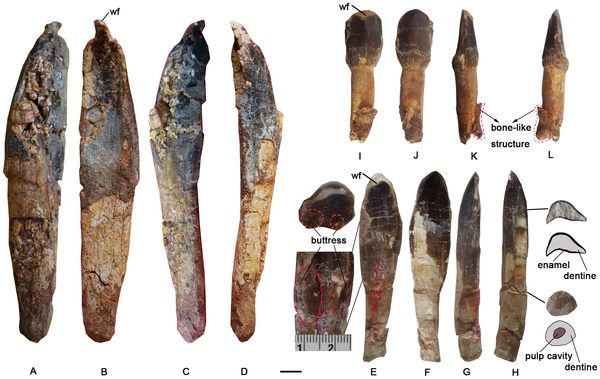
A team has characterized a new dinosaur based on fossil remains found in northwestern China. The species, a plant-eating sauropod named Yongjinglong datangi, roamed during the Early Cretaceous period, more than 100 million years ago. This sauropod belonged to a group known as Titanosauria, members of which were among the largest living creatures to ever walk the earth.

At roughly 50-60 feet long, the Yongjinglong individual discovered was a medium-sized Titanosaur. Anatomical evidence, however, points to it being a juvenile; adults may have been larger.

We know now that asteroids are relics that can tell us what the planets in our solar system may have been like before they formed cores and mantles and crusts. But that wasn't always the case. Until the past few decades asteroids were viewed in a more static way. Those that formed near the sun remained near the sun, those that formed farther out stayed on the outskirts.

Then it was discovered that some asteroids have compositions that don't match their locations in space. Those that looked like they formed in warmer environments were found further out in the solar system, and vice versa. Anomalous "rogue" asteroids.

