



You wouldn't think the brightest exploding stars ever discovered in the universe could need some light shed on them, but they got it anyway.

A new paper proposes that the most luminous supernovae – exploding stars – are powered by small and incredibly dense neutron stars, with gigantic magnetic fields that spin hundreds of times a second.

Scientists observed two super-luminous supernovae for more than a year. Contrary to existing theories, which suggested that the brightest supernovae are caused by super-massive stars exploding, the findings suggest that their origins may be better explained by a type of explosion within the star's core which creates a smaller but extremely dense and rapidly spinning magnetic star.

Food, medicine and energy are three of the most crucial problems we face today - and they are all protested by a common demographic.

Science tends to think on the supply side - how to feed more people, how to get energy to everyone, how to save lives - while anti-science activists promote mitigation and rationing and retreating into the past. They believe in 13th century energy that hasn't worked, like wind power, unproven herbal medicines and a food system where only the agricultural 1% will be able to eat.

Schizophrenia patients often suffer from a breakdown of organized thought, accompanied by delusions or hallucinations - neuroscientists have observed the neural activity that appears to produce this disordered thinking and found that mice lacking the brain protein calcineurin have hyperactive brain-wave oscillations in the hippocampus while resting, and are unable to mentally replay a route they have just run, as normal mice do.

A new paper says that babies can tell when something is wrong — as early as 18 months.

The intermediate Palomar Transient Factory (iPTF) was developed to help scientists learn more about the complex nature of celestial objects in the universe and began searching the skies for certain types of stars and related phenomena in February.

A new study has revealed that the ancestors of chelicerates (spiders, scorpions, etc.) branched off from the family tree of other arthropods, such as including insects, crustaceans and millipedes, more than half a billion years ago.

Emissions standards are easy for politicians. They just consult some people whose opinion they happen to like and pick a number. 

Then it is up for science and engineering to make it possible, whatever the cost. 

In 2012, California approved standards to reduce emissions from passenger cars to 3 milligrams, or a millionth of an ounce, per mile over the 2017-2021 automobile model years. Part of the justification politicians used was a gross miscalculation by the California Air Resources Board, which overstated some emissions by 340% to make the problem look urgent.

Please note: spoiler information in this article!

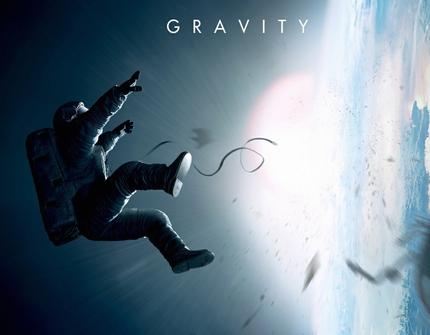
The recent movie "Gravity", featuring the two hollywood stars George Clooney and Sandra Bullock, is a very interesting experiment in film-making.

I can hardly recall other movies with just two characters, so this must clearly be a rare occurrence and one which shows that the movie treads in largely unexplored territory. Can people be entertained by one-man shows ? Well, yes, if the story is an extraordinary one. Tom Hanks does excellently in "Cast Away", for instance. "Gravity" is similar in the use of the loneliness of the protagonist and the large odds against her survival. But it is more radical in the total absence of other human figures, except Clooney of course.

You can tell I've had philosophy of mind on my mind lately. I've written about the Computational Theory of Mind (albeit within the broadest context of a post on the difference between scientific theories and philosophical accounts), about computation and the Church-Turing thesis, and of course about why David Chalmers is wrong about the Singularity and mind uploading (in press in a new volume edited by Russell Blackford and Damien Broderick).
In the wave of articles, blog posts and Tweets that are addressing the impact of the shutdown on science, no one has asked the obvious question: If the president care about science so much, why doesn't he care about science?

I have argued that science should be considered a strategic resource, no different than food and oil - yet the President who declared he was going to "restore science to its rightful place" has done nothing of the kind.

