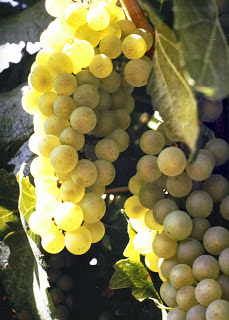



I am 99.9% sure that there will never be commercial production of genetically engineered wine grapes ("GMO" to use the common misnomer). Even so, I'd like to indulge in imagining what could be if we lived in some parallel universe where rational scientific thinking prevailed.

New methods are needed to fight the infection Clostridium difficile and better use of antibiotics could be key, according to a new paper.

Clostridium difficile (C.diff) causes severe diarrhoea, cramps and sometimes life-threatening complications, and has traditionally been thought to be transmitted within hospitals from other sick C.diff patients.
 

In a United Kingdom study, the team mapped all cases of Clostridium difficile (C.diff) in Oxfordshire over a three-year period (2008 to 2011) and found that less than one in five cases of the "hospital superbug" were likely to have been caught from other hospital cases of C.diff, where the focus of infection control measures has been.

Earlier studies have suggested that omega-3 fatty acids,  found in fatty fish such as salmon and in nuts, benefit thinking skills. A new paper in Neurology, based on a study that involved 2,157 women age 65 to 80 who were enrolled in the Women's Health Initiative clinical trials of hormone therapy,  disputes that.

The women were given annual tests of thinking and memory skills for an average of six years. Blood tests were taken to measure the amount of omega-3s in the participants' blood before the start of the study.

The discovery of what may be the earliest known creature with what can be discerned as a face has been reported in Nature. Entelognathus primordialis is an exceptionally well-preserved 419-million-year-old fish from China that is the most primitive vertebrate to have a modern type of jaw.

This fish is a placoderm, one of a member of an extinct group of gnathostomes (jawed vertebrates), but its jaw is much more like that of a modern bony fish: its discovery may offer a new perspective on the early evolution of these creatures.

Raytheon Company is recognizing 32 teachers from 18 states as "Math Heroes" for their work promoting student enthusiasm and achievement in math. 

Each Math Hero receives a $2,500 award and a matching grant for his or her school. Winners are selected based on compelling submissions from nominators on the effective and creative ways teachers work with students in math, drawing on new and advanced approaches.Nominations were done by students, parents and school administrators.

The "green seed problem" is a long-standing issue that causes millions of dollars annually in canola crop losses for Canada.

Canola is the major cash crop in Alberta, which produces about 35 per cent of Canada's canola that generates in the province about $5 billion in revenue annually. Across the country, the oilseed crop, whose seeds are pressed into canola oil, contributes about $15 billion a year to the Canadian economy.

However, every year around the time when canola matures, an unpredictable touch of a light frost can damage crop quality and cause severe losses. The discovery of a plant gene regulatory network means plants could be genetically enhanced to prevent green seeds from occurring in mature canola.

A review panel has concluded that the mass stranding of approximately 100 melon-headed whales in the Loza Lagoon system in northwest Madagascar in 2008 was primarily triggered by acoustic stimuli - a multi-beam echosounder system operated by a survey vessel contracted by ExxonMobil Exploration and Production (Northern Madagascar) Limited.

In response to the event and with assistance from The International Fund for Animal Welfare and Wildlife Conservation Society led an international stranding team to help return live whales from the lagoon system to the open sea, and to conduct necropsies on dead whales to determine the cause of death.

 Akawaio penak,  a previously unknown genus of thin, eel-like electric fish, was discovered in the shallow, murky waters of the upper Mazaruni River is northern Guyana.
University of Toronto Scarborough professor Nathan Lovejoy.

While America has drastically reduced its greenhouse gas emissions - CO2 from energy is back at early 1990s levels and emissions from coal are back at early 1980s levels - that isn't good enough for many environmentalists. Meanwhile, China is setting the stage to offset all of the greenhouse emissions cuts by the rest of the world while claiming they lead in clean energy.

