






The origin of the microscopic meteorites that make up cosmic dust has been revealed for the first time in new research out yesterday.

The research, published in the journal Geology, shows that some of the cosmic dust falling to Earth comes from an ancient asteroid belt between Jupiter and Mars. This research improves our knowledge of the solar system, and could provide a new and inexpensive method for understanding space.

Cosmic dust particles, originally from asteroids and comets, are minute pieces of pulverised rock. They measure up to a tenth of a millimetre in size and shroud the solar system in a thin cloud. Studying them is important because their mineral content records the conditions under which asteroids and comets were formed over four and a half billion years ago and provides an insight into the earliest history of our solar system.

One day soon, you may be able to pinpoint the geographic origins of your ancestors based on analysis of your DNA.

A study published online this week in Nature by an international team that included Cornell University researchers describes the use of DNA to predict the geographic origins of individuals from a sample of Europeans, often within a few hundred kilometers of where they were born.

"What we found is that within Europe, individuals with all four grandparents from a given region are slightly more similar genetically to one another, on average, than to individuals from more distant regions," said Carlos Bustamante, associate professor of biological statistics and computational biology at Cornell and the paper's senior author. John Novembre, an assistant professor in the University of California-Los Angeles' Department of Ecology and Evolution, was lead author of the study that also included researchers from GlaxoSmithKline, the University of Chicago and the University of Lausanne (Switzerland).

The ocean as an ecological and physical system is unmatched in its complexity but researchers are getting closer. A team of scientists is studying the complex ocean upwelling process by mimicking nature – pumping cold, nutrient-rich water from deep within the Pacific Ocean and releasing it into surface waters near Hawaii that lack the nitrogen and phosphorous necessary to support high biological production.

The researchers are harnessing the power of the ocean to conduct their experiments, using the up-and-down motion of waves to pump deep water to the surface. Their next step is to create a pump that can withstand the rigors of the rugged Pacific and then see if the biology follows the physics.

The theory behind the experiment was published in Marine Ecology Progress Series and the initial test of the pumps and their effect in the open ocean is getting its own documentary on the Discovery Channel, scheduled to air September 5th.

PARIS, September 2 /PRNewswire/ -- Alcatel-Lucent's Board of Directors (Euronext Paris and NYSE: ALU) yesterday approved the appointment of Philippe Camus as the company's non-executive Chairman as of October 1st, 2008. Ben Verwaayen is appointed as the company's chief executive officer. Ben will also join the company's Board of Directors.

West Australian health experts are urging older people to get active after trial results show for the first time that just 20 minutes of activity each day can prevent memory deterioration. In a world-first, a team from the WA Centre for Health and Ageing (WACHA) based at the Western Australian Institute for Medical Research (WAIMR) say their trials results in the Journal of the American Medical Association have shown that regular physical activity can lead to a lasting improvement in memory function.

WACHA director Professor Leon Flicker said people over the age of 50 could proactively prevent memory deterioration by joining in simple and easy exercises each day.

Molecular imaging aims at the use of imaging probes to visualize specific cellular or sub cellular processes that occur before changes in morphology and function. This is highly relevant because impairments of such processes often are precursors or earliest stages of cardiovascular disease. They are also involved in the early response to therapy or may identify candidates most suitable for a specific therapy.

Probes for multiple molecular pathways, including cardiac metabolism, cell death, neurotransmission, receptors, cell-matrix interaction and cell trafficking have been developed in early experimental work and are increasingly translated into the clinical arena.

Variation in the gene for one of the receptors for the hormone vasopressin appears to be associated with how human males bond with their partners, according to an international team of researchers.

The researchers found that the "334" allele of a common AVPR1A variation, the human version of avpr1a studied in voles, seemed to have negative effects on men's relationship with their spouses.

"Our findings are particularly interesting because they show that men who are in a relatively stable relationship of five years of more who have one or two copies of allele 334 appear to be less bonded to their partners than men with other forms of this gene," says Jenae Neiderhiser, professor of psychology, Penn State. "We also found that the female partners of men with one or two copies of allele 334 reported less affection, consensus and cohesion in the marriage, but interestingly, did not report lower levels of marital satisfaction than women whose male partners had no copies of allele 334."

Being an athlete or merely a fan improves language skills when it comes to discussing their sport because parts of the brain usually involved in playing sports are instead used to understand sport language, new research at the University of Chicago shows.

The research was conducted on hockey players, fans, and people who'd never seen or played the game. It shows, for the first time, that a region of the brain usually associated with planning and controlling actions is activated when players and fans listen to conversations about their sport. The brain boost helps athletes and fans understanding of information about their sport, even though at the time when people are listening to this sport language they have no intention to act.

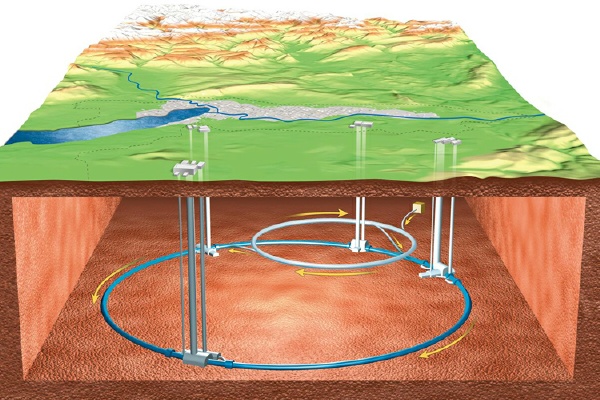
LHC Kritiks in Switzerland, Germany and Austria survived the first ruling on their case by the European Court for Human Rights, August 29th. So did CERN's Large Hadron Collider, which will go ahead while the court action continues. A stunningly quick decision by the ECHR only 3 days after the complaint was filed against CERN and its 20 member countries from the EC denies any Interim Measures that would have forced CERN to suspend operations of the LHC.

Soon to be the world's most powerful atom smasher and the biggest and most costly science experiment ever, the $10 billion LHC straddles the borders of Switzerland and France, near Geneva. CERN, the giant European nuclear physics lab, has completed the 17 mile underground construction of the ring accelerator and is now in the first stages of start-up. It's goal is to unlock the secrets of the early Universe, through unparalled high energy collisions of hadrons, protons at first and then heavy lead ions. Critics believe that the LHC could pose enormous dangers to the planet.

Sarah Palin, John McCain’s choice for Vice President should he win the November elections, is a worrisome character from the point of view of science education. It is hard to tell whether Palin herself is a creationist or not and, frankly, that’s far less important than the policy positions she holds in the matter. (Though, of course, having a Vice President who is deluded about basic aspects of reality would not be exactly reassuring. Oh, right, we already have had something along those lines for the past eight years, though Dick Cheney’s most dangerous delusions were not about who created the world.)

