






A scientist at the University of Liverpool has found that hypnosis can slow down the impacts of dementia and improve quality of life for those living with the condition.

Forensic psychologist, Dr Simon Duff, investigated the effects of hypnosis on people living with dementia and compared the treatment to mainstream health-care methods. He also looked at how hypnosis compared to a type of group therapy in which participants were encouraged to discuss news and current affairs.

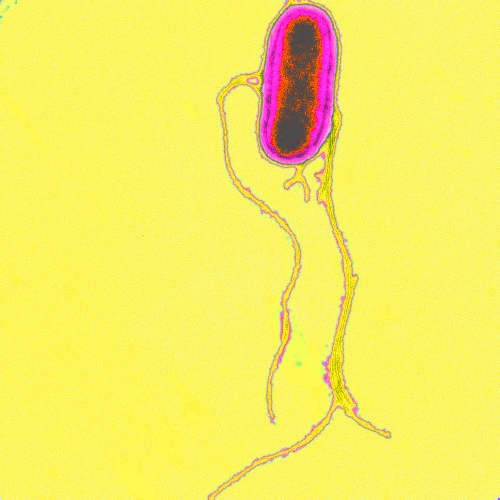
Scientists hope a vaccine is on the horizon for tularemia, a fatal disease caused by the pathogen Francisella tularensis, an organism of concern as a potential biological warfare agent. Until recently we knew very little about this bacterium. However, according to the August issue of the Journal of Medical Microbiology, research on the bacterium has been reinvigorated and rapid progress has been made in understanding how it causes disease.

Infection with F. tularensis can result in a variety of symptoms, depending on the route of infection. For example, infection via an insect bite can lead to a swollen ulcer or fever, chills, malaise, headaches and a sore throat. When infection occurs by eating
contaminated food, symptoms can range from mild diarrhoea to an acute fatal disease.

Bacteria living on opposite sides of a canyon have evolved to cope with different temperatures by altering the make-up of their 'skin', or cell membranes, write scientists who have found that bacteria change these complex and important structures to adapt to different temperatures by looking at the appearance of the bacteria as well as their genes. The researchers hope their study, published in the August issue of Microbiology, will start a new trend in research.

The cell membrane is one of the most important and complex parts of a cell. Membranes contain different fatty acid molecules; the branching type can change depending on temperature to keep the cell alive. The researchers found significant differences in the fatty acids of several ecotypes that live on different slopes in Evolution Canyon.

'Evolution Canyons' I and II are in Israel. They are similar, each with a hot south-facing slope and a cooler north-facing slope. The sun-exposed 'African' south-facing slopes get eight times more solar radiation than the shady, green, lush 'European' north-facing slopes. Scientists studied 131 strains of Bacillus simplex and found that bacteria on different slopes have evolved differently, forming different 'ecotypes' of the same species.

Typhoid fever kills 10–30% of untreated people. One of the best-known cases was that of Mary Mallon, a healthy carrier of typhoid, who worked for many years in the food industry in New York and is thought to have infected almost 50 people. She was eventually forcibly quarantined by authorities and named Typhoid Mary.

There are 17 million cases of Typhoid fever each year - although the World Health Organization cautions that this is a 'very conservative' estimate. Young people are most at risk: in Indonesia, nine out of ten cases occur in 3–19-year-olds.

It has been controlled by vaccination and use of antibiotics but antibiotic resistance is an emerging problem, especially in south-east Asia.

Knowledge of the structure–property–function relationships of dermal scales of armoured fish could enable pathways to improved bioinspired human body armor, and may provide clues to the evolutionary origins of mineralized tissues.

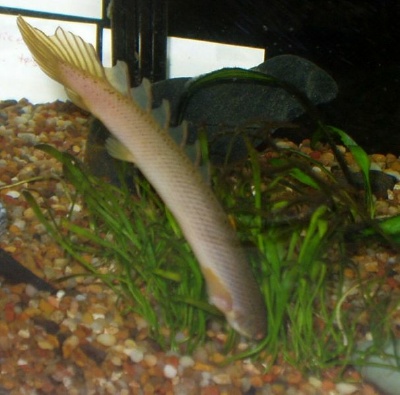
Writing in Nature Materials, researchers Benjamin J. F. Bruet, Juha Song, Mary C. Boyce and Christine Ortiz present a multiscale experimental and computational approach that reveals the materials design principles present within individual ganoid scales from the 'living fossil' Polypterus senegalus.

This fish belongs to the ancient family Polypteridae, which first appeared 96 million years ago during the Cretaceous period and still retains many of their characteristics.

A new discovery could lead to treatments which turn off the inflammation in the lungs caused by influenza and other infections, according to a study published today in the journal Nature Immunology.

The symptoms of influenza, such as breathlessness, weight loss and fever, are made much worse by the immune system responding in an exaggerated way to the virus, rather than by the virus itself. The virus is often cleared from the body by the time symptoms appear and yet symptoms can last for many days, because the immune system continues to fight the damaged lung.

A national survey into the bedroom behavior of British women has revealed that 46% percent never or rarely achieve orgasm. The survey, conducted by Scarlet magazine and the makers of the PelvicToner to mark National Orgasm Day on July 31, polled over 2000 women across the country and found that women with better pelvic floor muscles were also enjoying better sex lives.

The survey is ongoing at http://www.orgasmsurvey.co.uk. The latest survey results can be downloaded from the site.

 Athletes, both professional and amateur, as well as the general public are convinced that human growth hormone (HGH), Erythropoietin (EPO) and anabolic-androgenic steroids (AAS) are all artificial and controversial paths to improved performance in sports.  The recent headlines that have included Barry Bonds, Marion Jones, Floyd Landis, Dwayne Chambers, Jose Canseco, Jason Giambi, Roger Clemens and many lesser known names (see the amazingly long list of doping cases in sport) have referred to these three substances interchangeably leaving the public confused about who took what from whom. 
With so many athletes willing to gamble with their futures, they must be confident that they will see significant short-term results.  So, is it worth the risk?  Two very interesting recent studies provide some answers on at least one of the substances, HGH.

UPDATE: See a video clip here

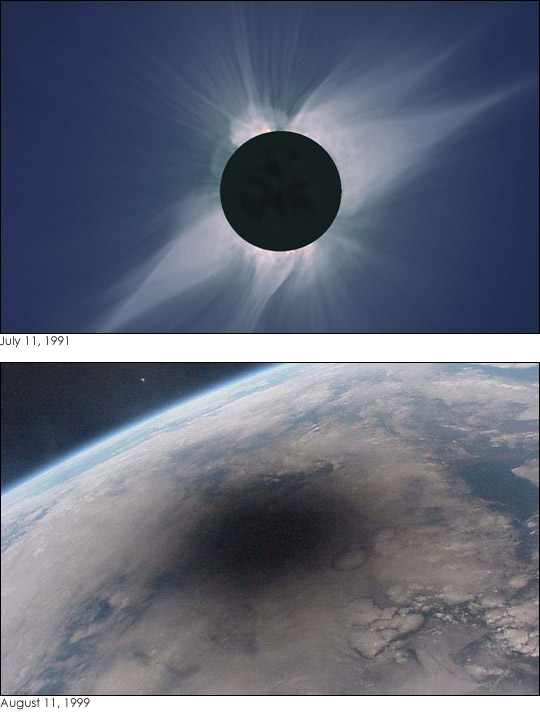
Total solar eclipses take place when the Earth, Moon and Sun are aligned and the shadow of the Moon touches the surface of the Earth. At mid-eclipse, observers within the lunar shadow briefly see totality, where the silhouette of the Moon completely covers the Sun, revealing the beautiful outer solar atmosphere or corona.

On August 1st, 2008 there will be a total eclipse visible from Canada, northern Greenland, Svalbard, the Barents Sea, Russia, Mongolia and China.

People in the British Isles will see a partial solar eclipse, with between 1/10th and 1/3rd of the Sun obscured by the Moon.

Global climate change could explain the explosion in marine biodiversity that took place 460 million years ago, according to researchers from INSU-CNRS Laboratoire PaléoEnvironnements et PaléobioSphère (CNRS)Université Claude Bernard Lyon and Australian National University in Canberra.

They have found evidence of a progressive ocean cooling of about 15°C over a period of 40 million years during the Ordovician, a geologic period extending from 490 to 440 million years ago. Until now, this geologic period had been associated with a "super greenhouse effect" on our planet. The results from this study were published in the July 25, 2008 issue of Science.


