



FRANKFURT, Germany, January 7 /PRNewswire/ --

- New cytric Release: Travel Policy in the Highest Level of Detail

A mysterious and unpredictable group of side effects from modern medications called idiosyncratic drug reactions (IDRs) likely will persist as a major health care problem unless there is a dramatic increase in research funding, according to a 20-year review of research in the field scheduled.

The review, by Jack Uetrecht at the University of Toronto, defines IDRs as reactions that happen unexpectedly and with no obvious connection to the known effects of a medication’s ingredients or dosage. Although relatively rare, IDRs make an important contribution to the annual burden of death, illness, and increased health care costs from serious adverse drug reactions.

BERLIN, January 7 /PRNewswire/ -- The first of January 2008 marked the introduction of the first three environmental zones in Germany in Berlin, Cologne and Hanover. These green zones are designated by special road signs. Starting in March 2008 other German cities will also follow suit. Every vehicle entering an environmental zone - no matter whether registered in Germany or another country - now needs to display an environmental badge. These badges have unrestricted validity for the individual vehicle and all German environmental zones.

To be eligible for an environmental badge, your vehicle must be registered in your country and fulfil certain conditions as per validation of the key number in the vehicle registration.

LAS VEGAS, CES 2008, January 7 /PRNewswire/ -- OKI Electric Industry, Co., Ltd., the leading Japanese electronic equipment manufacturer and Alpine Electronics Inc, Japan's leading manufacturer of in-car audio equipment, mobile multimedia components and in-car navigation systems joined forces with Runcom Technologies Ltd, the pioneer in ODFMA(R) enabling technologies for Mobile WiMAX. The three companies will demonstrate the world's first car navigation system with streaming content based on Mobile WiMAX technology at Runcom's booth (Sands 72702) at International CES 2008 in Las Vegas from January 7th to 10th.

SHEFFIELD, England, January 7 /PRNewswire/ --

- Image and Caption - http://www.disenco.com/html/corporate/news-releases/environment-chairman...

- High Resolution Image available from h.paterson@disenco.com

PRINCETON, New Jersey and SOFIA, Bulgaria, January 7 /PRNewswire/ --

- World's largest component vendor taps into Eastern European Talent

Infragistics, the world leader in presentation layer development tools, announced today the opening of a new office in Sofia, Bulgaria which will house teams for .Net and Java development of user interface component toolsets. The Bulgarian operation becomes Infragistics' ninth office worldwide. Other Infragistics offices include the United States, United Kingdom, India and Japan.

A new study from Danish researchers has found that childless men have a lower risk of developing prostate cancer than fathers, and that, paradoxically, the more children a father has, the lower the risk of the disease. The study appears in the February 15, 2008 issue of CANCER.

Whether fatherhood can affect the risk of prostate cancer remains controversial. Evidence has suggested that childless men may be at lower risk of prostate cancer than men with children, and that men who father sons may be at lower risk than men with daughters only.

LAS VEGAS, January 7 /PRNewswire/ --

- BT Vision IPTV customers will soon be able to receive best in gaming, TV and movies, all through Xbox 360.

Oxytocin, a hormone involved in child-birth and breast-feeding, helps people recognize familiar faces, according to new research in the January 7 issue of The Journal of Neuroscience. Study participants who had one dose of an oxytocin nasal spray showed improved recognition memory for faces, but not for inanimate objects.
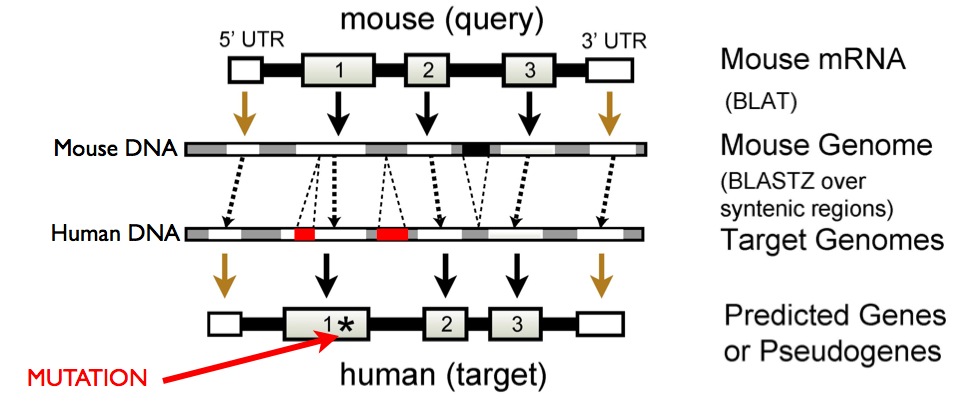
When we think of the genetic changes that had to take place during our evolutionary history, we typically think of changes that resulted in a gain of function, like genetic changes that resulted in a larger and more sophisticated brain, improved teeth for our changing prehistoric diet, better bone anatomy for bipedalism, better throat anatomy for speech, and so on. In many cases however, we have lost genes in our evolutionary history, and some of those losses have been beneficial. The most widely known example, found in every introductory biochemistry textbook, is the sickle-cell mutation in hemoglobin - a clear example of a mutation that damages a functional protein yet confers a beneficial effect. People with mutations in both copies of this particular gene are terribly sick, but those who have one good and one bad copy are more resistant to malaria. Another example is the CCR5 gene - people with mutations that damage this gene are more resistant to HIV. In the more distant past, a universal human mutation in a particular muscle gene that results in weaker jaw muscles may have played a role in brain evolution, by removing a constraint on skull dimensions. These few examples were found primarily by luck, but now with the availability of multiple mammalian genome sequences, researchers can systematically search for human genes that show signs of being adaptively lost at some point in our history. David Haussler's group at UC Santa Cruz, in a recent paper, looked for the genes we lost as we developed into our modern-day human species. What they found could help us better understand our evolutionary history, and possibly the human diseases that are the side-effects of that history.

