




The 3-way catalysator of a car apparently works differently from the way chemists had expected. The conversion of carbon monoxide into carbon dioxide takes place not in one single step, but in at least two different steps. To date, the second reaction path was completely unknown, but it seems to work much more efficiently than the first, more familiar process.

This discovery has been made by surface physicist Marcelo Ackermann from Leiden University. His findings call into question the chemistry of catalysators.

Catalysator performance now understood

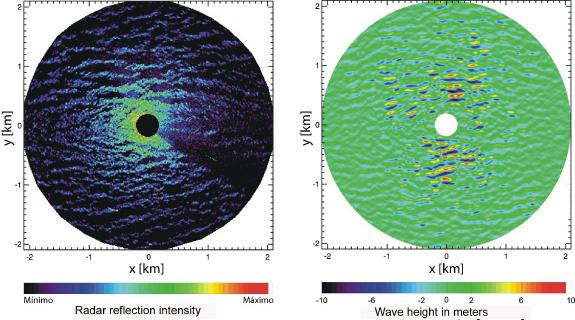
Giant waves, also known as monster waves, have been talked about by sailors for centuries, often related to unexplained disappearances at sea, but no one quite believed them.

They have been considered merely a myth until recently, when new studies using technological developments like buoys, radars and satellites have scientifically proven the existence of rogue waves, and that they exist in much higher numbers than it was ever expected.

These rogue waves could be the cause of tragic accidents at sea, not only because of their immense power and heights that reach over 30 meters, but it is their unpredictable nature that poses a bigger threat; they emerge as unexpected mighty walls of water towering from calm seas.

MIT scientists have devised remotely controlled nanoparticles that, when pulsed with an electromagnetic field, release drugs to attack tumors. The innovation, reported in the Nov. 15 online issue of Advanced Materials, could lead to the improved diagnosis and targeted treatment of cancer.

In earlier work the team, led by Sangeeta Bhatia, M.D.,Ph.D., an associate professor in the Harvard-MIT Division of Health Sciences & Technology (HST) and in MIT's Department of Electrical Engineering and Computer Science, developed injectable multi-functional nanoparticles designed to flow through the bloodstream, home to tumors and clump together. Clumped particles help clinicians visualize tumors through magnetic resonance imaging (MRI).

It’s well known that the body’s energy levels cycle on a 24-hour, or circadian, schedule, and that this metabolic process is fueled by oxygen. Now, researchers at the University of Pennsylvania School of Medicine have found that a protein called Rev-erb coordinates the daily cycles of oxygen-carrying heme molecules to maintain the body’s correct metabolism.

Many studies, including this one, point to a link between the human internal clock and such metabolic disorders as obesity and diabetes. Proteins such as Rev-erb are the gears of the clock and understanding their role is important for fighting these diseases.

As the U.S. continues to fall behind countries such as China and India in producing high-level scientists, one immediate and obvious solution would be to take advantage of the many women who have obtained doctoral degrees in science but have been passed over in their attempts to rise to the position of tenured professor, according to an editorial in DNA and Cell Biology.

Co-authors Jo Handelsman, PhD, Howard Hughes Medical Institute Professor at the University of Wisconsin-Madison, Editor-in-Chief of DNA and Cell Biology, and President of the Rosalind Franklin Society, and Robert Birgeneau, PhD, Chancellor of the University of California, Berkeley, contend that “a few significant changes in the academic system” in the U.S.

University of Wisconsin-Madison researchers are taking a leadership role in the quest for one of Einstein’s greatest predictions – gravitational waves.

“Galileo was the first person to use the telescope to view the cosmos,” says Patrick Brady, a UWM professor of physics. “His observations with the new technology led to the discovery of moons orbiting Jupiter and lent support to the heliocentric model of the solar system.”

New research shows that women suffering from Persistent Genital Arousal Disorder (PGAD), a condition marked by unprovoked, intrusive and persistent sensations of genital arousal that are unrelieved by one or several orgasms, are likely to experience a variety of associated psychological conditions.

Women who have this rare and often distressing condition often experience related depression, anxiety, panic attacks and frequently show a past history of sexual victimization. The condition is accompanied by frustration, guilt, anxiety and distress for the sufferer. The first-ever study on PGAD appears in the current issue of The Journal of Sexual Medicine.

Previous studies have shown that when a drug study was funded by the company that made that drug, the results might be biased in favor of that drug. New research published in the British Medical Journal shows that, at least for blood pressure drugs, studies are now much less likely to have biased results but still tend to have overly positive conclusions favoring the company's products.

The authors call on editors and peer reviewers to scrutinize the conclusions of these studies to ensure that they contain an unbiased interpretation of the results.

The technology that makes a cell phone vibrate is the same technology that provides more natural movements to prosthetic limbs. A University of Houston research team is working on recreating and enhancing this technological effect, which, if successful, could result in better prosthetic movements and also provide instant electrical power for soldiers and others through the simple act of walking.

Pradeep Sharma, a UH mechanical engineering professor, is leading the team to create a “piezoelectric on steroids.” Piezoelectricity is the ability of some materials to generate an electric charge when placed under stress. This pioneering technology already is more useful than many people realize.

Research announced this week by a team of U.S. and Japanese geoscientists may help explain why part of the seafloor near the southwest coast of Japan is particularly good at generating devastating tsunamis, such as the 1944 Tonankai event, which killed at least 1,200 people. The findings will help scientists assess the risk of giant tsunamis in other regions of the world.

Geoscientists from The University of Texas at Austin and colleagues used a commercial ship to collect three-dimensional seismic data that reveals the structure of Earth’s crust below a region of the Pacific seafloor known as the Nankai Trough. The resulting images are akin to ultrasounds of the human body.


