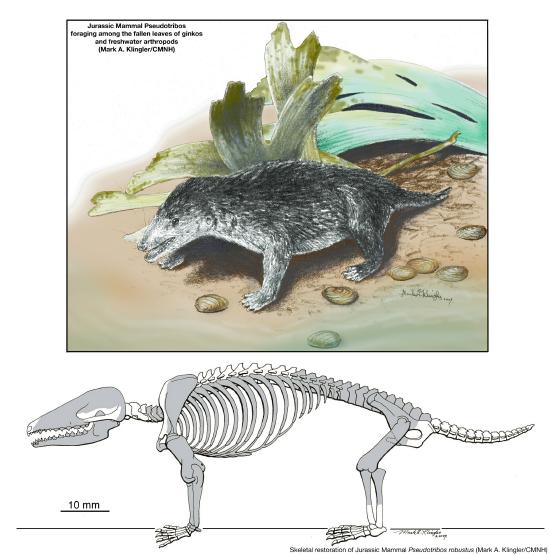






A team of Chinese and American scientists has discovered a new mammal from the 165 million-year-old lakebeds of the Jurassic Period in Northern China.

The find is reported in the November 1st issue of the journal Nature.

Supermassive black holes can produce powerful winds that shape a galaxy and determine their own growth, confirms a group of scientists from Rochester Institute of Technology.

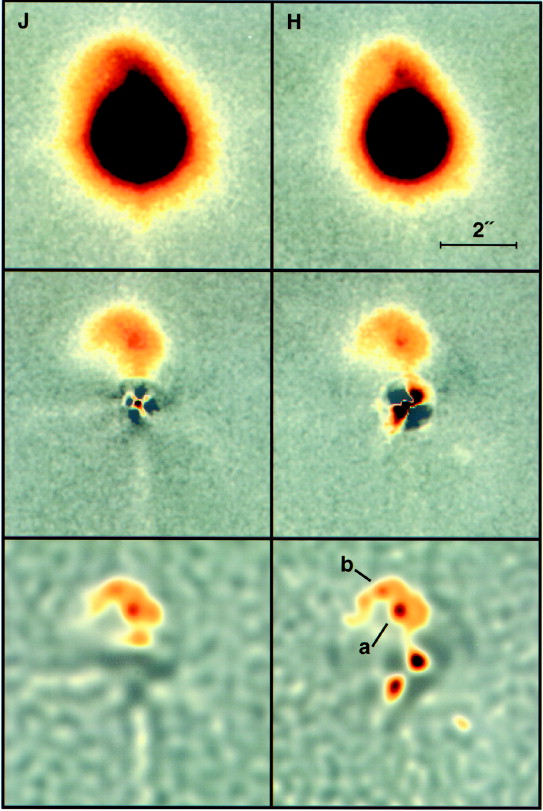
The RIT team has, for the first time, observed the vertical launch of rotating winds from glowing disks of gas, known as accretion disks, surrounding supermassive black holes in the centers of galaxies. The findings are reported in the Nov. 1 issue of Nature.

Gas flowing into a supermassive black hole first accumulates in a rapidly spinning accretion disk, which forms the engine of a quasar, a type of active galactic nucleus found in some galaxies and an extremely powerful source of radiation.

Charting the circuitry of the brain and nervous system just got a lot more fun.

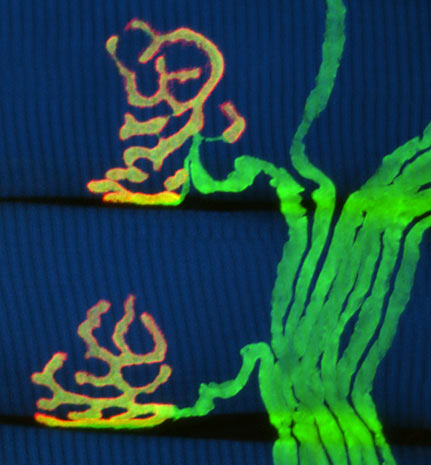
By activating multiple fluorescent proteins in neurons, neuroscientists at Harvard University are imaging the brain and nervous system as never before, rendering cells with 90 distinct colors which they dubbed a "Brainbow."

Brainbow is a huge leap over the handful of shades possible with current fluorescent labeling. By permitting visual resolution of individual brightly colored neurons, this increase should greatly help neuroscientists in understanding how our brains function.


Confocal reconstructions of the neuromuscular unctions on two adjacent muscle fibers from an adult YFP transgenic mouse.

The most emails I ever received about an article was Social Science And Social News Sites because of a very small part of the article where we mentioned that we swapped out the Digg submission button with Slashdot.

My take was that our kind of serious science content is just not right for Digg, since the last hundred or so articles were buried by readers and thus not a good fit for their audience. Not so, said the people who wrote. They contended Digg has an internal bury list and that it was probably marketing related rather than being done by users.

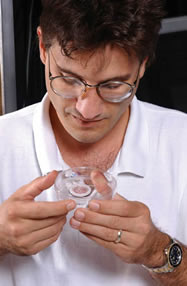
Physicists in Arizona State University have designed a revolutionary laser technique which can destroy viruses and bacteria such as AIDS without damaging human cells and may also help reduce the spread of hospital infections such as MRSA.

The research, published in the Institute of Physics’ Journal of Physics: Condensed Matter, discusses how pulses from an infrared laser can be fine-tuned to discriminate between problem microorganisms and human cells.

Current laser treatments such as UV are indiscriminate and can cause ageing of the skin, damage to the DNA or, at worst, skin cancer, and are far from 100 per cent effective.

In a familiar high-school chemistry demonstration, an instructor first uses electricity to split liquid water into its constituent gases, hydrogen and oxygen. Then, by combining the two gases and igniting them with a spark, the instructor changes the gases back into water with a loud pop.

Scientists at the University of Illinois have discovered a new way to make water, and without the pop. Not only can they make water from unlikely starting materials, such as alcohols, their work could also lead to better catalysts and less expensive fuel cells.

“We found that unconventional metal hydrides can be used for a chemical process called oxygen reduction, which is an essential part of the process of making water,” said Zachariah Heiden, doctoral student and lead author of the paper.

Make way for the real nanopod and make room in the Guinness World Records. A team of researchers with Lawrence Berkeley National Laboratory and the University of California at Berkeley have created the first fully functional radio from a single carbon nanotube, which makes it by several orders of magnitude the smallest radio ever made.

“A single carbon nanotube molecule serves simultaneously as all essential components of a radio -- antenna, tunable band-pass filter, amplifier, and demodulator,” said physicist Alex Zettl, who led the invention of the nanotube radio.

A University of Florida scientist has grown a living "brain" that can fly a simulated plane, giving scientists a novel way to observe how brain cells function as a network.

The "brain" -- a collection of 25,000 living neurons, or nerve cells, taken from a rat's brain and cultured inside a glass dish -- gives scientists a unique real-time window into the brain at the cellular level.

By watching the brain cells interact, scientists hope to understand what causes neural disorders such as epilepsy and to determine noninvasive ways to intervene. As living computers, they may someday be used to fly small unmanned airplanes or handle tasks that are dangerous for humans, such as search-and-rescue missions or bomb damage assessments.

A potent clot-busting substance originally extracted from the saliva of vampire bats may be used up to three times longer than the current stroke treatment window – without increasing the risk for additional brain damage, according to research reported in Stroke: Journal of the American Heart Association.

The vampire bat saliva-derived clot buster is called Desmodus rotundus salivary plasminogen activator (DSPA) or desmoteplase. DSPA targets and destroys fibrin, the structural scaffold of blood clots, says senior author Robert Medcalf, Ph.D.

The "dark matter" that comprises a still-undetected one-quarter of the universe is not a uniform cosmic fog, says a University of California, Berkeley, astrophysicist, but instead forms dense clumps that move about like dust motes dancing in a shaft of light.

In a paper from Physical Review D, Chung-Pei Ma, an associate professor of astronomy at UC Berkeley, and Edmund Bertschinger of the Massachusetts Institute of Technology (MIT), prove that the motion of dark matter clumps can be modeled in a way similar to the Brownian motion of air-borne dust or pollen.

Their findings should provide astrophysicists with a new way to calculate the evolution of this ghost universe of dark matter and reconcile it with the observable universe, Ma said.

