






A new study has identified genes involved in long-term memory in the worm as part of research aimed at finding ways to retain cognitive abilities during aging.

The study identified more than 750 genes involved in long-term memory, including many that had not been found previously and that could serve as targets for future research, said senior author Coleen Murphy, an associate professor of molecular biology and the Lewis-Sigler Institute for Integrative Genomics at Princeton University.


Fish vision just got more complex. Janderk, CC BY-SA

By William Feeney, University of Cambridge

Some suggest that the universe naturally produces complexity. The emergence of life in general and perhaps even rational life, with its associated technological culture, may be extremely common, argues Kelly Smith, Associate Professor of Philosophy&Biological Sciences at Clemson, in a recent Space Policy paper.

What's more, he suggests, this universal tendency has distinctly religious overtones and more knowledge of astrobiology may even establish a truly universal basis for morality.

UK doctors subject to complaints procedures are at significant risk of becoming severely depressed and suicidal, reveals research published in the online journal BMJ Open.

Those referred to the UK professional regulator, the General Medical Council, seem to be most at risk of mental ill health, the findings suggest.

The researchers base their findings on an anonymised online survey of more than 95,000 UK doctors in 2012, all of whom were members of the British Medical Association (BMA).

Emerging data on the role of inflammation and the immune system in the development, growth, and spread of breast tumors have focused increased attention on the role cytokines such as interleukin and transforming growth factor-β play in breast cancer initiation, protection, and metastasis.

A comprehensive overview of this new knowledge and its potential to lead to novel therapeutic approaches is presented in a Review article in Journal of Interferon & Cytokine Research.

Researchers have created a new approach that protects animal models against a type of genetic disruption that causes intellectual disability, including serious memory impairments and altered anxiety levels. 

The method focuses on treating the effects of mutations to a gene known as Syngap1. Damaging mutations in Syngap1 that reduce the number of functional proteins are one of the most common causes of sporadic intellectual disability and are associated with schizophrenia and autism spectrum disorder.

Inflammation has long a target in Alzheimer's disease studies so a new finding in Neuron is counterintuitive. In the study, researchers hace uncovered the mechanism by which anti-inflammatory processes may trigger the disease and this anti-inflammatory process might actually trigger the build-up of sticky clumps of protein that form plaques in the brain. These plaques block brain cells' ability to communicate and are a well-known characteristic of the illness.

The finding suggests that Alzheimer's treatments might need to be tailored to patients depending on which forms of Apolipoprotein E, a major risk factor for Alzheimer's disease, these patients carry in their genes.


Climate science is right – but it isn't winning. NASA, CC BY

By Mathis Hampel, University of East Anglia

Scientists tell us the world is warming and that a climate catastrophe is imminent.

They’re probably right.

Yet climate change framed by scientists, politicians and economists as a straightforward pollution problem will neither convince skeptics nor advance the difficult decision-making process.

Bacteria communicate using chemical signals and now scientists have described a previously unknown communication pathway that appears to be widely distributed - and even leads to pathogens.

The investigation of bacterial communication is valuable because those pathways are a possible therapeutic target for new medicines. If the relevant communication options are prevented, the bacteria cannot develop their pathogenic properties.

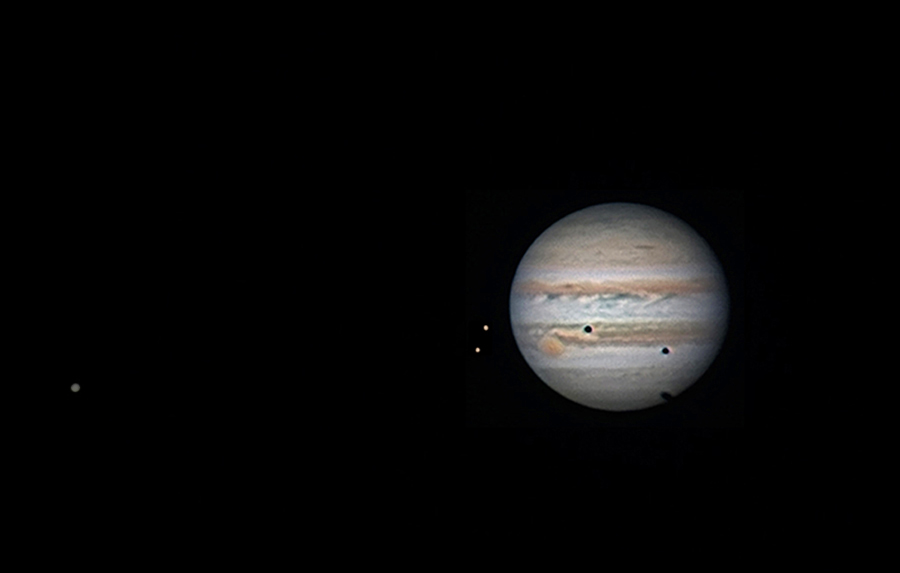
Jupiter's moons are giving us a show not seen since 2013: The orbital path of the moons is tilting edge-ion to the Earth and the sun, making it possible to watch the moons pass in front of each other, an occultation, or pass through another moon's shadow, an eclipse, and even cast tiny black shadows onto Jupiter.


