







This is a commonly used argument, indeed often taken for granted. We can simulate physics on a computer. So, the argument goes, what is to stop us eventually simulating your whole body including your brain? And if so, is it not just a matter of time, and increasing computer power before we have exact simulations of humans as computer programs? Programs whose behaviour is indistinguishable from humans?

This is a staple of many science fiction stories of course. But some logicians, philosophers and physicists think there are flaws in this argument.

We know the laws of physics are incomplete. Could there be physical processes which for some reason are impossible to simulate using a computer program? And could processes like that go on in a human being?

In the NFL, teams share revenue from national television contracts and to sell local tickets, if a team has not sold at least to a specific threshold, the game is blacked out locally. If enough people are attending, the game is shown to fans in the region

That appeals to 'hometown' fans. One satellite network shows all games to its package subscribers but otherwise fans are only going to see their local team. If they don't have one, they see something nearby. It is a rule and there is no choice.

In the modern mobile population, that may not be a wise strategy. Fans no longer live within an hour of where they grew up and a new paper finds that choosing to broadcast the local team isn't always the smartest ratings decision. Writing in 


Proof of life beyond earth is coming. Stargazing image via Shutterstock

By David A. Weintraub, Vanderbilt University

Let’s talk about gastrulation. For those unfamiliar with the term, it’s not as disgusting as it sounds. Gastrulation is a process in early embryonic development which leads to the generation of the three germ-layer tissues- ectoderm, endoderm, and mesoderm- from which all other tissue-types in the body are erived. 

The early (amniote) embryo coverts from a bilaminar structure of epithelial tissue plus and extra-embryonic layer, to a trilamiarone. A second function of gastrulation is that it defines the anterior-posterior body axis for the first time. In other words, it begins to distinguish the head end of the embryo from the tail end- this is pretty important if you want all your bits and pieces in the right place later on! 


SLAC National Accelerator Laboratory at Stanford

By Ian Bailey, Lancaster University

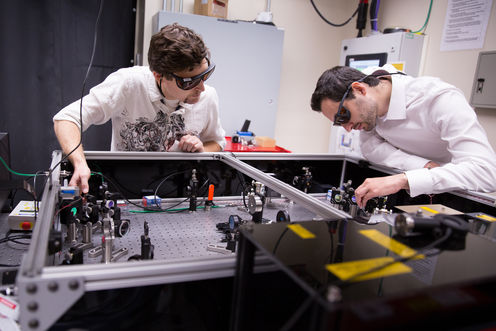
Scientists working on an experiment at the SLAC National Accelerator Laboratory in the US have taken a step forward in developing a technology which could significantly reduce the size of particle accelerators. The technology is able to accelerate particles more rapidly than conventional accelerators at a much smaller size.

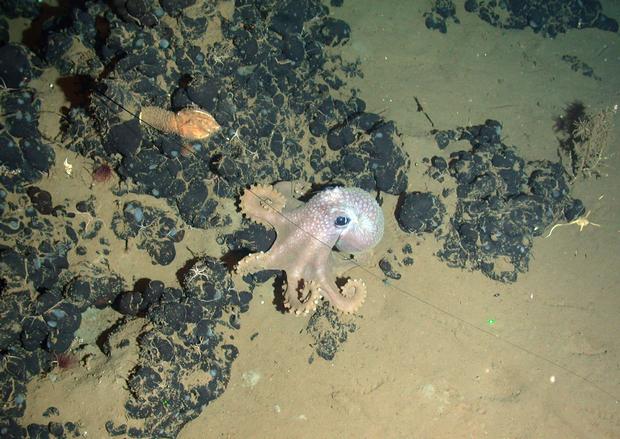
Over a mile beneath the West African ocean, off the coast of Angola, are over 2,000 mounds of asphalt containing a wealth of deep-water creatures.

A paper in Deep-Sea Research 1 examined the images and data captured at the site to build an intriguing picture of the life and geology of this underwater area. The naturally-occurring asphalt mounds are made up of the same substance that covers our roads. They range in size from single football-sized blobs to small hills several hundred meters across.

The fame of Lady Gaga is the stand-out phenomenon of 21st-century celebrity – the go-to example for any commentator. But in a recent interview for 60 Minutes she complained that being so famous wasn’t all peachy. Apparently, some people can’t see through her clothes (ironic given the frequency of very sheer fabrics and flesh-baring garments in her kaleidoscopic wardrobe).

But what I’m interested in here is how she clothes her face: all too often with sunglasses.

Will the medicines you take make their way back into your food?  They might, especially of you take your cue from an old Yorkshire song which deals with human recycling in the food chain, via worms and ducks.  Now, research [1] from the university of York (where else?) has studied one step of this process in detail.

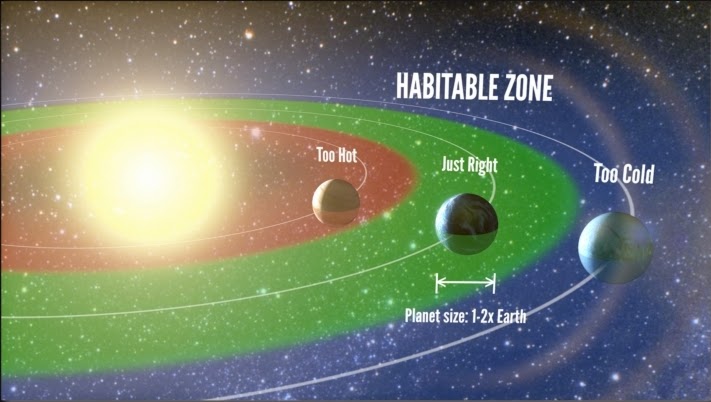
Think of our poor sister world Venus – almost the same size as Earth, it probably had oceans at the beginning. But Venus orbits closer to the sun -- and was never in the Continuously Habitable Goldilocks Zone, or CHZ.

Instead our poor sister world quickly spiraled into a greenhouse effect that erased its oceans and drove all the water away, leaving a desert planet, coated with dense clouds of sulfuric acid and carbon dioxide.

What is the best way to learn a dance sequence?

Professional dancers make it look easy. A choreographer rattles off a long list of moves, kicks and turns and the dancers somehow remember it all. But what about the rest of us who will be hitting the club this weekend?

Researchers from Bielefeld University and the Palucca University of Dance in Dresden are here to help. They  researched whether dancers learn a dance sequence better by seeing or by listening, that is, if a dance instructor first demonstrates the sequence, or if he or she first gives a spoken explanation.

