









An experiment with 42 people under functional magnetic resonance imaging (fMRI) found that if people see pictures of others being loved and cared for, it subsequently reduces
the brain's threat monitor, the amygdala,
 response to threats. 

This occurred even if the person was not paying attention to the content of the first pictures.

The study in Social, Cognitive and Affective Neuroscience, suggests that being reminded of being loved and cared for dampens the threat response and may allow more effective functioning during, and activation of soothing resources after, stressful situations. This was particularly true for more anxious individuals.


It’s been a disappointing couple of weeks for the Scotch whisky industry.

Diageo reported that it is delaying plans on a £1 billion new-build distillery just north of Inverness following a slow-down in the company’s key whisky markets, particularly Latin America and China.

In World War II, did people with bird feeders have substantially different chirping friends than we see today?

Probably not, but a group of researchers warns than 2075 might look a lot less like then, or even 1975, or today. The distribution of birds in the United States could change a lot.

A new U.S. Geological Survey study in PLOS ONE predicts where 50 bird species will breed, feed and live in the conterminous U.S. by 2075. While some types of birds, like the Baird's sparrow, could lose a significant amount of their current U.S. range, other ranges could nearly double.    

Last year, two experiments at the Large Hadron Collider announced the finding of a new elementary particle - the long-theorized Higgs particle. 

Many calculations indicate that the particle discovered last year in the CERN particle accelerator was indeed the famous Higgs particle. Physicists agree that the CERN experiments did find a new particle that had never been seen before, but an international team say they are not convinced it was the Higgs particle. 

Maybe it just looks like it. And maybe it is not alone. 

The research team analyzed the existing scientific data from the LHC and published an analysis in Physical Review D

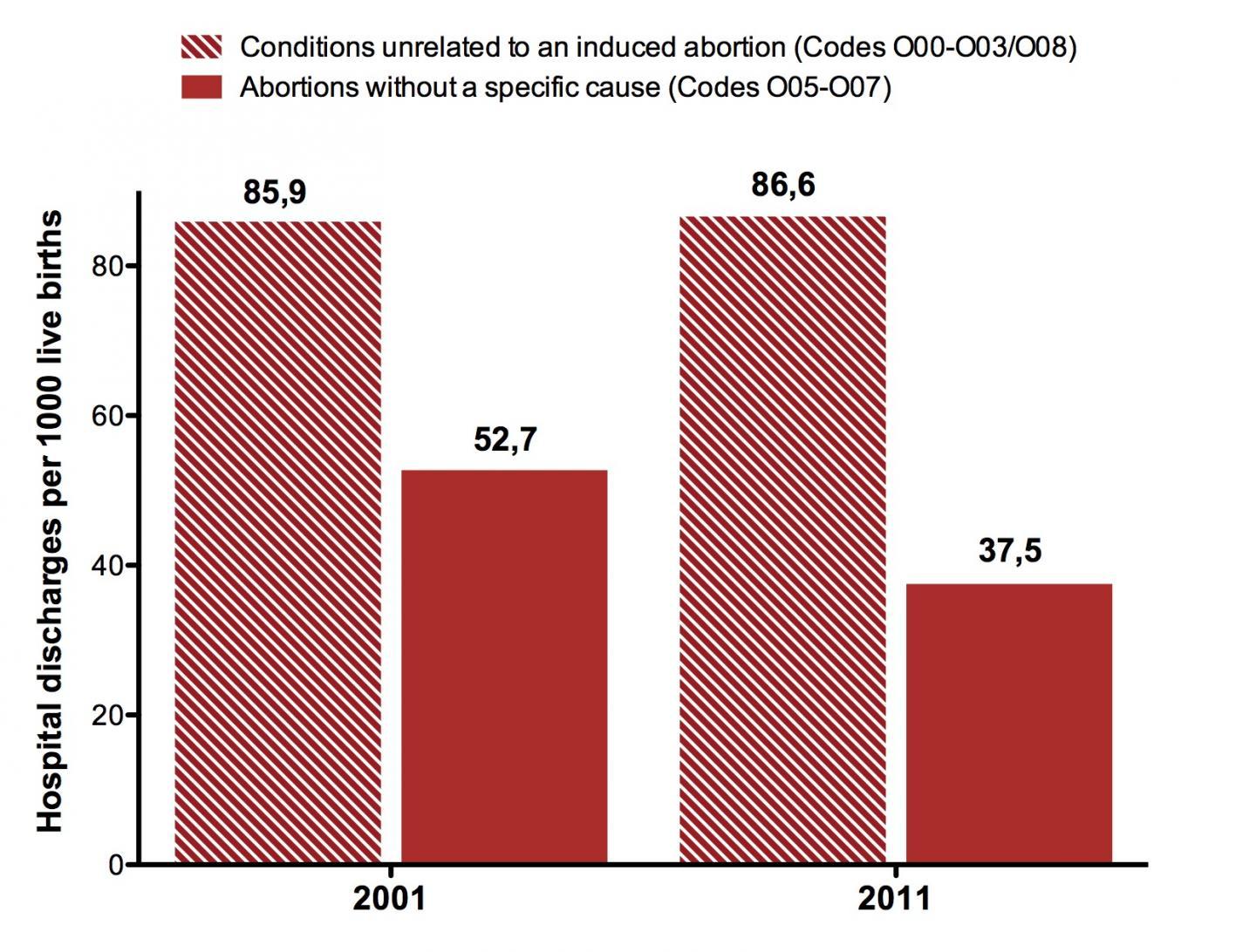
 Another American election season has come and gone.  In San Francisco, Rep. Nancy Pelosi, Minority Leader of the House, campaigned only modestly, even in a year when voters turned on Democrats nationwide she was sure to get 80 percent of the vote, and once again she talked about abortion, saying that if Democrats were not in charge, they would be banned.

It is hard to imagine that 1 person out of 435 would cause a 40-year-old abortion law to be overturned but the implication has always been that the federal government must control it because of the dangers of 'back alley abortions' that were unsafe.

If you voted for a Democrat this week, it may not be because of the issues, it may be because your emotions caused you to gloss over facts, according to a paper in Personality and Social Psychology Bulletin.

Emotions are obviously powerful forces in human behavior and attitudes and to some extent they play an important role in guiding policy support. A paper by researchers at Tel Aviv University and the Interdisciplinary Center in Herzliya studied the interaction between emotion and political ideology, showing that the motivating power of emotions is not the same for those on different ends of the ideological spectrum. 

If you read the marketing claims for probiotics and supplements, and an alarming number of papers that have made spurious claims to feed the fad, you might think gut bacteria were the magic bullet for a lot of diseases.

A new paper says they even determine whether or not your jeans fit this week. Pizza and exercise are hereby absolved. Instead, the  types of microbes that grow in our body, influenced by our genetic makeup, influences whether we are fat or thin, according to a paper in Cell.

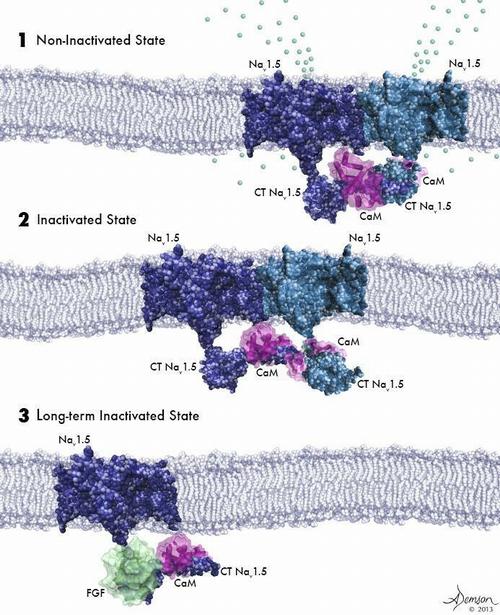
Heart attacks are often caused by conditions that affect electrical signaling in the heart. Genetic studies have linked two of these conditions, long QT syndrome and Brugada syndrome, to mutations in the sodium channels that let sodium ions into cells in response to electrical signals.  
A multidisciplinary team has been tracking the complex of proteins thought to be at fault in some cases of sudden cardiac death and now they have finally captured images of the complex. Those images reveal the connection between some genetic mutations and electrical abnormalities of the heart and provide a starting point for designing therapies.


vivaviena, CC BY-NC-SA

By Vincent F Hendricks, University of Copenhagen

Science, like any other field that attracts investment, is prone to bubbles.

Overly optimistic investments in scientific fields, research methods and technologies generate episodes comparable to those experienced by financial markets prior to crashing.


