







By: Karin Heineman, Inside Science

(Inside Science TV) – Who can forget the winter of 2013-2014? Record-breaking cold temperatures and heavy snowfall hit from the Rocky Mountains all the way to the East Coast.

Although the majority of Americans still believe that global warming is happening, the especially blustery winter caused some people to question whether global warming is really happening.

“Almost invariably we find that after any winter a drop off in belief in the existence of global warming," said Barry Rabe, a political scientist at the University of Michigan in Ann Arbor.

America has a health care problem. It is excellent, the best in the world, but it is expensive. Rather than solving the problems of defensive medicine costs, designed to prevent lawsuits by conducting unnecessary tests, or tort reform to prevent lawyers from convincing people they are 'suing an insurance company' so the cost won't matter, America has instead created mandates so everyone is forced to buy insurance, and then subsidized people who can't afford it.

I am spending a few days in Aix Les Bains, a pleasant lakeside resort in the French southwest, to follow the works of the second ECFA workshop, titled "High-Luminosity LHC". ECFA stands for "European Committee for Future Accelerators" but this particular workshop is indeed centred on the future of the LHC, despite the fact that there are at present at least half a dozen international efforts toward the design of more powerful hadron colliders, more precise linear electron-positron colliders, or still other solutions.

The Ord River dam, completed in 1971, formed Australia's largest artificial lake in the far north west. Graeme Churchard/Flickr, CC BY-NC-SA

By Willem Vervoort, University of Sydney

Some 27 irrigation and dam projects are highlighted in the green paper for agricultural competitiveness released this week by agriculture minister Barnaby Joyce.


Science can't tell us exactly when the rising oceans will swallow up the Maldives, but it can give us a good idea. Credit: Hiroyuki-H, CC BY-SA

By Richard Pancost, University of Bristol and Stephan Lewandowsky, University of Bristol

Playing violent video games in 3-D makes everything seem more real –  and in a new study researchers found that people who played violent video games in 3-D showed more evidence of anger afterward than people who played games on 2-D systems. 

That may have troubling consequences for young players, according to an upcoming paper in Psychology of Popular Media Culture.


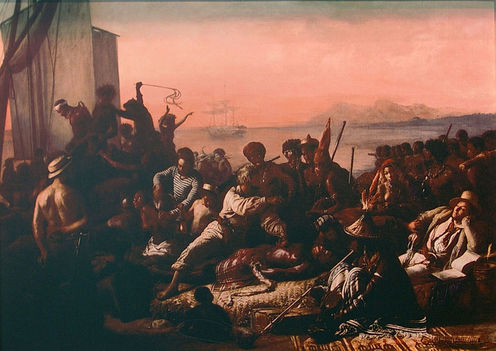
The Slave Trade painted by a French abolitionist artist.

By Daina Ramey Berry, University of Texas

People think they know everything about slavery in the United States, but they don’t.

They think the majority of African slaves came to the American colonies, but they didn’t. They talk about 400 hundred years of slavery, but it wasn’t. They claim all Southerners owned slaves, but they didn’t. Some argue it was a long time ago, but it wasn’t.

Though it has been in the works since 1996 and long passed both its original 2011 completion date and even the most aggressive budget estimate, the James Webb Space Telescope has a milestone that may get people excited: after 116 days of extremely frigid temperatures like that in space, the heart of the James Webb Space Telescope, the Integrated Science Instrument Module (ISIM) and its sensitive instruments, emerged unscathed from the thermal vacuum chamber at NASA's Goddard Space Flight Center in Greenbelt, Maryland.


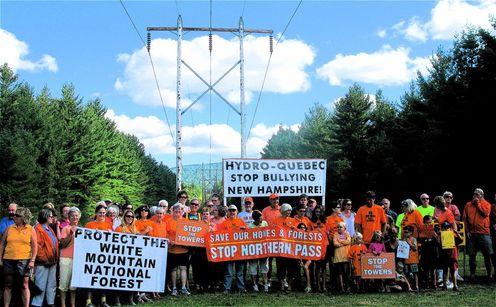
It's easy to sneer at people for protecting their backyards, but what if there's a compelling reason to do so? Mickey DeRham photos, CC BY-NC

By Naomi Oreskes, Professor of the History of Science at Harvard University.

The term NIMBY – “not in my back yard"– has long been used to criticize people who oppose commercial or industrial development in their communities. Invariably pejorative, it casts citizens as selfish individualists who care only for themselves, hypocrites who want the benefits of modernity without paying its costs.

There are some things that Republicans and Democrats share in common with Palestinians and Israelis and lots of other groups where human conflict seems intractable.

A new sociology paper in Proceedings of the National Academy of Sciences says that seemingly unsolvable political and ethnic conflicts are fueled by asymmetrical perceptions of opponents' motivations, and that these tensions can be relieved by providing financial incentives to better understand what drives an adversary group.

