












Who doesn't want more brain power? Credit: James Steidl

By Elizabeth Maratos, University of Leicester

The practice of physically stimulating the brain in order to alleviate symptoms of illness and injury has been around since the early 20th century. For example, electroconvulsive therapy (ECT) is still used to alleviate symptoms of depression.

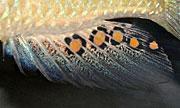
The evolution of new traits with novel functions has long been studied by evolutionary biology and a new study of the color markings of cichlid fish has shed some new light on it.

Swiss scientists writing in Nature Communications show what triggered these evolutionary innovations, namely: a mobile genetic element in the regulatory region of a color gene.  

Sometimes organic food kills and there is nothing more natural than locally-hunted wild meat bought at a local market. 

Now it turns out that ebola, as with many emerging infections, may have arisen due to the practice of eating wild meat known as 'bushmeat', say a team of researchers led by the University of Cambridge and the Zoological Society of London. They surveyed almost 600 people across southern Ghana about their bat bushmeat consumption – and how people perceive the risks associated with the practice.


A close up of one of the hand stencils found in the prehistoric caves in Indonesia. Credit: Kinez Riza, Author provided

By Paul S.C.Taçon, Griffith University; Adam Brumm, Griffith University, and Maxime Aubert, Griffith University


Credit: Institute of Responsible Technology

By Jon Entine, Genetic Literacy Project

It’s perplexing that strident anti-GMO critics who regularly harp on the “danger” of harvesting a “foreign” gene from one species and inserting into another to improve crop performance or nutrition are mostly silent when the exact same process is used to engineer new drugs. The Ebola crisis and the desperate search for viable treatments highlights that oddity.

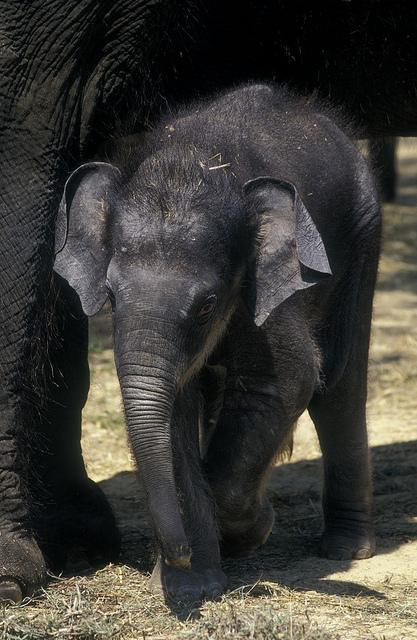
Elephants are among the most intelligent non-humans, arguably on par with chimpanzees, and both African and Asian elephants are endangered. 

In 1995, 16-month old Kumari, the first Asian elephant born at the National Zoo in Washington, DC, died of a mysterious illness. In 1999, Gary Hayward of Johns Hopkins University and collaborators published their results identifying a novel herpesvirus, EEHV1 as the cause of Kumari's sudden death. They now show that severe cases like this one are caused by viruses that normally infect the species, rather than by viruses that have jumped from African elephants, which was their original hypothesis.  

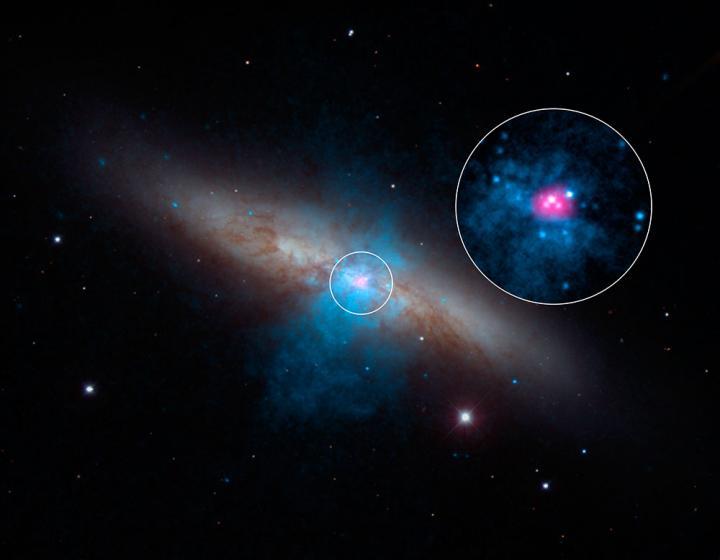
A once-in-a-century supernova, dubbed SN2014J, in a the nearby galaxy Messier 82 - the Cigar Galaxy - 12 million light-years away has been spotted; a pulsating dead star beaming with the energy of about 10 million suns. The object, previously thought to be a black hole because it is so powerful, is in fact a pulsar - the incredibly dense rotating remains of a star. 

Dom Walton, a postdoctoral scholar at Caltech who works with NuSTAR data, says that with its extreme energy, this first ultraluminous pulsar takes the top prize in the weirdness category. Pulsars are typically between one and two times the mass of the sun. This new pulsar presumably falls in that same range but shines about 100 times brighter than theory suggests something of its mass should be able to.


Commotion outside house of infected nurse Teresa Ramos near Madrid. Credit: EPA

By Peter Barlow, Edinburgh Napier University


Violent rhetoric appeals to disaffected young men because it gives them a challenge to express aggression as 'proof' of manhood. Credit: Sillouetted children playing as soldiers/Shutterstock

By David Plummer, Griffith University

Recent coverage of counter-terrorism raids in Australia featured hard-core gyms, anabolic steroids, nightclub bouncers, gangs and weapons. Footage from the Middle East regularly depicts truckloads of young bearded warriors bristling with ordnance.


Winners of the Nobel Prize in chemistry: Eric Betzig, Stefan Hell and William Moerner. Credit: Matt Staley, HHMI / Bernd Schuller, Max-Planck-Institut / K. Lowder

By Mark Lorch, University of Hull

Robert Hooke was a pioneer of microscopy, when back in the 17th century he drew stunning images of insects, plant cells and fossils. Since then microscopes that use light to magnify things we can’t see with the naked eye have, of course, improved. But, surprisingly, 300 years of engineering lenses hasn’t improved things all that much.

