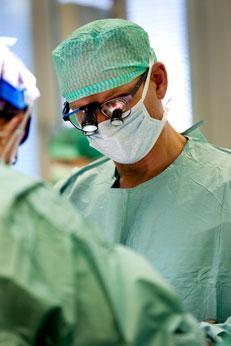











Seven Swedish women have had embryos reintroduced after receiving wombs from living donors and now one has delivered a healthy and normally developed boy, reveals the case study in The Lancet.

The uterus transplantation research project at the University of Gothenburg started in 1999 and the goal has been to enable women who were born without a womb or who have lost their wombs in cancer surgery to give birth to their own children.

Nine women in the project have received a womb from live donors – in most cases the recipient's mother but also other family members and close friends. The transplanted uterus was removed in two cases, in one case due to a serious infection and in the other due to blood clots in the transplanted blood vessels.

"Fermilab has very actively tried to scoop us by press release, even though their uncertainties are under serious challenge and they knew our measurements even before they released theirs."

Michael Riordan, a member to the Mark II collaboration, in an interview by David Perlman on the San Francisco Chronicle, July 21st 1989

What role do genes have to play in children's exam results? Student test by  wavebreakmedia

John O'Keefe , left, and Edvard and May-Britt Moser. Credits: David Bishop, UCL and NTNU

By Luc Henry, Swiss Federal Institute of Technology in Lausanne

The 2014 Nobel Prize in Physiology or Medicine was awarded with one half to John O'Keefe and the other half jointly to May-Britt Moser and Edvard Moser “for their discoveries of cells that constitute a positioning system in the brain”.


Just before totality on a total lunar eclipse. Credit: Flickr/John Johnson, CC BY-NC-SA

By Tanya Hill, Museum Victoria

At least twice a year, Earth comes between the sun and the moon. The result is a lunar eclipse, where we see the splendid sight of Earth’s shadow falling across the moon.

In last month’s review of Preparing the Ghost, I mentioned that you can actually learn facts from some fiction. Below is one such novel, crammed with science. As author Ryan Lockwood wrote in an e-mail, “Hopefully, most of the biology described in the book is in-line with real-world scientific data. I want to educate readers to some extent and encourage them to learn more after they finish the book.”

Cerebral palsy is the most common motor disability in childhood, afflicting between between 1 and 4 per 1,000 kids born worldwide. It's more common among boys than girls and only about half of adolescents with it can walk independently but regardless of that, kids with cerbral palsy rate their quality of life pretty high.

Either adolescents with cerebral palsy are doing pretty well or able-bodied adolescents in general invent problems when they have none. 

Researchers are investigating a possible association between breast implants and a form of lymphoma that may develop tumors at a later stage. The researchers conclude that breast implants can cause a new subtype of the rare yet malignant lymphoma known as anaplastic large cell lymphoma (ALCL).

Worldwide there have been 71 documented cases of patients with ALCL in which researchers suspected breast implants to be the cause. ALCL is normally found in the lymph nodes, as well as in skin, lung, liver and soft tissue, but not usually in the breast. 

Clinicians are just like anyone else. As the days goes on, they wear down a little. Numerous patient care decisions each day, and the cumulative demand of those decisions, take their toll.

In primary care, doctors often prescribe unnecessary antibiotics for acute respiratory infections (ARI) and now scholars at Brigham and Women's Hospital (BWH) in Boston found that antibiotic prescribing rates increased as the days got later.     

A few years ago there was concern that poor people did not have access to the best health care because of high cost, but two new papers find that spending is actually too high.

The first study examines recent trends in spending and use of oral cancer drugs. They find that average spending on the 47 available oral oncolytics — cancer medication taken specifically by mouth — increased from $940 million in the first quarter of 2006 to $1.4 billion by the third quarter of 2011.

