









The U.S. Food and Drug Administration has approved Keytruda (pembrolizumab), a new immunotherapy drug to treat advanced melanoma after it was tested on more than 600 patients who had melanoma that had spread throughout their bodies.

Because so many of the patients in the early testing showed significant long-lasting responses, the study was continued and the FDA granted the drug “breakthrough therapy” status, allowing it to be fast-tracked for approval. The largest Phase 1 study in the history of oncology, the research was conducted at UCLA and 11 other sites in the U.S., Europe and Australia.
A 'less is more' approach is not only making 3-D printed parts lighter and stronger, but faster and more economical.

A new technique under development is high speed sintering (HSS). Unlike commercial 3-D printers that use lasers, HSS marks the shape of the part onto powdered plastic using heat-sensitive ink, which is then activated by an infra-red lamp to melt the powder layer by layer and so build up the 3-D part.

The researchers from the University of Sheffield have discovered they can control the density and strength of the final product by printing the ink at different shades of grey and that the best results are achieved by using less ink than is standard.

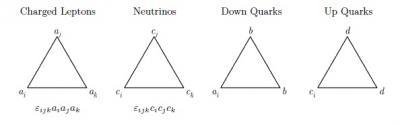
A recent paper makes a connection between the quantum group SLq(2), which describes knots, and the elementary particles of the Standard Model.  A mathematical knot is an embedding of a circle in 3-dimensional Euclidean space. Unlike your shoes, with their knot
the ends are joined together so it cannot be undone. The Standard Model, created in the 1970s, is the dominant hypothesis concerning electromagnetic, weak, and strong nuclear interactions in fundamental particles.

Some suggest that leptons, neutrinos, and quarks might be composite and the authors seeks to make the case that the structure is described by the quantum group SLq(2).

Cigarette smoking is considered a leading cause of preventable death worldwide and implicated in as many as 440,000 deaths in the United States each year by the U.S. Centers for Disease Control and Prevention.

In the United States, about 20 percent of people still smoke cigarettes and half claim they try to quit each year, though only 10 percent do so and most change their minds within 48 hours. Learning about withdrawal and difficulty of quitting can lead to more effective treatments to help smokers quit and so a new study on nicotine addiction measured a behavior that can be similarly quantified across species like humans and rats; the responses to rewards during nicotine withdrawal. 

A strange thing happened during climate change policy debates: Advances in hydraulic fracturing - fracking - put trillions of dollars' worth of previously unreachable oil and natural gas within humanity's grasp, and using it led to reductions in CO2 in the United States.

American cars didn't cause all climate change, no matter what you may have read. Around 13,000 years ago, a sudden, catastrophic event caused drastic climate change and much of the Earth was plunged into a period of cold climatic conditions and drought. This drastic climate change, now called the Younger Dryas, coincided with the extinction of Pleistocene megafauna, such as the saber-tooth cats and the mastodon, and resulted in major declines in prehistoric human populations, perhaps including the termination of the Clovis culture in America.

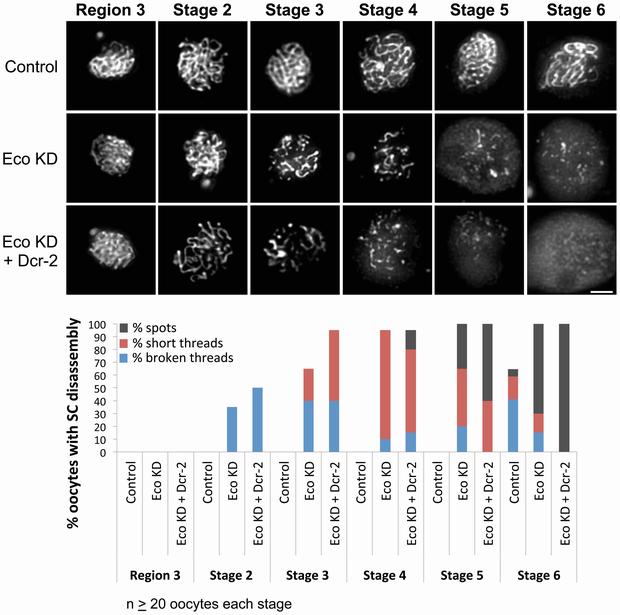
Researchers have discovered a pathway that may improve understanding of molecular mistakes that cause older women to have babies with Down syndrome.

As women age, so do their eggs and during a woman's 30s, the chance that she will conceive a Down syndrome fetus increases dramatically. Most such pregnancies arise from mistakes in a process called meiosis, a specialized cell division that creates gametes, or sex cells (sperm and eggs). Mistakes in meiosis can lead to gametes with the wrong number of chromosomes, which can cause Down syndrome.

Concerns about kidney transplantation are very high among kidney failure patients, particularly older adults and women, but why?

There are thousands of patients with kidney failure who lack access to kidney transplantation, and disparities persist in terms of race, age, sex, and other patient characteristics.  That gets a lot of attention but what gets less mention is those disparities are in large part self-created.

To improve access, it's important to understand the sources of the disparities. Are patients unaware of transplantation and clinicians don't explain it, clinicians don't give referrals, or are patient concerns causing them to avoid transplantation despite appropriate referrals?


The Tangshanpeng Wind Farm in China. Credit: Flickr/Land Rover Our Planet, CC BY-SA

By John Mathews and Hao Tan, University of Newcastle


Health systems aren't sexy. Credit: Truthout.org, CC BY-NC-SA

By Sophie Harman, Queen Mary, University of London

