







Image credit:  Gianluca Rasile via shutterstock http://shutr.bz/1o2xR50

By: Benjamin Plackett, Inside Science

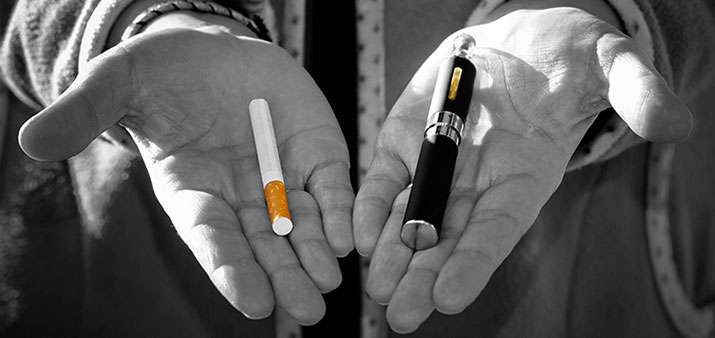
(Inside Science) -- From the strip malls of the Midwest to the boutiques of Manhattan’s West Village, e-cigarette stores can be found almost anywhere in the U.S.


Evolution is still the favored theory, according to fossil records. Credit: Flickr/Brent Danley, CC BY-NC-SA

By John Long, Flinders University


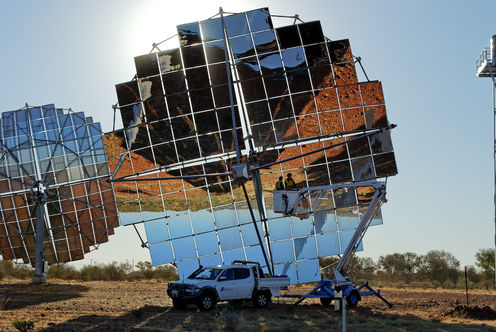
There are numerous methods for maintaining electricity supply when renewables are in the grid. Credit: Johan Douma/Flickr, CC BY-NC-SA

By Anthony Vassallo, University of Sydney

The recent review of the Australian Renewable Energy Target has once again raised the issue of the “unreliability” of some renewable power sources such as wind and solar power.

Quasars are supermassive black holes that live at the center of distant galaxies. They are the most luminous beacons in the sky, and shine across the entire electromagnetic spectrum due to rapidly accreting matter in their gravitationally inescapable centers.

Quasars display a broad range of outward appearances when viewed by astronomers, reflecting the diversity in the conditions of the regions close to their centers. But despite this variety, quasars have a surprising amount of regularity in their quantifiable physical properties, which follow well-defined trends (referred to as the "main sequence" of quasars) discovered more than 20 years ago. 

Objects in space spin, most people know that, but what is less known is that they spin in a way that's totally different from the way they spin on earth.

It comes down to where their centers of mass are, and how their mass is distributed - knowing how things will spin is crucial to any number of actual or potential space missions, from cleaning up debris in the geosynchronous orbit favored by communications satellites to landing a demolition crew on a comet.

The Obama administration recently began claiming that the unemployment rate had dropped to 6.1 percent, evidence that its economic policies were working. Yet over 90 Americans of working age are unemployed or working at low paying jobs outside their fields. How can they both be correct? 

Estimating the unemployment rate has become more difficult than in the past - because the definition of unemployment has changed and so has the design of metrics to track it. Millions of people cannot get unemployment benefits because they have been out of work too long, for example. To the government, that means they are not unemployed, even though they clearly are. Others have taken part-time jobs. 

VFH and UFH portions of the radio spectrum are reserved for over the air television broadcasts and the FCC keeps plenty of space between channels to prevent interference.

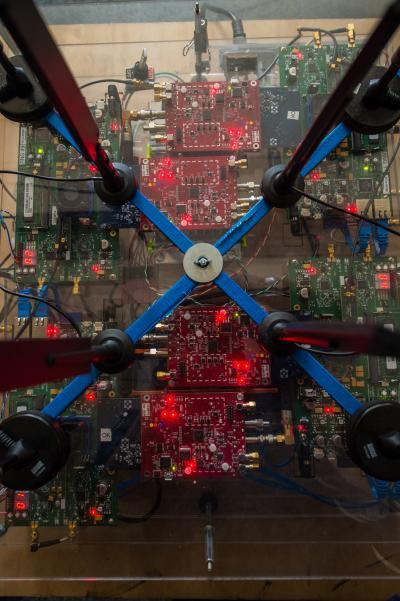
But unused UHF TV spectrum could be used for fat streams of data over wireless hotspots that could stretch for miles, according to a presentation at the Association for Computing Machinery's MobiCom 2014 conference.  

Some people avoid risk while others will roll the dice with wealth, health, and safety. Is it just personality? Media influence?

Researchers led by Ifat Levy, assistant professor in comparative medicine and neurobiology at Yale School of Medicine believe that the volume of the parietal cortex in the brain can predict where people fall on the risk-taking spectrum. 

People with blood type AB may be more likely to develop memory loss in later years than people with other blood types, according to a paper in Neurology, but what does that really mean?

AB is the least common blood type, found in about 4 percent of the U.S. population. The study found that people with AB blood were 82 percent more likely to develop the thinking and memory problems that can lead to dementia than people with other blood types.

Previous studies have shown that people with type O blood have a lower risk of heart disease and stroke, factors that can increase the risk of memory loss and dementia but those are based on epidemiological fishing expeditions.  Is there really a link?

A pop song goes that rainy days and Mondays bring people down. There was always some truth to that and a new paper in JAMA quantifies the link between a lack of sunshine and suicide. The authors found that lower rates of suicide are associated with more daily sunshine in the prior 14 to 60 days.

Light interacts with brain serotonin systems and possibly influences serotonin-related behaviors. Those behaviors, such as mood and impulsiveness, can play a role in suicide.

