


The prospective launch of the ambitious and successful Copenhagen Suborbitals rocket received a lot of press. The subsequent launch-abort and delay to spring may not seem an upbeat thing.  In a broad sense, though, it is.
"MAIN LOX VALVE FAILURE
I remember, as a child, being very upset by a ventriloquist’s dummy at a show, and crying out and making a ‘scene’.  Even well into my teens and beyond, I felt disturbed by “magic”, even in mathematics or science.  One particular incident I remember was being shown in class the ‘proof’, by an elementary form a calculus of variations, that the shortest path[1] between two coordinates is a straight line.  This left me with an uncomfortable feeling.
A non-mythological unicorn?   So it seems.   Unicorns have been mentioned throughout history, in mythology and in the works of The Bible and Pliny the Elder's Natural History.    Today the modern westernized unicorn is pure white and hangs out with virgins.

In zoology, it is never so simple.

In 1992, in Vietnam's Vu Quang Nature Reserve near the country's border with Laos, a spectacular zoological discovery occurred.  A creature with long horns (sorry unicorn fans - two of them) and white facial markings, and resembling the antelopes of North Africa but more closely related to wild cattle, a new species called the Saola was discovered.
My last post about hydrogen bonding included a video about dogs as an analogy to the chemistry. This got me thinking about visual analogies, and how video or images can be used to convey something that perhaps print can't quite accomplish.

This video by Brad Plummer and Julie Karceski of SLAC (disclaimer -- they are both colleagues and friends) explains the concept of gravitational lensing -- in which a particularly large galaxy bends light in such a way that an observer can see objects behind the galaxy -- with a simple household item: the wine glass. Watch:
When you think of the ideal creative environment, what comes to mind?  We may imagine a place where you have freedom of expression, a place that encourages breaking convention, somewhere that is abundant in resources that are readily accessible for innovative development of technology, and exposure to many different cultures for inspiration and collaboration.
A new study in Heart says a combination of depression and heart disease is far more lethal than either one of those condition alone.

Depressed people are more likely to die from all causes so it's difficult to narrow down whether or not depressed people with heart disease are at greater risk and people who who are depressed, but otherwise healthy, have been shown to be more likely to develop coronary heart disease, irrespective of what other risk factors they might have. 
A very important new theoretical study has appeared last Tuesday in the hep-ph preprint arxiv. Titled "Precise Predictions on W+4 Jet Production at the Large Hadron Collider", it is signed by a strong team of theorists: C. Berger, Z. Bern, L. Dixon, F. Febres Cordero, D. Forde, T. Gleisberg, H. Ita, D. Kosower, and D. Maitre.

I believe it may be quite useful if I review here the paper results, and explain to you why they are very important for the physics of the LHC. But first, I feel that there are a few details concerning the process of W+jets production at the LHC which might be obscure to most of you. Let me straighten them out -it is worthwhile to do it!

Preliminaries
I occasionally get questions about usage of Science 2.0 that go beyond the FAQ so I decided I would write up a short article on using the site for non-beginners.   The FAQ covers the basics - what Science 2.0® is, the experimental nature of this open writing site for science, etc. along with the basic functionality, like the dashboard - but due to the way the site has grown some other features may not be evident for newer members.

How to find good stuff to write about?

On September 16th the 2010 World Solar-Powered Air Conditioning Development Forum was held in Dezhou, a municipality of China's Shandong Province.

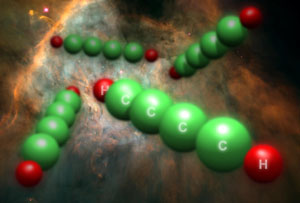
What is really happening in apparently empty areas of the Galaxy?   It may get a rethink because scientists have managed to find a molecule that has an unexpectedly complicated structure in interstellar clouds of extremely small density. 

Translucent interstellar clouds are penetrated by highly energetic ultraviolet and cosmic radiation which should break any chemical species it meets but a group of scientists have managed to observe in those clouds a molecule made up of an unexpectedly large number of atoms: the diacetylene cation; a discovery which may contribute to solving the oldest unsolved puzzle of spectroscopy.

The density of translucent interstellar clouds is extremely small.

