Search For Franklin - A Free Resource
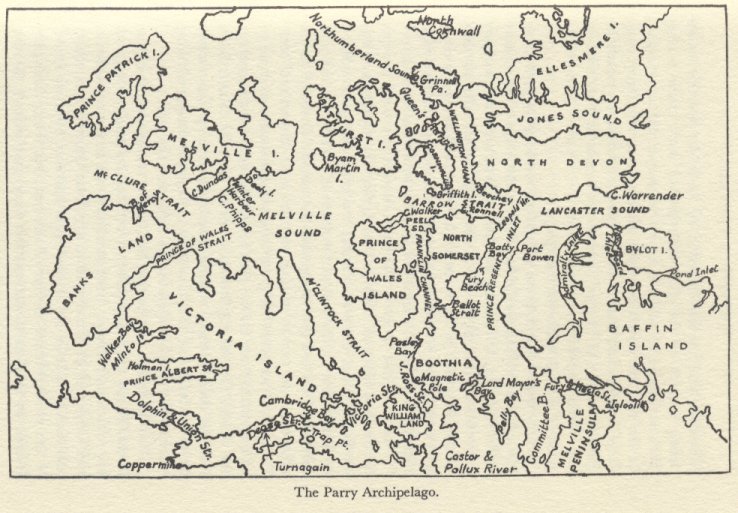
Much of what was known about the Arctic before the 20th century came from the sheer guts and determination of men who didn't know how to quit.
The quest for a North West Passage was promoted by commercial and military considerations. After the loss of the Franklin Expedition with two entire ships' crews, a 'no expense spared' approach was taken to finding the lost expedition.
Many of the ships engaged in the search had to be abandoned due to the terrible conditions. Eventually, all hope of finding any member of the Franklin crews alive was abandoned.
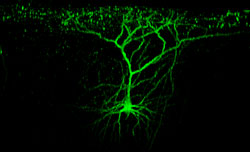
Neural circuitry is constantly changing to meet the challenges of its environment and ahead of his presentation on July 6th, sponsored by The Kavli Foundation , at the 7th FENS Forum of European Neuroscience in Amsterdam, Tobias Bonhoeffer, director at the Max Planck Institute of Neurobiology in Martinsried, Germany, offers insight into how new techniques enable researchers to watch this process of adaptation as never before.
What happens to our brains as we experience the outside world? Scientists have learned that the brain undergoes structural changes as it absorbs sensory data, learns and adapts, but the actual mechanism of this process is just now coming into view.
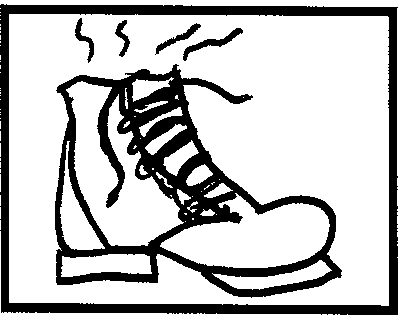
For many hundreds of years, people in Eastern Europe have treated epileptic seizures with the quick administration of shoe smell. This smell (and specifically this smell) has the power to arrest the seizure, or so says the folk wisdom.
Fact or fiction?
Z' Bosons: The Dream Moves Away
The long-distance competition between CERN and Fermilab - between Europe and the US, if you like - for supremacy in the field of fundamental physics is made of direct challenges, like the search for the Higgs boson, as much as of indirect skirmishes, such as one facility excluding a signal that the other facility has a chance of discovering.
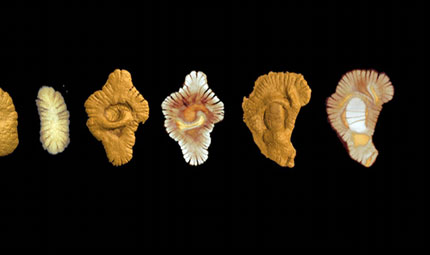
The existence of multicellular organisms, the first complex life forms (made up of several cells) has been extended from about 600 million years in the past to over 2 billion years ago, according to research published in Nature.
That means organized life is a lot older than was scientifically accepted, though older existence was obviously assumed because the first traces of life appeared in the form of prokaryotic organisms (without a nucleus) 3.5 billion years ago. The "Cambrian explosion" 600 million years ago marked a proliferation in the number of living species and was accompanied by a sudden rise in oxygen concentration in the atmosphere.
We meet many of the same people every day but without the ability to recognize faces at first glance, our lives would be a confusing mess. Imagine asking your boss for coffee or a waitress to place a phone call.
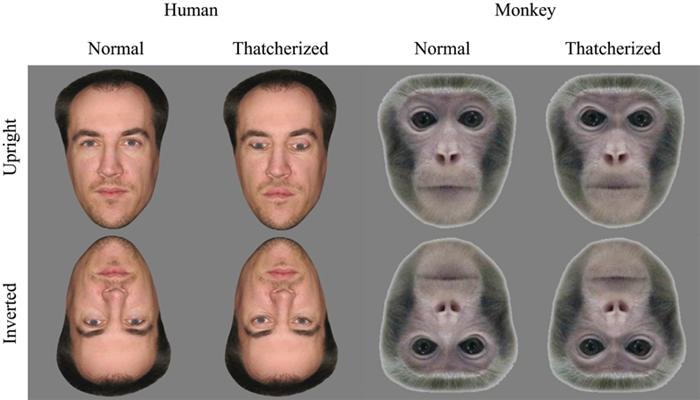
Monkeys also possess the ability to distinguish between faces of group members and to extract the relevant information about the individual directly from the face. With the help of the so-called 'Thatcher illusion', scientists of the Max Planck Institute for Biological Cybernetics in Tübingen, Germany, have examined how people and macaque monkeys recognize faces and process the information in the brain. They found out that both species perceive the faces of their kin immediately, while the faces of the other species are processed in a different way.
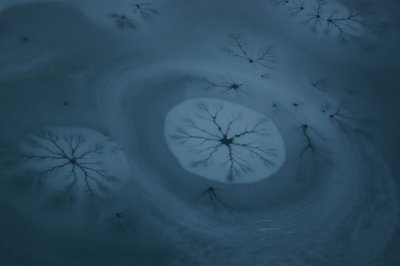
Understanding IceIce is just frozen water, right?
Wrong!
Now you will perhaps inquire with astonishment how it is possible that ice, which is the most brittle and fragile of substances, can flow in the glacier like a viscous mass; and you may perhaps be disposed to regard this as one of the wildest and most improbable statements that have ever been made by philosophers.
Hermann von Helmholtz, 1865
It's very difficult to make absolutely pure ice, even in the lab. Most especially in natural conditions, when ice forms it includes all sorts of chemicals and particles - and they affect its properties significantly, as does the water itself and the bottom topography.
Ever wonder what the future of space tourism will be? This series of posters (from the same collection as last week's
spaceport illo) in neo-retro style clearly presents your options.
You are all familiar with a solar eclipse, when our Moon passes in front of the Sun and blocks its light, but a similar situation can happen with asteroids, those Sun-orbiting, rocky objects left over from the formation of the Solar System or formed by collisions between other asteroids.
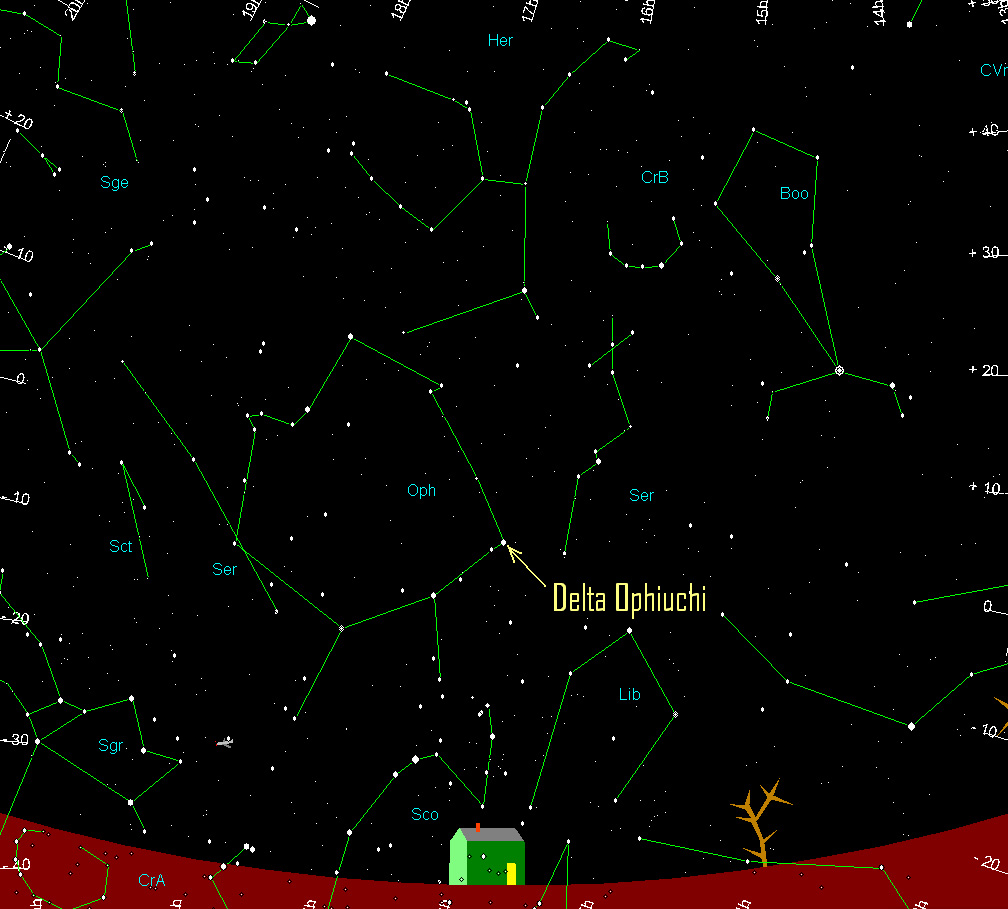
We know of about 400,000 asteroids, which range in size from a few hundred kilometers to just a few meters. Obviously an asteroid is too small to cover the Sun but because of proximity one will occasionally move directly in front of one of the stars in the night sky and block its light from our view, causing a stellar eclipse or 'occultation'.
Homeopathy's origin should be a clue to why there is no evidence to show it has ever worked. In the words of Samuel Hahnemann, the German physician at a time when being an M.D. was not a mark of respect, believed
"The vital force that animates the healthy body, rules with unbounded sway, and retains all the parts of the organism in admirable, harmonious, vital operation . . . so that our indwelling, reason-gifted mind can freely employ this living, healthy instrument for the higher purpose of our existence."
...
"when a person falls ill, it is only this spiritual vital force, everywhere present in his organism, that is primarily deranged by another dynamic influence hostile to his life."