






One of the biggest threats to today's farmlands is the loss of soil organic carbon (SOC) and soil organic matter (SOM) from poor land-management practices. The presence of these materials is essential as they do everything from providing plants with proper nutrients to filtering harmful chemical compounds to the prevention of soil erosion. Sustainable management practices for crop residues are critical for maintaining soil productivity, but being able to measure a loss in the quality of soil can be difficult.
In contrast to recent findings, two of the most common medications used to treat attention deficit hyperactivity disorder (ADHD) do not appear to cause genetic damage in children who take them as prescribed, according to a new study by researchers at the National Institutes of Health (NIH) and Duke University Medical Center.

ADHD is a disorder characterized by attention problems, impulsivity, and hyperactivity. About 3 percent of children in the United States have been diagnosed with the disorder, although some studies suggest 7 to 12 percent of children may be affected.
We don't have ten years, as Al Gore predicted in 2006, dangerous levels of carbon dioxide are already here, say 10 scientists, and the level of globe-warming carbon dioxide in the air has probably already reached a point where world climate will change disastrously unless the level can be reduced in coming decades. 

Their new study is markedly different from consensus projections that carbon dioxide levels would become critical later this century.   They publish their new estimates in the current edition of the Open Atmospheric Science Journal.
A new study by researchers at the Bradley Hasbro Children's Research Center suggests that the incidence of heterosexual anal sex is increasing among teens and young adults – particularly those who have recently had unprotected vaginal sex. These findings mirror recent data that show anal sex rates among adults doubled between the years 1995 and 2004.

The study, published online by the American Journal of Public Health, is among the first to report on the little-known factors associated with heterosexual anal intercourse among adolescents and young adults.

by Diane Banegas, National Science Foundation

Researchers at the University of Minnesota-Twin Cities are studying a remarkable species of bacteria, Geobacter sulfurreducens, that produces electric current when attached to a graphite electrode or other conductive surface.

Geobacter's current capability already has been harnessed in so-called "microbial fuel cells" that use bacteria to convert wastewater organic compounds into electricity. Daniel Bond, a microbiologist at the University of Minnesota-Twin Cities, and his team have demonstrated the same phenomenon can be harnessed for use in batteries and biosensors. 
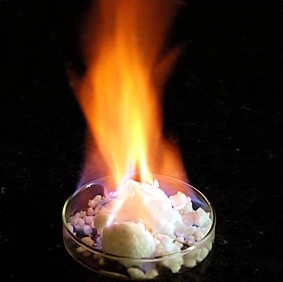
Imagine a future for ice cubes that burn, it may sounds impossible but gas hydrates are an alternate energy source said to put every other fossil fuel to shame.

Gas Hydrates are an ice-like solid composed from the bonding of water and natural gas molecules. The lattice-structure traps gas particles (mostly methane) within the ice. Hydrates form under the low temperatures and high pressures of the ocean floor, usually at depths greater than 500 meters and are primarily found to occur within sedimentary deposits along continental shelves and also beneath Arctic permafrost. The exact amount and whereabouts of the world's hydrate supply is unknown, but technological advances are pushing science closer to these answers.
A couple of years ago I co-taught a course in philosophy and science with a colleague in the Philosophy department at Stony Brook University. At some point the issue of “human nature” came up, and my colleague looked at me with a mix of surprise and pity: human nature, she maintained, is a quaint concept that has been long abandoned by serious scholars, so why are we still talking about it? Tell it to James Fowler and Darren Schreiber, who recently authored a paper in the prestigious Science magazine (7 November 2008) by the title “Biology, Politics, and the Emerging Science of Human Nature.”
Sometimes, you have to read between the lines.

As a columnist, I receive a host of press releases that fill up my mailbox with mostly unintelligible medical jargon which mostly amounts to nothing. So this past weekend, when I was sent a report from JAMA (Journal of the American Medical Association) saying that results from a six year study were being published in the following week’s journal, I eagerly awaited the study. However the study concluded that its six year evaluation on the effects of Ginkgo biloba extract on cognitive function in Alzheimer’s disease (AD) patients yielded nothing.
BEATNIKS   &   DREAMACHINES

Almost fifty years ago, the beat poet Brion Gysin (1916 - 1986), described a visual hallucination that he experienced while riding a bus:
In a study I dub “Are you powerful or not?” I’d be in a third category. Why? Because I felt insulted when instructed to do what researchers asked of students. At Northwestern and Stanford, no less. Here’s what happened. Two professors, Adam Galinsky, Professor of Ethics&Decision Management, Northwestern University and Joe Magee, Joe Magee of the Wagner Graduate School of Public Service at NYU,  divided undergrads into two groups.

