More than 11,000 alien species have been documented by DAISIE (Delivering Alien Invasive Species Inventory for Europe), a unique three year research project with more than 100 European scientists, funded by the European Union that provides new knowledge on biological invasions in Europe. Biological invasions by alien species often result in a significant loss in the economic value, biological diversity and function of invaded ecosystems.
University of Alberta research has yielded a way to double the output of rice crops in some of the world's poorest, most distressed areas.
Jerome Bernier, a PhD student in the U of A Department of Agricultural, Food and Nutritional Science, has found a group of genes in rice that enables a yield of up to 100 per cent more in severe drought conditions.
The discovery marks the first time this group of genes in rice has been identified, and could potentially bring relief to farmers in countries like India and Thailand, where rice crops are regularly faced with drought. Rice is the number one crop consumed by humans annually.
To some, it's a vague remembrance of a scene from a past life. Others attribute it to viewing something in real life they dreamed the night before. To the leather-clad protagonists of the movie "The Matrix", it happened whenever the machines altered something about the virtual world they created. Regardless of the explanation, déjà vu is the common and unmistakable experience of feeling as if whatever sensory input we're receiving has been received before - even though we can't pinpoint the exact source.

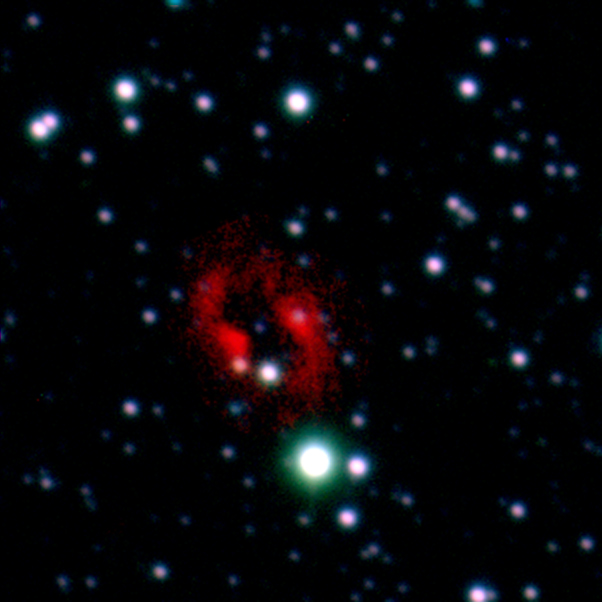
The explosion of a binary star inside a
planetary nebula has been captured by a team of researchers – an event that has not been witnessed for more than 100 years. The study, published in
Astrophysical Journal Letters, predicts that the combined mass of the two stars in the system may be high enough for the stars to eventually spiral into each other, triggering an even larger supernova explosion.
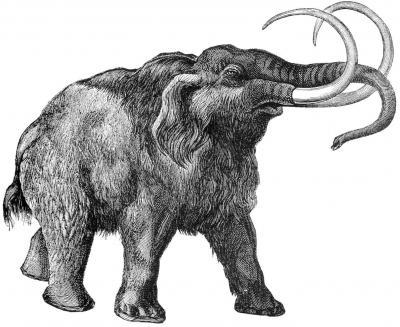
Scientists are reporting the first genome-wide sequence of an extinct animal, according to Webb Miller, Penn State professor of biology, one of the project's two leaders. The animal is the woolly mammoth, an extinct species of elephant that was adapted to living in the cold environment of the northern hemisphere and they did it by sequencing four billion DNA bases using next-generation DNA-sequencing instruments and a novel approach that reads ancient DNA with high efficiency.
A ban on fast food advertisements in the United States could reduce the number of overweight children by as much as 18 percent, according to a new study being published this month in the Journal of Law and Economics. The study also reports that eliminating the tax deductibility associated with television advertising would result in a reduction of childhood obesity, though in smaller numbers.
The authors found that a ban on fast food television advertisements during children's programming would reduce the number of overweight children ages 3-11 by 18 percent, while also lowering the number of overweight adolescents ages 12-18 by 14 percent. The effect is more pronounced for males than females.
A detailed analysis of black carbon, the residue of burned organic matter, in computer climate models suggests they may be overestimating global warming predictions. A new Cornell study in Nature Geosciences quantified the amount of black carbon in Australian soils and found that there was far more than expected, said Johannes Lehmann, the paper's lead author and a Cornell professor of biogeochemistry. The survey was the largest of black carbon ever published.
Analysis of newly revealed items found at the site of what is believed to be the mausoleum of King Herod at Herodium (Herodion in Greek) have provided Hebrew University of Jerusalem archaeological researchers with more evidence affirming that this was indeed the site of the famed ruler's 1st century B.C.E. grave.
Herod was the Roman-appointed king of Judea from 37 to 4 B.C.E., who was renowned for his many monumental building projects, including the reconstruction of the Temple in Jerusalem, the palace at Masada, the harbor and city of Caesarea, as well as the palatial complex at Herodium, 15 kilometers south of Jerusalem.
The first tissue-engineered trachea (windpipe), utilizing the patient's own stem cells, has been successfully transplanted into a young woman with a failing airway. The bioengineered trachea immediately provided the patient with a normally functioning airway, thereby saving her life.
These remarkable results provide crucial new evidence that
adult stem cells, combined with biologically compatible materials, can offer genuine solutions to other serious illnesses.
Global land use patterns and increasing pressures on water resources demand creative urban stormwater management. Traditional stormwater management focuses on regulating the flow of runoff to waterways, but generally does little to restore the
hydrologic cycle disrupted by extensive pavement and compacted urban soils with low permeability. The lack of infiltration opportunities affects groundwater recharge and has negative repercussions on water quality downstream.