



Men with premature ejaculation who used a topical spray five minutes before intercourse were able to delay their orgasm six times longer than normal, according to a study in the April issue of BJU International.

Three hundred men with clinically diagnosed lifelong premature ejaculation (PE) from 31 centres in the UK, Czech Republic, Hungary and Poland, were randomised into two groups. Two hundred used the PSD502 spray, which contains 7.5mg of lidocaine and 2.5mg of prilocaine, and 100 used a placebo spray with no active ingredients.

Patients with schizophrenia are able to correctly see through an illusion known as the 'hollow mask' illusion, probably because their brain disconnects 'what the eyes see' from what 'the brain thinks it is seeing', according to a joint UK and German study published in the journal NeuroImage. The findings shed light on why cannabis users may also be less deceived by the illusion whilst on the drug.

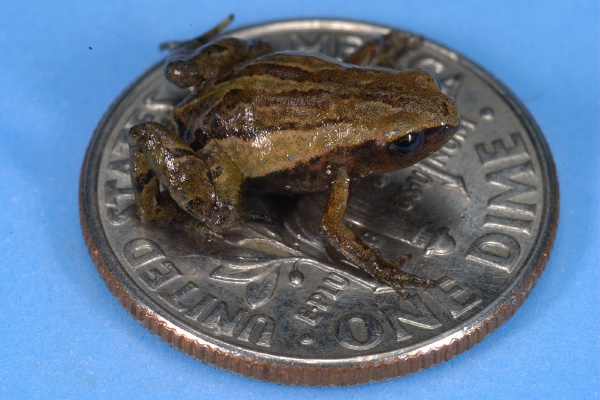
It fits on a fingertip: Noblella pygmaea is a midget frog, the smallest ever found in the Andes and among the smallest amphibians in the world. Only its croaking was to be heard from the leaves on the mossier ground of the “elfin forests” in the highlands of Manu National Park, before German and Peruvian herpetologists discovered the tiny little thing in south-eastern Peru.  

The popular name of the new species is fitting: Noble’s Pygmy Frog has an average length of 
On the eve of the Passover holiday, researchers from the University of Haifa reveal an exceptional and exciting archaeological discovery that dates back to the time of the People of Israel's settlement in the country: For the first time, enclosed sites identified with the biblical sites termed in Hebrew "gilgal", which were used for assemblies, preparation for battle, and rituals, have been revealed in the Jordan valley.
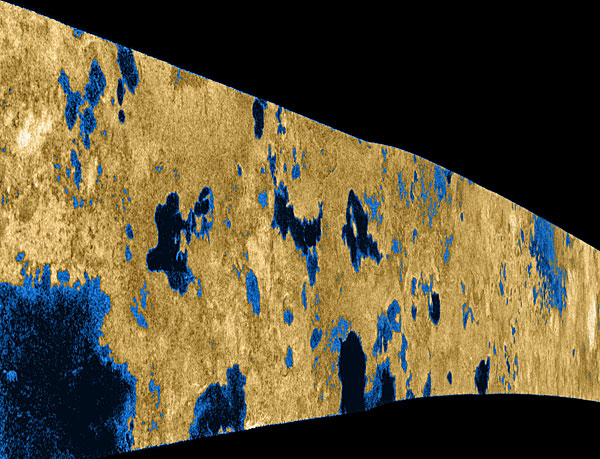
Saturn's largest moon, Titan, may have a subterranean ocean of hydrocarbons and some topsy-turvy topography in which the summits of its mountains lie lower than its average surface elevation, according to new research. 

Titan is also more squashed in its overall shape—like a rubber ball pressed down by a foot—than researchers had expected, said Howard Zebker, a Stanford geophysicist and electrical engineer involved in the work. The new findings may help explain the presence of large lakes of hydrocarbons at both of Titan's poles, which have been puzzling researchers since being discovered in 2007. 

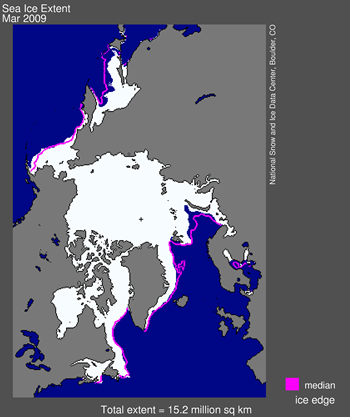
The latest data from NASA and the University of Colorado at Boulder's National Snow and Ice Data Center show the continuation of a decade-long trend of shrinking sea ice extent in the Arctic, including new evidence for thinning ice as well.

The researchers, who have been tracking Arctic sea ice cover with satellites since 1979, found that the winter of 2008-09 was the fifth lowest maximum ice extent on record. The six lowest maximum events in the satellite record have all occurred in the past six years, according to CU-Boulder researcher Walt Meier of NSIDC.

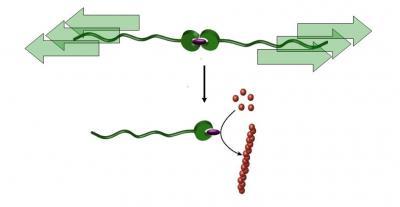
Researchers at Eindhoven University of Technology (TU/e) have developed an entirely new method for starting chemical reactions. For the first time they used mechanical forces to control catalytic activity – one of the most fundamental concepts in chemistry. This allowed them to initiate chemical reactions with mechanical force. This discovery paves the way to developing materials capable of repairing themselves under the influence of mechanical tension. The results of their research were published in Nature Chemistry.

Molecular ripcord

As science fiction plot lines go, the unintended consequences of yielding tasks too complicated or dangerous for human hands to computers and robots is a popular one. Yet real life scientists are increasingly doing just that, creating automated systems and devices that can not only help collect, organize and analyze scientific data, but that are also able to intelligently and independently draw up new hypotheses and approaches to research based on the data they receive.

Writing in Science, David Waltz of the Center for Computational Learning Systems at Columbia University and Bruce G. Buchanan of the computer science department at the University of Pittsburgh discuss this 'brave new world' of scientific research and its implications for the way science is conducted.

Researchers at the University of California, San Diego School of Medicine have compiled the first-ever review of the neurobiology of wisdom – once the sole province of religion and philosophy. The study by Dilip V. Jeste, MD, and Thomas W. Meeks, MD, of UC San Diego's Department of Psychiatry and the Stein Institute for Research on Aging, was published in the Archives of General Psychiatry.

Wisdom has been defined over centuries and civilizations to encompass numerous psychological traits. Components of wisdom are commonly agreed to include such attributes as empathy, compassion or altruism, emotional stability, self-understanding, and pro-social attitudes, including a tolerance for others' values.

With climate change looming, the hunt for places that can soak up carbon dioxide from the atmosphere is on.

Obvious "sinks" for the greenhouse gas include the oceans and the enormous trees of tropical rainforests. But temperate forests also play a role, and new research now suggests they can store more carbon than previously thought.

In a study that drew on both historical and present-day datasets, Jeanine Rhemtulla of McGill University and David Mladenoff and Murray Clayton of University of Wisconsin-Madison quantified and compared the above-ground carbon held in the forest trees of Wisconsin just prior to European settlement and widespread logging, and the total carbon they contain today.

