A small, pilot study in 50 people in Japan suggests that eating two and a half ounces of broccoli sprouts daily for two months may confer some protection against a rampant stomach bug that causes gastritis, ulcers and even stomach cancer.
Citing their new "demonstration of principle" study, a Johns Hopkins researcher and an international team of scientists caution that eating sprouts containing sulforaphane did not cure infection by the bacterium Helicobacter pylori (H. pylori). They do not suggest that eating this or any amount of broccoli sprouts will protect anyone from stomach cancer or cure GI diseases.
Dr. Aleem Gangjee, Distinguished Professor of Medicinal Chemistry at Duquesne University’s Mylan School of Pharmacy, and his team of collaborators continue to test a compound that appears not only to prevent cancer tumors from developing but to eliminate already-existing tumors.
In 2008, tests of a new compound developed by Gangjee showed that it stifled the growth of cancer tumors, which were composed of KB tumor cells, in mice. An unexpected result also showed that the compound shrunk and eventually eliminated cancer tumors in another group of mice, which remained tumor-free for 60 days.
“What we’re seeing here is a compound that can treat early- and late-stage cancer,” Gangjee said. “There are many ramifications to that.”
As part of the International Year of Astronomy 2009 Cornerstone project, 100 Hours of Astronomy, the ambitious “Around the World in 80 Telescopes” event is a unique live webcast over 24 hours, following night and day around the globe to some of the most advanced observatories on and off the planet.
To provide a long-lasting memory of this amazing world tour, observatories worldwide are revealing wonderful, and previously unseen, astronomical images. For its part, ESO is releasing outstanding pictures of two galaxies, observed with telescopes at the La Silla and Paranal observatories.
Investigators from the Harvard School of Public Health and the University of Puerto Rico evaluated the association between different measures of obesity and risk of periodontal disease. They analyzed data from 36,903 men from the Health Professionals Follow-Up Study who were free of reported periodontal disease at the start of follow-up, and followed them for up to 16 years (1986-2002).
Older people can dance their way towards improved health and happiness, according to a report from the Changing Ageing Partnership (CAP). The research, by Dr Jonathan Skinner from Queen’s University Belfast, reveals the social, mental and physical benefits of social dancing for older people. It suggests that dancing staves of illness, and even counteracts decline in aging.
Recommendations include the expansion of social dance provision for older people in order to aid successful aging and help older people enjoy longer and healthier lives.
Jonathan Skinner, Lecturer in Social Anthropology at the School of History and Anthropology at Queen’s, studied the effects of social dancing amongst older people in Northern Ireland, Blackpool and Sacramento.
Does the stress of being a parent lead to decay in children's teeth?
A team of scientists from The Ohio State University has examined the stress levels of parents whose young children either had no cavities or so many cavities that the children had receive anesthesia before undergoing dental treatment.
The investigators presented their findings today during the 87th General Session of the International Association for Dental Research.
The team also looked at the parents' education levels and income, and noted if they were single parents. Finally, they measured the parents' stress levels again after the children had received dental treatment.
A small, dense object only twelve miles in diameter is responsible for this beautiful X-ray nebula that spans 150 light years. At the center of this image made by NASA's Chandra X-ray Observatory is a very young and powerful pulsar, known as PSR B1509-58, or B1509 for short.
The pulsar is a rapidly spinning neutron star which is spewing energy out into the space around it to create complex and intriguing structures, including one that resembles a large cosmic hand. In this image, the lowest energy X-rays that Chandra detects are red, the medium range is green, and the most energetic ones are colored blue. Astronomers think that B1509 is about 1,700 years old and is located about 17,000 light years away.
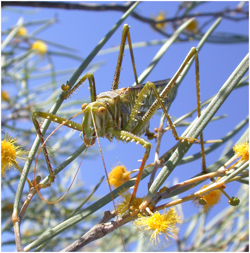
Remember when Bugs Bunny dressed as Brunhilda to mess with opera viking Elmer Fudd? If the
What's Opera, Doc? ended with Bugs biting off half of Elmer Fudd’s head to keep him hanging around as an immobile food source, then the "Kill The Wabbit" cartoon would essentially tell the story of the Spotted Predatory Katydid. This bug-of-prey lures lovesick male cicadas by decoding the complex cicada mating duet and imitating a lusty cicada female. As soon as the male cicada gets in grabbing range, the duet becomes a lot less romantic.
SAN JOSE, California, April 3 /PRNewswire/ --
- Doug Conn awarded US$15,000 for envisioning the 'home of the future' through The Smart Pill.
At the Embedded Systems Conference (ESC) Silicon Valley 2009 yesterday, Microsoft Corp. announced Doug Conn as the winner of the Microsoft Windows Embedded SPARKs Will Fly developer contest, a global competition designed to foster creativity and innovation among the embedded hobbyist and academic communities. The theme of the contest, home of the future, encouraged more than 140 contestants globally to demonstrate fresh thinking around the smart, connected, service-oriented devices of the future.
(Logo: http://www.newscom.com/cgi-bin/prnh/20000822/MSFTLOGO)
Some regions of our genomes are under permanent lockdown because they are hazardous to our health - or at least the health of our future offspring. These secured regions include large swaths of parasite-infested DNA - DNA that contains transposable elements, virus-like genetic parasites that have the ability to hop around the genome and cause harmful mutations.
Because out of control transposable elements are a major danger, cells (ours and those of most other organisms) have an elaborate maximum-security system for shutting these bad boys down. Just how this lockdown system works is an active area of research, and a recent
paper revealed how plant cells enforce security and prevent prison breaks by these DNA parasites.