Show Me The Science Month Day 12
Natural selection is often much like Goldilocks - an organism's traits shouldn't be too hot or too cold; natural selection likes them just right. In other words, traits are under pressure to remain near an optimum. If they deviate too far, natural selection will not-so-gently prod things back to the center. This phenomenon is known as
stabilizing selection.
Stabilizing selection has to push against another powerful evolutionary force - random drift. Much of our genetic makeup is influenced by
non-adaptive processes, that is, processes that are not particularly favored or disfavored by natural selection, and which do not perform some function that improves the fitness of the organism. Selection and drift have been especially hard to tease apart when it comes to gene regulation. Related species regulate their genes in different ways, but how many of those differences are simply due to random divergence? Trevor Bedford and Daniel Hartl at Harvard University take a crack at this question in a
recent paper. They use a mathematical model based on Brownian motion (the kind of random motion you see when you watch pollen grains buffeted about in a drop of water) to determine how well stabilizing selection counteracts the battering of random drift.
Right now we have a tandem situation. Jason-1 and Jason-2 are flying in tandem above our heads. Sounds like fun perhaps, but who cares? And who are Jason and what's with the numbers, anyways?

If Google is hoarding all of the information in the world, I want in on some of it. Lured by the
siren song of the new ocean features in Google Earth 5, I took the plunge. Embarked upon my maiden voyage. Threw myself in with the sharks. Ran out of sea cliches. Downloaded
Google 5 in all of its beta-riffic glory.
Researchers at the Swedish medical university Karolinska Institutet have shown for the first time that the active training of the working memory brings about visible changes in the number of dopamine receptors in the human brain. The study, which is published in the prestigious scientific journal Science, was conducted with the help of PET scanning and provides deeper insight into the complex interplay between cognition and the brain's biological structure.
"Brain biochemistry doesn't just underpin our mental activity; our mental activity and thinking process can also affect the biochemistry," says Professor Torkel Klingberg, who led the study. "This hasn't been demonstrated in humans before, and opens up a floodgate of fascinating questions."
Sensors able to identify individuals’ brain patterns and heart rhythms could become part of security systems which also use more traditional forms of biometric recognition, thanks to pioneering work being done by European researchers.
Since 9/11, the need to secure important facilities from terrorist attack has become a top priority around the world. And one of the keys to this is making sure the right people are allowed into sensitive areas and the wrong people are kept out.
A range of technologies and systems have been deployed in the past few years, but the more successful they are the more obtrusive they tend to be, causing disruptions and delays.
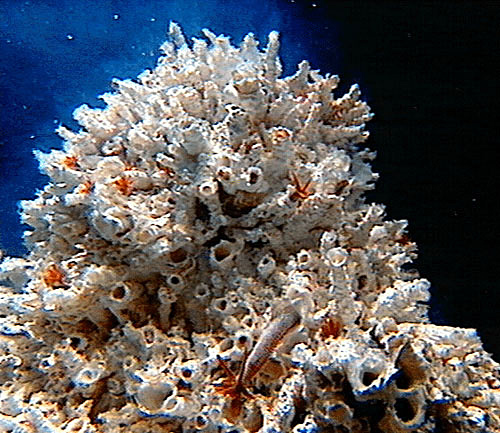
Want to learn how to survive in exteme environments? A marine bacterium living 8,000 feet below the ocean's surface can show you the way.
The bacterium Nautilia profundicola, a microbe that survives near deep-sea hydrothermal vents, was found in a fleece-like lining on the backs of Pompeii worms, a type of tubeworm that lives at hydrothermal vents, and in bacterial mats on the surfaces of the vents' chimney structures.
One gene, called rgy, allows the bacterium to manufacture a protein called reverse gyrase when it encounters extremely hot fluids from the Earth's interior released from the sea floor.
Show Me The Science Month Day 11
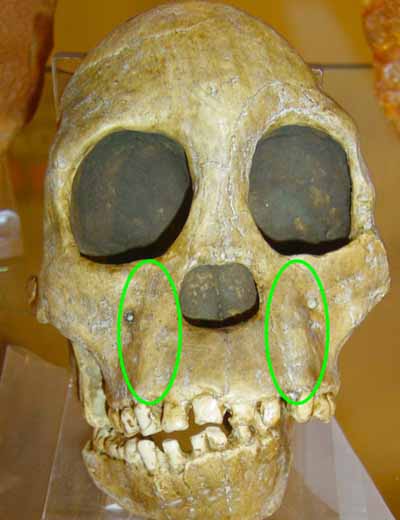
Imagine a world where the major source of human nutrition was beer. That may sound fantastic to some of you, but now imagine that, in this beer-world, there are no bottle openers and no twist-off caps. To get at the beer, you have to open the bottles with your teeth. Day in, day out, you're opening bottles with your teeth. If the world continued like this for a few thousand generations, how would the human jaw evolve into a better beer bottle opener?
2 million years ago, our ancestors lived in such a world. OK, so it didn't involve beer-bottles, but our ancestors did have to use their teeth to get at what was essentially armored but highly nutritious food - nuts and seeds.
ZUG, Switzerland, February 6 /PRNewswire/ --
- First and Only Approved Platelet Producer in Europe Represents New Treatment Approach for Serious Chronic Autoimmune Disorder
Amgen (Nasdaq: AMGN) today announced that the European Commission (EC) has granted marketing authorisation for Nplate(R) (romiplostim) for the treatment of splenectomised adult chronic immune (idiopathic) thrombocytopenic purpura (ITP) patients who are refractory to other treatments (e.g. corticosteroids, immunoglobulins). Nplate may be considered as second line treatment for adult non-splenectomised ITP patients where surgery is contra-indicated.
Oral medication is convenient, but its specificity is lousy. Your stomach gets a concentrated dose of every pill you take, and the rest of it gets dispersed where your stomach sees fit. Even the treatment of the subsequent organs in the digestive tract requires a means to sidestep the stomach.
A notable feature of the gastrointestinal tract is its well-defined acidity gradient, starting in the harsh stomach and steadily tapering toward neutral in the colon. By creating a polymer that automatically responds to acidity, researchers are develop drug delivery methods that passively target specific locations in the GI tract.
Oramed Pharmaceuticals, a drug development company aiming to make alternative delivery systems to injectable medication, has dedicated research to finding a solution to make oral insulin, thus making managing diabetes easier and painless.
Parallel to developing an effective oral medication, they have come upon another delivery method, bypassing the harsh portion of the gastrointestinal system altogether. Oramed recently announced that they have concluded proof of concept on their other alternative to injectable insulin: insulin suppositories.
Based on their research, the insulin suppositories showed rapid insulin absorption and actively lowered blood glucose levels. These results were well tolerated by participants and no adverse symptoms were seen.