HOUSTON, January 9 /PRNewswire/ --
- First South Texas well results in commercial discovery and first U.S. production
Endeavour International Corporation (Amex: END) (LSE: ENDV) announced today that the first exploration well of a new onshore exploration program focused in South Texas has resulted in a commercial discovery and the company's first production in the United States. The initiative reflects a shift in strategy by Endeavour to pursue opportunities with shorter cycle times and lower costs that complement its growing North Sea asset base.
LONDON, January 9 /PRNewswire/ --
- New Online Service Provides the Best Chance of Excelling in Examinations and Tests at Whatever Age
A new website has been launched by the Be Free From Partnership. It is designed specifically to get rid of all examination, test and interview nerves. The service is EXAM AID and it can be found at http://www.befreefrom.com. The website gives detailed personalized instruction, there and then, on how to get rid of exam and test nerves. At the end it provides a free optional print out of the personalised instructions for later use. It costs GBP10 and if the instructions do not work, the company offer a 'no quibble' money back guarantee.
LEUVEN, Belgium, January 9 /PRNewswire/ --
- ThromboGenics' Lead Product to be Studied in the Treatment of Vitreomacular Adhesion in the US and Europe
In 1609, 400 years ago, Galileo revolutionized humankind's understanding of our position in the Universe when he used a telescope for the first time to study the heavens and sketched radical new views of the moon and also discovering the satellites orbiting Jupiter.
To celebrate the International Year of Astronomy (IYA), which marks the anniversary of Galileo's discoveries, a group of astronomers and curators from the Arcetri Observatory and the Institute and Museum of the History of Science, both in Florence, Italy, are recreating the kind of telescope and conditions that led to Galileo's world-changing observations, reports January's Physics World.
To make children happier, we may need to encourage them to develop a strong sense of 'personal worth', according to Dr. Mark Holder, Associate Professor at the University of British Columbia, Visiting Assistant Professor Dr. Ben Coleman and graduate student Judi Wallace. Their research says that children who feel that their lives have meaning and value and who develop deep, quality relationships – what they term measures of spirituality – are happier.
But according to their paper in the Journal of Happiness Studies, actual religious practices have little effect on that happiness.
6 newly discovered genes for obesity have a neural effect, according to the international GIANT (Genetic Investigation of Anthropometric Parameters) consortium.
So far, the scientists have analyzed two million DNA variations in 15 genome-wide association studies with a total of more than 32,000 participants and the identified candidate genes were validated in 14 further studies including 59,000 participants.
In addition to the FTO and MC4R genes already known, it was now possible for six more obesity genes to be identified: TMEM18, KCTD15, GNPDA2, SH2B1, MTCH2, and NEGR1.
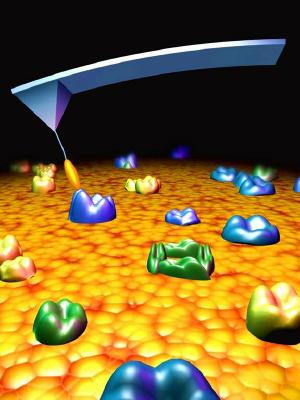
Nanotechnology exploits the properties of materials on a nanometric scale, (a nanometer is one millionth of a millimeter). The ultimate limit for such miniaturization is the development of devices formed by atomic structures created artificially to fulfil a determined purpose.
The tools that permit the visualization and manipulation of atoms are called proximity microscopes. This includes the Scanning Tunneling Microscope (STM), whose development in 1986 earned G. Binning and H. Rohrer the Novel prize for physics, and more recently the Atomic Force Microscope (AFM).
The International Year of Astronomy 2009 (IYA2009) is a global celebration of astronomy and its contribution to society and culture, with strong emphasis on education, public participation, and the involvement of young people, and with events at national, regional, and global levels. Many thousands of individuals in over 135 countries around the world are already involved, forming the world's largest ever astronomy network.
IYA2009 portrays astronomy as a peaceful global scientific endeavour that unites astronomers in an international, multicultural family of scientists, working together to find answers to some of the most fundamental questions that humankind has ever asked.
South America is the world’s most species-rich area and there have been many theories as to why, ranging from animals and plants accompanying the continent when it broke loose from Africa to variations in the extent of the rainforests over millions of years creating new species.
A thesis from a Gothenburg University doctoral student proposes a different theory: that the formation of the Andes was a 'species pump' which spread animals and plants across the continent.
When Charles Darwin published his landmark book On the Origin of Species(*) in 1859, his theories on evolution were quickly accepted by the vast majority of scientists. The general public, however, was not as eager to accept Darwin’s ideas, due largely to the fact that they challenged established religious beliefs.
Today, 150 years after the publication of Darwin’s book, science and religion remain as conflicted as ever when it comes to the subject of evolution.
“There is a real disconnect between what science says and what the public believes, at least in the United States,” says Ben Pierce, holder of the Lillian Nelson Pratt Chair in Biology at Southwestern University in Georgetown, Texas.