




Are you happy? Well don't try to be happier; you might become less happy. That is the gist of a multi-cultural study published this month in the Journal of Personality and Social Psychology.

The study by University of Virginia psychology professor Shigehiro Oishi and colleagues at three other institutions found that, on average, European-Americans claim to be happy in general – more happy than Asian-Americans or Koreans or Japanese – but are more easily made less happy by negative events, and recover at a slower rate from negative events, than their counterparts in Asia or with an Asian ancestry.

A new clinical trial seeks to predict who is most likely to experience osteoarthritis, and to test whether an experimental treatment can prevent it altogether. Physicians are setting their sights on people who sustain a knee injury, seeking to understand why nearly half of them will later go on to develop osteoarthritis, a debilitating condition that causes pain and disability in more than 20 million Americans each year.

The work is funded by a special class of National Institutes of Health grants awarded to research programs that show promise of quickly translating basic science discoveries into patient treatments. In this case, initial research has shown that an enzyme which controls the response of cells to growth factors may in fact be a major cause of osteoarthritis.

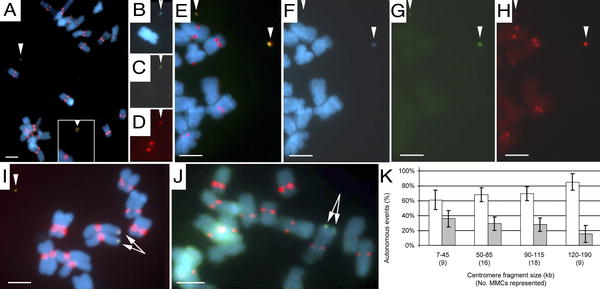
In the October 19, 2007, issue of PLoS-Genetics, a team of academic and commercial researchers (1) show that their "maize mini-chromosomes" (MMC) can introduce an entire "cassette" of novel genes into a plant in a way that is structurally stable and functional. Early results, the study authors say, "suggest that the MMC could be maintained indefinitely."

The production of transgenic plants, including maize, has historically relied on techniques that integrate DNA fragments into a host chromosome. This can disrupt important native genes or lead to limited or unregulated expression of the added gene.

Currently, to add a single gene, plant scientists create hundreds of transgenic plants in which the new gene is randomly inserted into a plant chromosome.

Cryptococcus neoformans is a major cause of fungal meningitis, predominantly in immunocompromised individuals. This fungus has two mating types/sexes, a and α, and mating typically requires two individuals with opposite mating types.

It is mysterious why the α mating type is overwhelmingly predominant in nature and how the capacity for sexual reproduction is maintained in a largely unisexual population. We postulated that same-sex mating between α isolates may occur naturally, as it does under laboratory conditions.

By analyzing natural Cryptococcus diploid hybrid isolates containing two α alleles of different serotypic origins, this study demonstrates that same-sex mating transpires in nature.

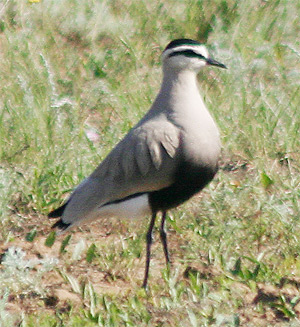
Hopes are rising for one of the world’s rarest birds after the discovery of the largest flock seen for more than 100 years.

More than 3,000 critically endangered sociable lapwings have been found in the Ceylanpinar district of south-eastern Turkey after a satellite tag was fitted to one of the birds migrating from breeding grounds in Kazakhstan.

The tracked lapwing had flown more than 2,000 miles from its nesting site, where numbers of the species have plunged following the collapse of Soviet farming. The bird flew north of the Caspian Sea, then down through the Caucasus and south into Turkey.


Sociable Lapwings can now be a lot more sociable.

Responding to media reports of recent studies that emphasized the dangers of angioplasty in women compared to men, Dr. Alexandra J. Lansky, MD, Director of the Angiographic Core Laboratory and the Women's Cardiovascular Health Initiative at the Cardiovascular Research Foundation, said that the comparison to men overshadows the true benefit to women of early intervention.

“We should be comparing interventional strategies in women to other therapies in women, in order to determine whether or not they are beneficial. The comparison to men is largely irrelevant,” says Lansky.

“Recent news reports suggest that women do not fare as well as men following angioplasty.

Retinoblastoma arises in the retina—the multi-layered, membrane lining the back of the eye that responds to light by generating nerve impulses that are carried into the brain by the optic nerve. Researchers have found that certain mutations enable specific cells in the retina to multiply and cause eye cancer, a finding that suggests deliberate genetic manipulations might coax an injured brain to repair itself

Investigators at St. Jude Children's Research Hospital have identified the cell that gives rise to the eye cancer retinoblastoma, disproving a long-standing principle of nerve growth and development. The finding suggests for the first time that it may one day be possible for scientists to induce fully developed neurons to multiply and coax the injured brain to repair itself.

Sugars made by plants are rapidly used by microbes living in their roots, according to new research by Professor Peter Young of the Department of Biology at York and Dr Philippe Vandenkoornhuyse of the University of Rennes, creating a short cut in the carbon cycle that is vital to life on earth.

The green leaves of plants use the energy of sunlight to make sugar by combining water with carbon dioxide from the atmosphere. This sugar fuels the plant’s growth, but scientists in the University’s Department of Biology discovered that some of it goes straight to the roots to feed a surprising variety of microbes.

In the carbon cycle, plants remove carbon dioxide (a greenhouse gas) from the atmosphere.

Shiny amber jewelry and a mucky Florida swamp have given scientists a window into an ancient ecosystem that could be anywhere from 15 million to 130 million years old.

Scientists at the University of Florida and the Museum of Natural History in Berlin made the landmark discovery that prehistoric aquatic critters such as beetles and small crustaceans unwittingly swim into resin flowing down into the water from pine-like trees.

Bats are the most vocal mammals other than humans, and understanding how they communicate during their nocturnal outings could lead to better treatments for human speech disorders, say researchers at Texas A&M University.

Thousands of bats native to Central Texas fly overhead each night singing songs of complex syllables – but at frequencies too high for humans to hear.

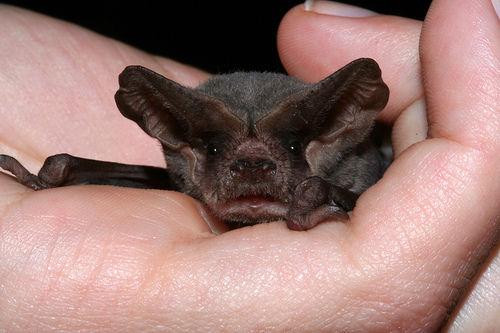
Texas A&M researcher Michael Smotherman is trying to understand how Mexican Freetail bats organize syllables into songs and how their communication is linked to the brain.


Mexican Freetail Bat up close. Credit: J.E. Brandt


