



A University of Leicester mathematician has been working with scientists in Japan and The Netherlands to develop a new technique that produces accurate mathematical models of the actual behaviour of nerve (neural) cells. Developing such models requires detailed information about the dynamics of components responsible for the spike generation in the cell.

The main barrier between mathematical modelling and reality is that the most of intrinsic variables of living cell are not available for direct observation. Dr Ivan Tyukin and his colleagues developed a method for automatic reconstructing of hidden variables describing the cell dynamics using only the recordings of evoked electric activity of the cell.

Positive selection in human evolution plays a role in genes associated with schizophrenia, according to a new study in the Sept. 2007 edition of Proceedings of the Royal Society B. It found that genes believed to be linked to schizophrenia are more likely to show evidence of natural selection than those not associated with the disorder.

“Schizophrenia has a huge impact on health and reproduction, yet it persists at a high frequency in the human population. This is something of a paradox from an evolutionary perspective,” said East Carolina University biologist Kyle Summers, who conducted the research with colleagues Bernard Crespi from Simon Fraser University (Canada) and Steven Dorus from the University of Bath (United Kingdom).

Sonia Garel intend to tackle one of the great mysteries of neurobiology - how the brain is built up during embryonic development. There have long been fundamental unanswered questions relating both to the wiring of the brain during growth, and how evolution drove forward the sophisticated neural circuitry associated with mammals.

Garel will focus on two key processes involved in development of neural circuitry in the forebrains of young mammals as they grow. One of these processes concerns the formation of connections between neurons, the nerve cells of the brain.

These connections are needed to process sensory information, execute motor functions, and provide the network for cognitive abilities.

In 2000, Hal Pashler and I published a paper called “How persuasive is a good fit? A comment on theory testing.” For more than 50 years, experimental psychologists have supported mathematical theories by showing that the equations of the theory could fit their data. We pointed out that this was a mistake because no account was taken of the flexibility of the theory. A too-flexible theory can fit anything. However obvious this may sound to outsiders, the practice we criticized was common (and continues).

Researchers at UT Southwestern Medical Center have found nearly 350 genes related to female fertility. Their research may open the door to much wider study in the poorly understood field of infertility.

“This study gives us a way to begin to understand the causes of female infertility,” said Dr. Diego Castrillon, assistant professor of pathology and senior author of a study appearing in the September issue of the journal Genetics. “It gives us a much more complete list of candidate genes to explore. Before, we didn’t even know where to look.”

The study was done in mice, “but at the molecular level, ovarian biology is very similar in mice and humans,” Dr. Castrillon said.

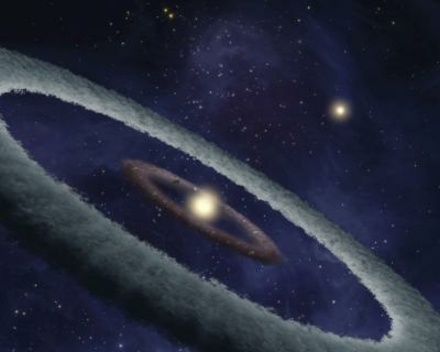
An international team of astronomers wants to answer the question, "Will the world end with a bang or a whimper?"

Using an array of telescopes around the globe, a team of 23 researchers led by Italian astronomer Dr. Roberto Silvotti of the Observatorio Astronomico di Capodimonte in Naples has spent seven years investigating the pulses of the star V391 Pegasi. This international collaboration has resulted in the discovery of a new planet — Peg V392b – the oldest planet known so far in the universe.

Prof. Elia Leibowitz, of Tel Aviv University's School of Physics and Astronomy was a member of the team. To date, astronomers around the world have discovered more than 200 planets outside our solar system, but Prof.

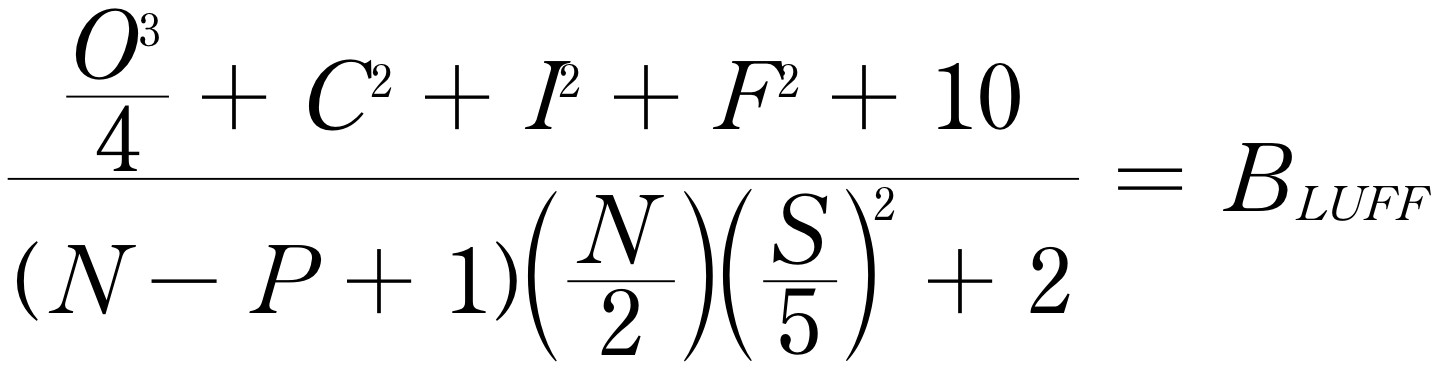
So, you've seen the WSOP on ESPN—big money, big personalities, big bluffs. But what these highlight reels forget to mention is the fact that, at the highest level, there's method behind the blood-pumping madness. Behind every good bluff is a strong foundation of numbers. And here it is: the equation that defines when to pull the trigger, even if you're holding three-six offsuit.

Plug your numbers into this equation (or into the attached spreadsheet calculator) to calculate the percentage that you should bluff. Note—this works well for a specific situation: No Limit Texas Hold' Em, just after seeing the flop.

Rather than waxing poetic, it seems best to look at the variables in order:

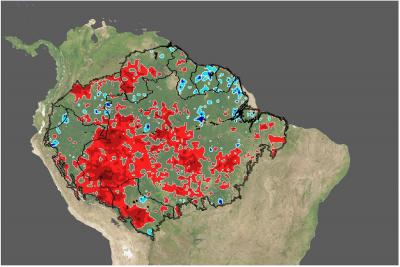
Accepted global climate models had predicted the Amazon forest would begin to "brown down" after just a month of drought and eventually collapse as the drought progressed. Instead, drought-stricken regions of the Amazon forest grew particularly vigorously during the 2005 drought, according to new research.

“Instead of ‘hunkering down’ during a drought as you might expect, the forest responded positively to drought, at least in the short term," said study author Scott R. Saleska of The University of Arizona. "It's a very interesting and surprising response."

UA co-author Kamel Didan added, "The forest showed signs of being more productive.

In case you happen to be in town:

Professor Jim Al-Khalili of the University of Surrey will host the third public Surrey Debate ‘The God Particle: Is science the new religion?’ on Wednesday, October 17 from 7.00 p.m. – 8.30 p.m.

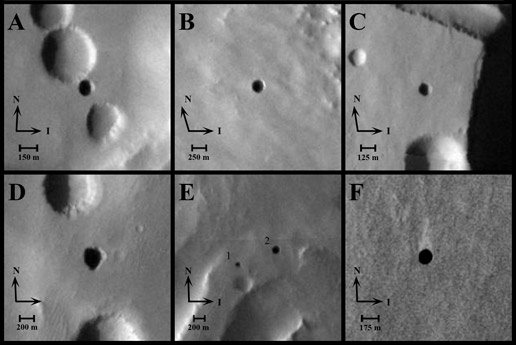
A heat-sensitive camera flying on NASA's Mars Odyssey orbiter has led a team of Mars geologists to find seven small, deep holes on the flanks of Arsia Mons, a giant volcano on Mars. The holes may be openings, called skylights, in the ceilings of underground caves.

Very dark, nearly circular features ranging in diameter from about 100 to 250 meters (328 to 820 feet) puzzled researchers who found them in images taken by NASA's Mars Odyssey and Mars Global Surveyor orbiters. Using Mars Odyssey's infrared camera to check the daytime and nighttime temperatures of the circles, scientists concluded that they could be windows into underground spaces.

