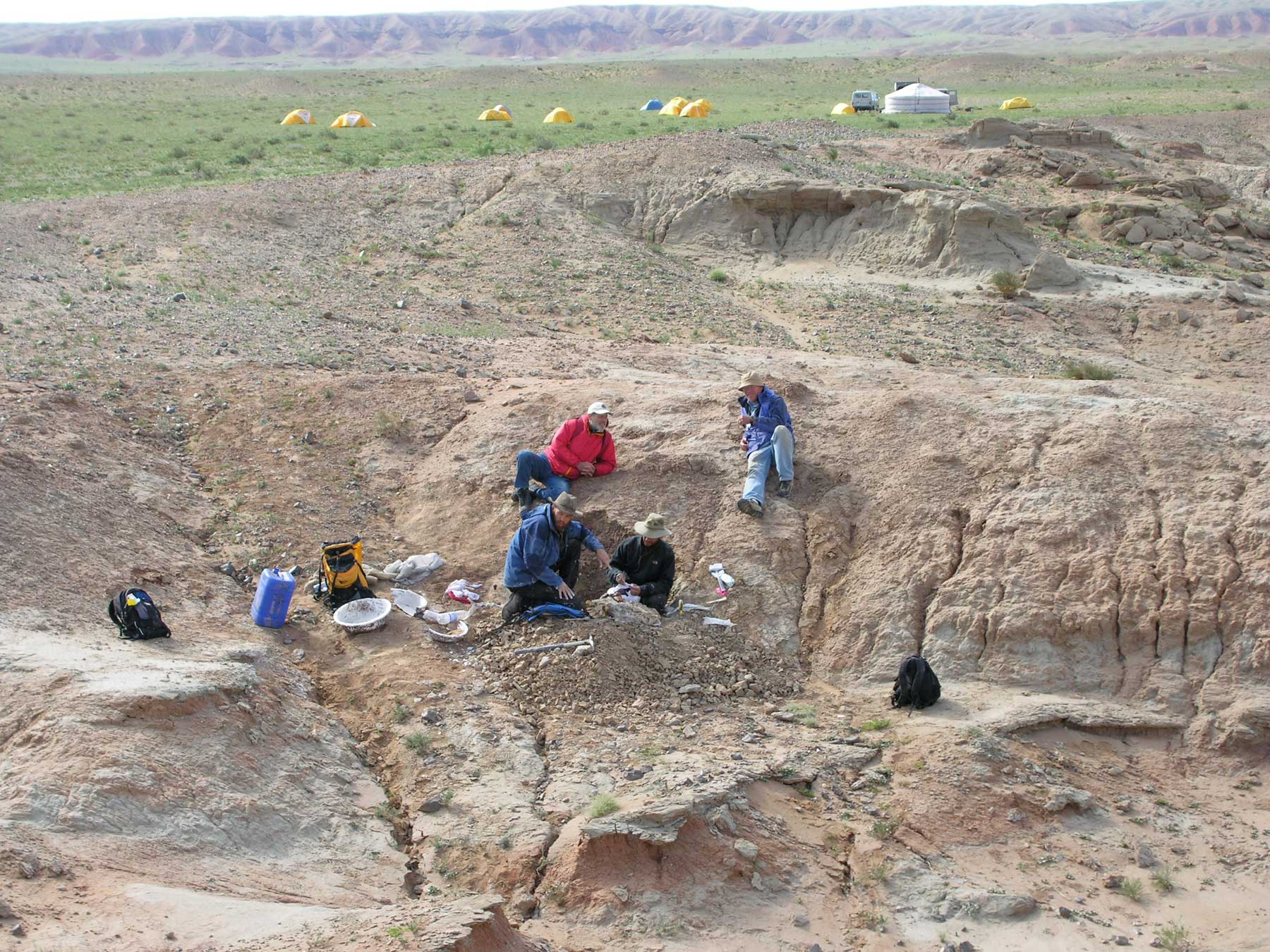






Sometimes it takes two decades to identify something but the wait is worth it. A dinosaur skeleton found 24 years ago in Montana has finally been identified as a new species that links North American dinosaurs with Asian dinosaurs. The dinosaur would have weighed 30 to 40 pounds, walked on two feet and stood about three feet tall. The fossil came from sediment that's about 80 million years old.

Jack Horner said he found the nearly-complete skeleton in 1983 near Choteau, in northwest Montana, but it was located in extremely hard rock and took a long time to prepare. He also had to wait about two decades before he found an expert who could identify it. That expert was Brenda Chinnery, who specializes in horned dinosaurs.

Scientists have proved for the first time that vitamin C is essential for plant growth. Vitamin C is already known to be an antioxidant, which helps plants deal with stresses from drought to ozone and UV radiation, but until now it was not known that plants could not grow without it.

The study in The Plant Journal describes a newly-identified enzyme, GDP-L-galactose phosphorylase, which produces ascorbate ( vitamin C ) in plants. This discovery could have implications for agriculture and for the production of vitamin C dietary supplements.

Professor Nicholas Smirnoff of the University of Exeter, lead author on the paper said: "Vitamin C is the most abundant antioxidant in plants and yet its functions are poorly understood.

A new study in Nature Biotechnology claims their numerical models and lab experiments have confirmed they can improve a class of drugs based on antibodies by predicting structural changes that will improve its effectiveness.

They've already used the model to create a new version of cetuximab, a drug commonly used to treat colorectal cancer, that binds to its target with 10 times greater affinity than the original molecule.

“New and better methods for improving antibody development represent critical technologies for medicine and biotechnology,” says MIT Professor Dane Wittrup.

Good news for lovers of fish and chips. Japanese scientists have come up with the perfect recipe to make a crispy batter which is also lower in fat, reports Joanna Harries in Chemistry & Industry.

Dr Thanatuksorn and his team at Tokyo University of Technology studied how the structure of the batter molecules changes during the frying process. By altering the water content and frying time they were able to suggest the perfect conditions to create batter with the best lasting crispiness, as well as helping to reduce the fat content.

During the deep-frying process a rigid microstructure of pores is formed in the batter, and this microstructure is responsible for the textural properties of the food, as well as determining how much oil is absorbed during the frying.

The Carbon Disclosure Project (CDP) is a collaboration of over 315 institutional investors with assets under management of more than $41 trillion. They have released their 5th annual global report, providing the largest and most comprehensive database of strategies from the world's largest corporations regarding the impact of climate change on shareholder value.

On behalf of the collaboration of 315 investors, including Merrill Lynch, Goldman Sachs, CalPERS and AIG, CDP has sent a questionnaire to the world's largest publicly-owned companies each year since 2002. This elicits detailed information on the risks and opportunities posed to the companies by climate change.

Every response has been graded and ranked based on climate disclosure and governance practices.

Researchers have found that lack of sleep can more than double the risk of death from cardiovascular disease. They also found that too much sleep can also more than double the risk of death.

One way or another, you are going to die. Strangely, your sleep habits may speed up that process.

The study detailed how sleep patterns affected the mortality of 10,308 civil servants in the “Whitehall II study”. Amongst other things the data they used provided information on the mortality rates and sleep patterns on the same group of civil servants at two points in their life (1985-8 and those still alive in 1992-3).

Six months of acupuncture treatment appears to be more effective than conventional therapy in treating low back pain, according to a study in the Sept. 24 issue of Archives of Internal Medicine, although the study suggests that both sham acupuncture and traditional Chinese verum acupuncture appear to be effective in treating low back pain.

“Low back pain is a common, impairing and disabling condition, often long-term, with an estimated lifetime prevalence of 70 percent to 85 percent,” the authors write as background information in the article.

Modern conservation techniques have brought us the resurgence of American bald eagles, sustainable forest harvests and the rescue of prized lobster fisheries. So how can modern conservation strategies also have wrought such failures, from the catastrophic loss of Guatemalan forests to the economy-crippling Klamath River salmon kill in 2006?

Indiana University political scientist Elinor Ostrom and colleagues argue that while many basic conservation strategies are sound, their use is often flawed.

For more than 100 years, scientists have tried to figure out the cell size problem: How does a cell know when it is big enough to divide? In research conducted in budding yeast (Saccharomyces cerevisiae), scientists at Rockefeller University have now identified the cellular event that marks the moment when a cell knows it is big enough to commit to cell division and spawn genetic replicas of itself.

The findings provide a precise and quantitative framework for studying the possible mechanisms that allow cells to monitor and sense their size.

During the first phase of the cell cycle, known as G1, budding yeast grows and begins to form a bud; in the final stage, the cell splits into two — one bigger than the other.

Florida Atlantic University received U.S. patent no. 10/822,496, “Promoting Cardiac Cell Differentiation,” based on an invention which induces and restores cardiac muscle function.

The invention was discovered by FAU researcher and vice president for research, Dr. Larry F. Lemanski and his postdoctoral fellow, Dr. Chi Zhang. Their research has focused on understanding the mechanisms that regulate myocardial (heart muscle mass) cell differentiation and myofibrillogenesis (the process by which proteins in the heart are changed into heart muscle cells) in the developing heart. From their findings, these researchers hope to repair myocardial deficiencies in the human heart which are caused by either congenital heart defects or heart attacks.

