



According to new research at the University of Virginia Health System, N-acetylcysteine (NAC), an anti-oxidant commonly used in nutritional and body-building supplements, can form a red blood cell-derived molecule that makes blood vessels think they are not getting enough oxygen. This leads to pulmonary arterial hypertension (PAH), a serious condition characterized by high blood pressure in the arteries that carry blood to the lungs.

“NAC fools the body into thinking that it has an oxygen shortage,” said Dr. Ben Gaston, UVa Children’s Hospital pediatrician and researcher who led the study. “We found that an NAC product formed by red blood cells, know as a nitrosothiol, bypasses the normal regulation of oxygen sensing.

Both in her recent appearance on KQED’s Forum talk show and in her blog, Stanford University’s Joan Roughgarden continues her campaign to discredit me and my book, The Man Who Would Be Queen.

Roughgarden’s rate of false accusations per utterance is so high that it is tempting to take the time to refute them one by one to the exclusion of getting around to discussing the science. Indeed, I believe that is the intent of Roughgarden and my other chief critics.

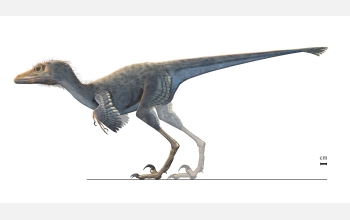
An 80-million-year-old dinosaur fossil unearthed in the Gobi Desert of Mongolia demonstrates that miniaturization, long thought to be a hallmark of bird origins and a necessary precursor of flight, occurred progressively in primitive dinosaurs.

The find, described in the September 7 issue of the journal Science, is made up of the fossilized bones of a new dinosaur the researchers have named Mahakala, and includes portions of its skull, forelimb and hindlimb, as well as much of the vertebral column.

Mahakala is an early evolutionary offshoot of the group of carnivorous dinosaurs known as dromaeosaurids that also includes the agile, sickle-clawed Velociraptor made famous in the 1993 movie Jurassic Park.


A dinosaur foss

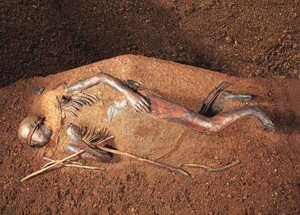
Bog mummies are 2000-year-old mummies from the Iron Age that were preserved with amazing detail by the peat bogs of Europe.

Physical anthropologists draw conclusions from the eerily preserved hair, leathery skin and other features in the mummies that emerge from the bogs. In the Iron Age, from approximately 500BC to 500AD, people were often cremated, leading experts to believe that mummies preserved by the bogs were usually those who met their demise through particularly violent means or were used as sacrifices.

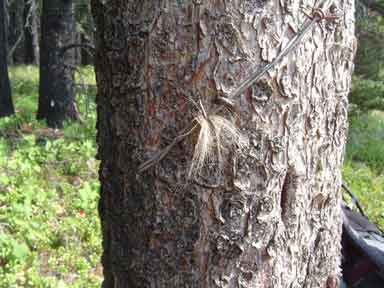
Bears don't rub trees because their backs are itchy. Dr Owen Nevin of the University of Cumbria states that adult male grizzly bears use so-called “rub trees” as a way to communicate with each other while looking for breeding females, and that this behavior could help reduce battles between the bears.

Many theories have been advanced as to why bears rub trees: some thought females might rub trees as they came into oestrous, and others that bears might be giving their backs a good scratch to get rid of parasites or pick up sap to act as insect repellent.

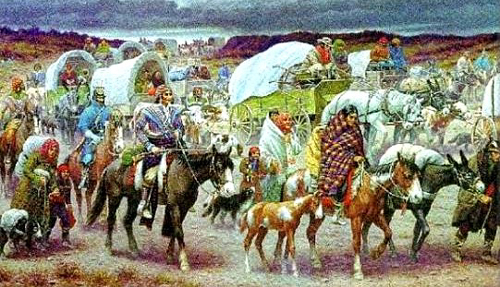
By 1763, the world of Cherokee Indians in the Southeastern U.S. was in tatters. The French and Indian War had wracked the sprawling Cherokee settlements that stretched from the headwaters of the Savannah River in South Carolina and Georgia to the Overhills towns in eastern Tennessee.

Though 75 years would pass before the Trail of Tears would banish the remnants of the nation west to Oklahoma, the tribe watched hopelessly as much of its history rapidly faded.

Researchers have long wondered why the Cherokee settled where they did, building clusters of small towns in fertile river valleys in mostly mountainous areas.

Scientists have also studied why the society collapsed with such relative speed as the eighteenth century unfolded.

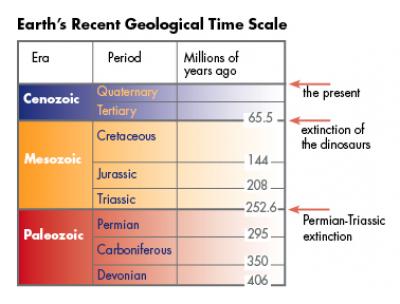
252 million years ago a mass extinction of cataclysmic proportions occurred and the world was changed forever. Prior to that, ocean life was diverse and clam-like organisms called brachiopods dominated. After the extinction little else existed and a different kind of clam-like organism, called a bivalve, took over.

Why did it happen?

The Aurigid meteor shower peaked on September 1, originating from C/1911 N1 Kiess, or comet Kiess, a long-period comet that takes about 2000 years to orbit the Sun. It was discovered in 1935 by Carl Kiess.

As Earth passes through the dust comet Kiess left behind 2000 years ago, meteoroids, or shooting stars, rain upon Earth. They burn up in the atmosphere at very high velocities, about 67 km/s, creating the meteor shower.

The Aurigids get their name from the constellation Auriga, because if you look up in the sky, this is where the shooting stars seem to come from. The dust trail of comet Kiess will not be crossed again in this manner for 70 years.


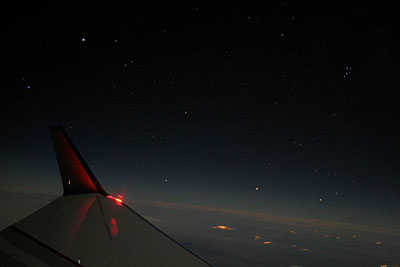
The constellation of Auriga rising above the horizon.

Researchers at UT Southwestern Medical Center have found that a single gene might control whether or not individuals tend to pile on fat, a discovery that may point to new ways to fight obesity and diabetes.

“From worms to mammals, this gene controls fat formation,” said Dr. Jonathan Graff, associate professor of developmental biology and internal medicine at UT Southwestern and senior author of a study appearing in the Sept. 5 issue of Cell Metabolism.

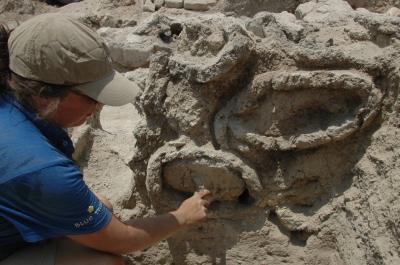
Amihai Mazar, Eleazar L. Sukenik Professor of Archaeology at the Hebrew University, revealed that the first apiary (beehive colony) dating from the Biblical period has been found in excavations he directed this summer at Tel Rehov in Israel’s Beth Shean Valley. This is the earliest apiary to be revealed to date in an archaeological excavation anywhere in the ancient Near East, said Prof. Mazar. It dates from the 10th to early 9th centuries B.C.E.

Tel Rehov is believed to have been one of the most important cities of Israel during the Israelite monarchy. The beehives there were found in the center of a built-up area there that has been excavated since 1997 by Dr. Nava Panitz-Cohen of the Hebrew University. Three rows of beehives were found in the apiary, containing more than 30 hives.

