






The impact of HIV in Zimbabwe since the early 1980s is explored in new research published this week in the journal PNAS.

Researchers found that HIV’s impact on Zimbabwe’s population as a whole has not been quite as severe as some predicted in 1989, when a group of epidemiologists at a World Health Organisation meeting modelled its potential effects. Some of the models they created suggested that the population of Zimbabwe might start shrinking, with more people dying than being born.

The new research shows that the population of the country continues to grow. However, in the worst affected areas, HIV has reduced the level of population growth by two thirds, from 2.9% to 1.0% each year.

Sheets of highly organized epithelial cells line all the cavities and free surfaces of the body, forming barriers that control the movement of liquids and cells in the body organs. The organized structure of normal breast epithelial cells may also serve as a barrier against cancer, according to a study by University of Helsinki scientists.

Finnish researchers found that the tightly organized architecture of mammary epithelial cells is a powerful restraint against the cancer gene provoked inappropriate proliferation. Their study also links function of a tumor suppressor gene to the development of cancer gene resistant epithelial organization.

Between 5 and 10 degrees of cooling was the success criteria for the first milestone in a project involving magnetic cooling at Risø National Laboratory – Technical University of Denmark (DTU) and the first milestone has been achieved.

The figure is currently at 8.7°C; this means that a refrigerator at room temperature (20°C) can be cooled to almost 11°C, not quite enough to keep milk cold, but the project’s test setup is enough to achieve the objective of conducting research in different materials, varying operating conditions and the strength of the magnetic field.

“The setup is not the largest of its type, but the most important thing is that it ’s easy to exchange parts in the machine.

When white dwarf stars explode, they leave behind a rapidly expanding cloud of 'stardust' known as a Type Ia supernova. These exploding events, which shine billions of times brighter than our sun, are all presumed to be extremely similar, and thus have been used extensively as cosmological reference beacons to trace distance and the evolution of the Universe.

Astronomers have now – for the first time ever – provided a unique set of observations obtained with the ESO Very Large Telescope in Chile and the 10-meter Keck telescope in Hawaii, enabling them to find traces of the material that had surrounded a white dwarf star before it exploded.

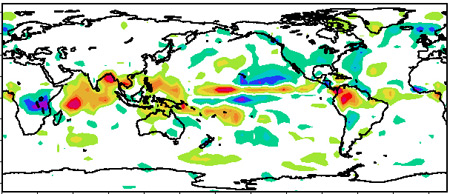
NASA scientists have detected the first signs that tropical rainfall is on the rise with the longest and most complete data record available.

Using a 27-year-long global record of rainfall assembled by the international scientific community from satellite and ground-based instruments, the scientists found that the rainiest years in the tropics between 1979 and 2005 were mainly since 2001. The rainiest year was 2005, followed by 2004, 1998, 2003 and 2002, respectively.


Over the 27 years between 1979 and 2005 some areas of the tropics experienced an increase in rainfall of as much as 0.5 millimeters per day per decade (red areas). Overall, tropical rainfall increased 5 percent during this period.

When human heart muscle cells derived from embryonic stem cells are implanted into a rat after a heart attack, they can help rebuild the animal's heart muscle and improve function of the organ, scientists report in the September issue of Nature Biotechnology.

The researchers also developed a new process that greatly improves how stem cells are turned into heart muscle cells and then survive after being implanted in the damaged rat heart. The findings suggest that stem-cell-based treatments might one day help people suffering from heart disease, the leading cause of death in most of the world.

The study was conducted by researchers at the University of Washington School of Medicine in Seattle and at Geron Corp. in Menlo Park, Calif.

Here's a reminder for our second SciFoo Lives On session in Second Life tomorrow Monday August 27, 2007 16:00 GMT/12:00 ET. Berci and I will be the moderators. I've put up a one page poster to briefly discuss our drug development efforts with our collaborators using Web 2.0 tools. Everyone is welcome to attend.

Boys with difficulty reading actually respond better to female teachers, according to a new Canadian study. Research shows that boys develop higher positive self-perceptions as readers when they worked with female research assistants compared to working with male research assistants.

The study focused on 175 third- and fourth-grade boys who were identified as struggling readers by their teachers. The boys participated in a 10-week reading intervention to determine the effect of the reading teacher’s gender on boys’ reading performance, self-perception as readers, and view of reading as a masculine, feminine or gender-neutral activity.

According to a new study, visual information is processed on a daily schedule set within the eyes themselves rather than one dictated by the brain.

The researchers found in mice that the eyes’ normal rhythmic response to light requires only that a molecular "clock" inside the retina go on ticking. The retina is a layer of nerve tissue covering the back of the eyeball, which is often likened to the film in a camera; without it, images can't be captured.

The results offer the first glimpse into the physiological importance of circadian clocks found in organs throughout the body, said Charles Weitz of Harvard Medical School.

Working with embryonic mouse brains, a team of Johns Hopkins scientists seems to have discovered an almost-too-easy way to distinguish between “true” neural stem cells and similar, but less potent versions. Their finding, reported this week in Nature, could simplify the isolation of stem cells not only from brain but also other body tissues.

What the researchers identified is a specific protein “signal” that appears to prevent neural stem cells – the sort that might be used to rebuild a damaged nervous system – from taking their first step toward becoming neurons. “Stem cells don’t instantly convert into functional adult tissue,” says author Nicholas Gaiano, Ph.D., assistant professor at the Institute for Cell Engineering.

