


Snakes are relatively new on the world scene, having been around for about 100 million years. Yet they currently comprise about half of all reptile species. This new kid on the evolutionary block's novel survival strategies could be used to determine the health of snake populations.

“These animals take energy reduction to a whole new level,” said Marshall McCue, a graduate student in biological sciences in the J. William Fulbright College of Arts and Sciences. He reported his findings in the journal Zoology.

While scientists knew that some snake species could survive for up to two years without a meal, no studies have examined the physiological changes that take place when a snake goes for prolonged periods without food.

Leave it to Scotland to find a reason to make more whisky. A new research project at the University of Abertay Dundee could make it possible for cars of the future to run on fuel made from the by-products of brewing and distilling booze.

Researchers in Abertay’s School of Contemporary Sciences have been awarded a Carnegie Trust Research Grant to investigate turning residues from beer and whisky processes into biofuel.

The year long project will look at new methods of turning spent grain into bioethanol, a more environmentally friendly alternative to fossil fuels.

Climate change is big news in regards to the atmosphere, oceans, and Earth’s surface. In many countries, the groundwater reservoirs contribute a large part of the total water supply but little is known about how soil, subsurface waters, and groundwater are responding to climate change.

Scientists with CSIRO Australia and USDA’s Agricultural Research Service (ARS) have addressed the vital need for the prediction of climate change impacts on water below the ground. They report that the only way to make such predictions is with simulated interactions between soils and plants that are essential in determining sensitivities of soil-water-vegetation systems to climate change.

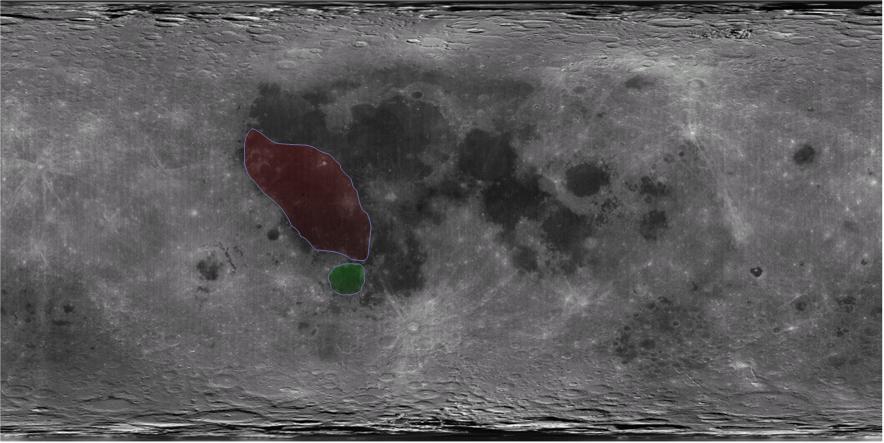
Good lighting and high resolution cameras in the SMART-1 satellite are making it possible to put together the story linking geological and volcanic activity on the Moon.

“Thanks to low-elevation solar illumination on these high-resolution images”, says SMART-1 Project Scientist Bernard Foing, “it is now possible to study fine, small-scale geological features that went undetected earlier.”

The study provides new information on the thermal and tectonic history of the Moon and the processes following the formation of the large basins. There are approximately 50 recognizable lunar basins more than 300 km in diameter.

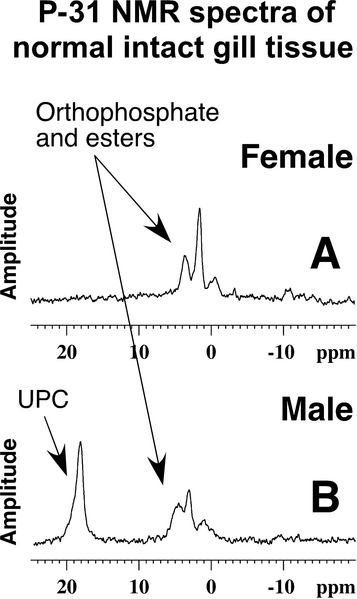
Researchers at the University of Illinois at Chicago have discovered a chemical compound in male blue crabs that is not present in females -- the first time in any species that an entire enzyme system has been found to be activated in only one sex.

The research, performed using nuclear magnetic resonance, was published online Aug.

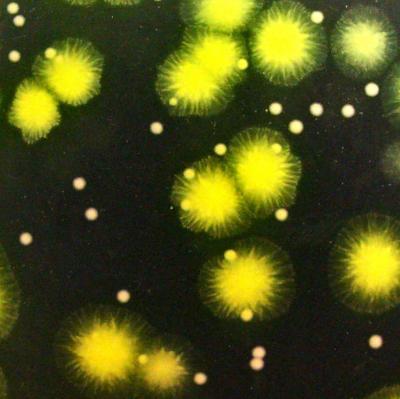
Cooperation is widespread in the natural world but so too are cheats – mutants that do not contribute to the collective good but simply reap the benefits of others’ cooperative efforts. In evolutionary terms, cheats should indeed prosper, so how cooperation persists despite the threat of cheat takeover is a fundamental question. Recently, biologists at the Universities of Edinburgh and Oxford have found that in bacteria, cheats actually orchestrate their own downfall.

In the study, reported in the September issue of The American Naturalist, the team explored the impact of cheats in populations of the notorious pathogen, Pseudomonas aeruginosa.

Planning for a summer delivery for your child? You might want to choose an ophthalmologist along with an obstetrician.

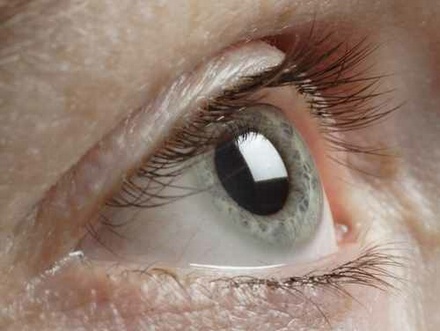
If your child is born in the winter or fall, it will have better long-range eyesight throughout its lifetime and less chance of requiring thick corrective glasses, predicts a Tel Aviv University investigation led by Dr. Yossi Mandel, a senior ophthalmologist in the Israel Defense Forces Medical Corps.

Forming a large multi-center Israeli team, the scientists took data on Israeli youth aged 16-23 and retroactively correlated the incidence of myopia (short-sightedness) with their month of birth. The results were astonishing.

Researchers at BRIC, University of Copenhagen, have identified a new gene family (UTX-JMJD3) essential for embryonic development. The family controls the expression of genes crucial for stem cell maintenance and differentiation, and the results may contribute significantly to the understanding of the development of cancer.

All organisms consist of a number of different cell types each producing different proteins. The nerve cells produce proteins necessary for the nerve cell function; the muscle cells proteins necessary for the muscle function and so on. All these specialized cells originate from the same cell type – the embryonic stem cells.

Neuroscientists at University College London and Ghent University have found the brain circuit involved in thinking twice and checking impulsive behaviour. The duo discovered that an area in the fronto-median cortex of the brain is activated when you begin to think ‘I’m not going to go through with this’ and stop yourself doing what you were about to do.

According to the study, published in the ‘Journal of Neuroscience’ today, this specific brain network is involved in self-control and checks and limits our desired actions.

A Swedish researcher says astrococytes, the most abundant cell type in the brain, can lead to new treatment for stroke victims.

Stroke is the result of an infarction, or bleeding, within the brain, and it may lead to impaired movement, impaired sensation, and difficulties in cognitive function and speech. Approximately 30,000 people are affected by stroke each year in Sweden, and it is the most common cause of long-term dependence on care.

"Researchers all over the world are intensively searching for new treatments. One interesting possibility is that of activating stem cells in the damaged brain such that the brain can be repaired and regain its function", says stem cell researcher Jonas Faijerson.

