


Each time you press "save" on your computer you force atoms on magnets to align their polarity with the intruding magnetic field. Helping physicists understand why it happens and why it isn't a physics-induced train wreck more often is the goal of Joshua Deutsch and Andreas Berger and they say their research could advanced materials research.

Correcting even a single typo in an e-mail means changing dozens of bits of information. For each bit, a magnetic head grazes a tiny patch of your disk drive, forcing its polarity, or "spin," to align up or down--the magnetic equivalent of a one or a zero.

Who knew the cute koala bears were so promiscuous?

Professor Peter Timms from QUT's Institute of Health and Biomedical Innovation said chlamydia in koalas was a significant cause of infertility, urinary tract infections, and inflammation in the lining of the eye that often led to blindness.

"The numbers of koalas with chlamydia seems to be increasing," he said.

The first Australian trials of a vaccine developed by Queensland University of Technology that could save Australia's iconic koala from contracting chlamydia are planned to begin later this year.

"The trial is planned to begin before the end of the year and will test the vaccine's ability to induce a good immune response in the koala against chlamydia," he said.

Monkey viruses related to HIV may have swept across Africa more recently than previously thought, according to new research from The University of Arizona in Tucson.

A new family tree for African green monkeys shows that an HIV-like virus, simian immunodeficiency virus, or SIV, first infected those monkeys after the lineage split into four species. The new research reveals the split happened about 3 million years ago.

Previously, scientists thought SIV infected an ancestor of green monkeys before the lineage split, much longer ago.

On the eve of the 62nd anniversary of the world's first atomic explosion, the Trinity atomic bomb test, a CDC-led study team has reported new insights on the radiation released at the time of the test. Analyzing the doses that nearby residents received, the CDC team has made preliminary estimates of additional doses that the residents could have ingested in their bodies.

The test of a plutonium-based atomic device at the Trinity Site in southern New Mexico on July 16, 1945 was an undertaking unlike any that humankind had tried before. There was much uncertainty among the Los Alamos scientists, military personnel, and Manhattan Project officials assembled for the event as to whether the device would work and how, if it did work, it would affect the local environment.

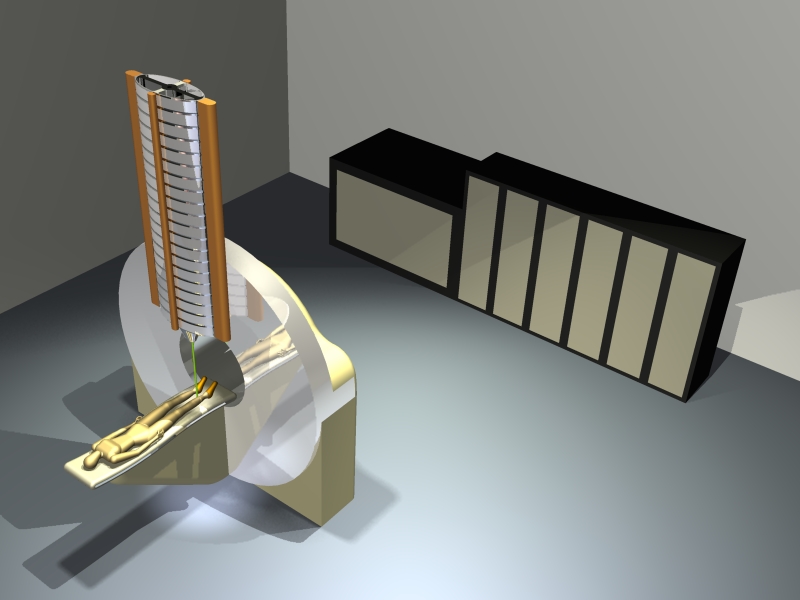
Using innovative physics, researchers have proposed a system that may one day bring proton therapy, a state-of-the-art cancer treatment method currently available only at a handful of centers, to radiation treatment centers and cancer patients everywhere. Thomas R. Mackie, a professor at the University of Wisconsin and co-founder of the radiation therapy company TomoTherapy, will present this new design at next week's annual meeting of the American Association of Physicists in Medicine in Minneapolis.

Compared to the x rays conventionally used in radiation therapy, protons are potentially more effective, as they can deposit more cell-killing energy in their tumor targets and less in surrounding healthy tissue.

New research suggests that an eyedrop used to diagnose a rare syndrome in infants can cause severe lethargy lasting up to 10 hours and requiring hospital admission and oxygen administration.

In the article “Adverse Effects of Apraclonidine Used in the Diagnosis of Horner Syndrome in Infants”, published in the June issue of Journal of the American Association for Pediatric Ophthalmology and Strabismus, Dr. Patrick Watts and coauthors described five cases of extreme drowsiness or unresponsiveness after infants under 6 months of age were administered 1% apraclonidine eyedrops.

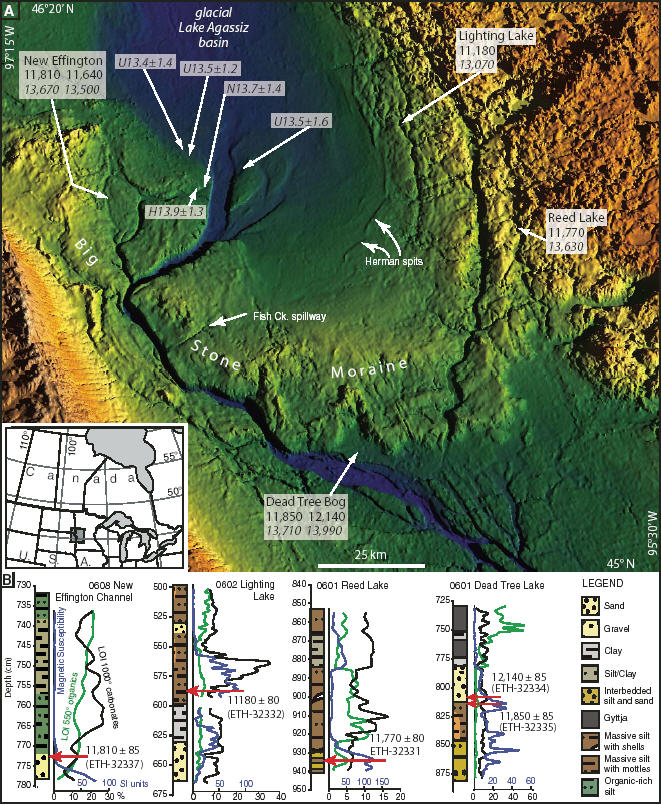
If you've never heard of Lake Agassiz, it's no surprise. It disappeared over 8,000 years ago. Yet it may have been the global warming trigger that ended the last Ice Age.

Using remains from lakes, bogs and channels, a multi-disciplinary group of scientists recently tackled the secrets of glacial Lake Agassiz and Big Stone Moraine.

Knowing the chronology of glacier retreat, and when glacial lakes formed, is important in linking physical events on the landscape with paleoclimate records. At the close of the last ice age, glacial ice in the upper Midwest of the United States retreated very quickly, likely in response to the warming climate.

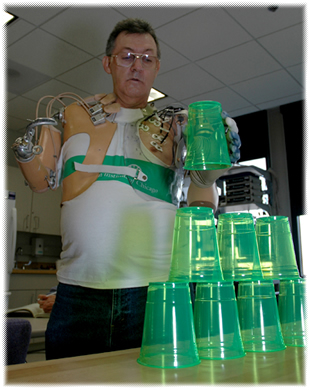
Jesse Sullivan, a double amputee from Dayton, Tenn., has been called the world's first "bionic man" with his thought-controlled, state-of-the-art prosthetic arm. He can eat with a fork, pick up a cup, paint his house or guide a weed eater by bending his advanced appendage's elbow and rotating its forearm. But he still cannot grasp and throw a baseball, cast a fishing line, tie his shoes or type on a computer keyboard as naturally as before.

That may change with the help of numerous organizations including Oak Ridge National Laboratory, some 50 miles north of Sullivan's hometown.

In 2001 while working as a utility lineman, Sullivan lost both arms after a 7000-volt shock in a power-line accident.

How to reduce flies? Here’s one way:

A Chinese city suburb has set a bounty on dead flies in a bid to promote public hygiene . . . Xigong, a district of Luoyang in the central province of Henan, paid out more than 1,000 yuan ($125) for about 2,000 dead flies on July 1, the day it launched the scheme with the aim of encouraging cleanliness in residential areas. . . An Internet user said that although the office had good intentions, the action itself had made the district a laughing stock.


Pediatrics researchers at The Children’s Hospital of Philadelphia and McGill University in Montreal have identified a gene variant that raises a child’s risk for type 1 diabetes, formerly called juvenile diabetes. As investigators continue to pinpoint genes contributing to diabetes, they have their eyes on providing a scientific basis for designing better treatments and preventive measures for the disease.

The research adds a new gene and new knowledge to the four genes previously discovered for type 1 diabetes, in which the immune system destroys insulin-producing beta cells in the pancreas and makes patients dependent on frequent insulin injections to keep the body’s blood sugar under control.

